Wi-Fi routers, phone chargers and the odd fluorescent light in an office all leak a small amount of electrical noise into the air, and a poorly shielded lead will pick some of that up. Shielding quality is the part of an 8k displayport cable most buyers never think to check, yet it decides whether a signal reaches the monitor clean or slightly corrupted.
Quick Answer
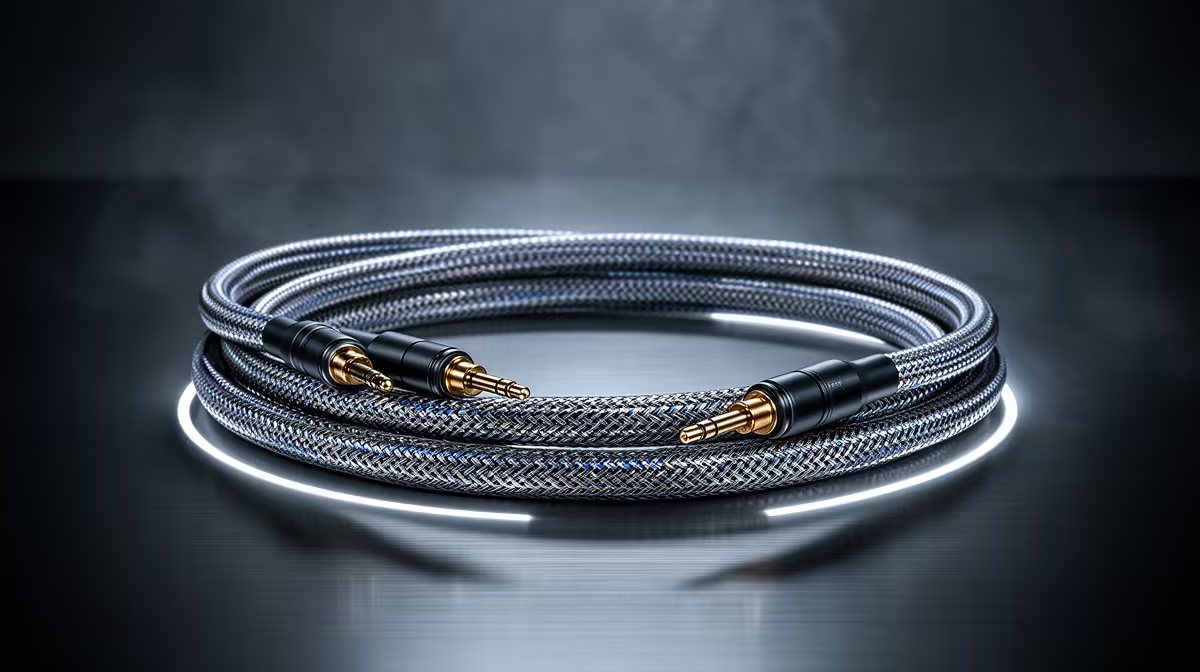
Foil-and-braid shielding blocks more interference than a single basic layer because it combines two different protection methods rather than relying on one. The UGreen DP114 uses this dual-layer approach and costs R299, aiming to keep an 8K signal and high refresh rate stable across its full 1.5m length even in a cluttered desk setup.
🛡️ Two Layers, Two Jobs
A basic shield, whether foil or braid alone, blocks a portion of electromagnetic interference but each type has weaknesses the other covers. Foil wraps the conductors completely and handles high-frequency noise well, but it can be thin and prone to gaps at stress points. Braided shielding is more physically robust and handles lower-frequency interference, but its woven structure leaves tiny gaps a foil layer does not have.
Combining both means the gaps in one layer get covered by the strengths of the other. The DP114's foil-and-braid construction is built around this idea specifically, rather than doubling up on the same shielding type.
Where Basic Shielding Falls Short
A single-layer cable sitting near a power brick, a USB hub, or a router will often show it first as random flicker or brief signal dropouts, especially at higher refresh rates where the data being pushed through the cable is denser.
📶 Signal Stability Under Real Conditions
Stability is not just about avoiding total dropout. At 8K resolution and high refresh rates, even minor interference can introduce visible artefacts or momentary sync loss that a lower resolution signal would shrug off. This is part of why the DP114's shielding pairs with oxygen-free copper conductors and gold-plated connectors, since noise resistance and clean contact both play a role in the final picture on screen.
🔌 Practical Cable Routing Still Matters
Good shielding reduces risk but does not eliminate every source of interference. Running any cable directly alongside a power strip or coiling it tightly next to a router will still test even a well-shielded lead. Keeping some distance from major noise sources gives the DP114's dual-layer shielding the best chance of doing its job.
The full build details for this cable are on the DP114 product page. Shoppers wanting to compare shielding across other cable types can look through Evetech's cable solutions section, and anyone finishing off a gaming desk setup might also check the gaming peripherals range.
Frequently Asked Questions
What is the difference between foil shielding and braided shielding?
Foil shielding wraps the conductors in a thin metal layer that blocks high-frequency noise well, while braided shielding is a woven metal mesh that is more physically durable and handles lower-frequency interference.
Does more shielding mean a thicker, stiffer cable?
Additional shielding layers can add some bulk, though the DP114 keeps its braided outer sheath manageable for typical desk routing despite the extra internal protection.
Can interference still affect a foil-and-braid shielded cable?
Extreme proximity to strong interference sources can still affect any cable, but dual-layer shielding significantly reduces the risk compared with a single shielding layer.
Is shielding more important at higher resolutions?
Yes, higher resolutions and refresh rates push more data through the cable, so even small amounts of interference are more likely to show up as visible issues.
Ready to see why some cables hold a signal better than others?
Foil-and-braid shielding inside the UGreen DP114 blocks interference more consistently than the thin shielding found in cheaper cables. Order it through Evetech's DisplayPort cable page for R299.