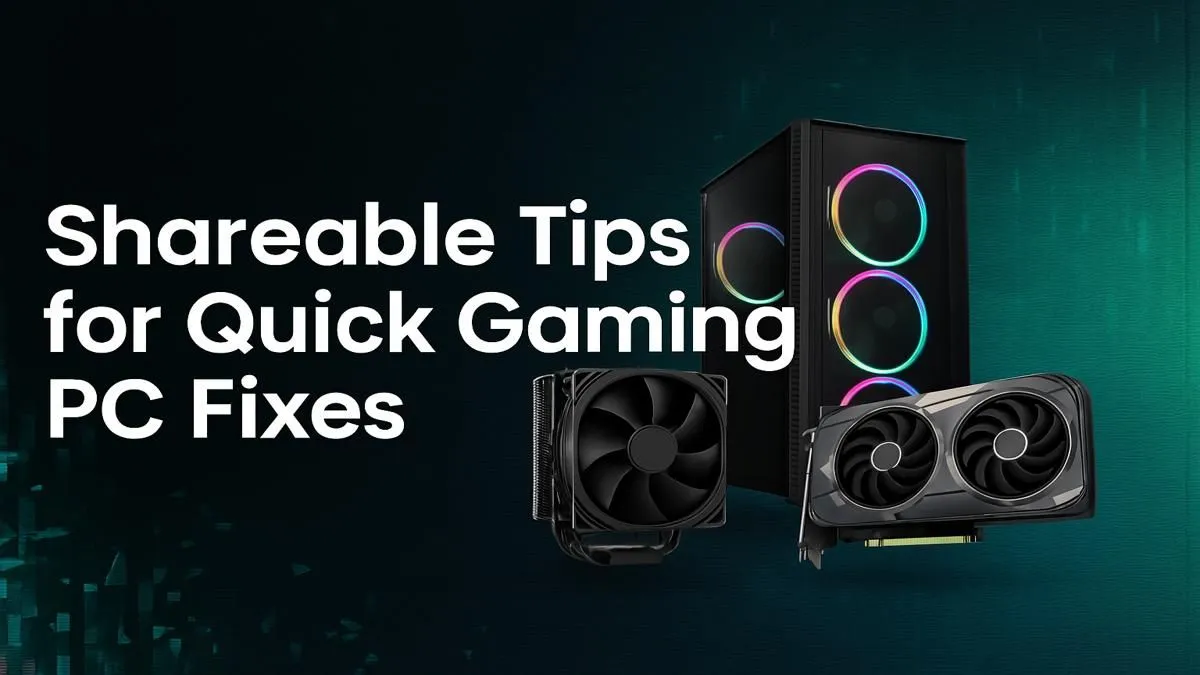
There’s nothing worse. You’re in the final circle, the enemy is in your sights... and your screen freezes. A sudden crash, a stuttering frame rate, or a blue screen of death can ruin any gaming session. Before you rage-quit and throw your mouse across the room, take a breath. Most common PC problems have surprisingly simple solutions. This guide offers 10 quick fixes to get your rig running smoothly again, getting you back to the win.
The Simple Stuff First: Your Go-To Checklist
Before diving into complex diagnostics, effective gaming PC troubleshooting starts with the basics. These two steps solve more issues than you’d think.
1. The Universal Fix: Reboot Everything
It’s a cliché for a reason. A simple restart clears out temporary files, resets glitchy software processes, and can solve a host of mysterious performance issues. Power down your PC completely, wait 30 seconds, and turn it back on. It’s the oldest trick in the IT book, and it’s often the only one you’ll need.
2. Wiggle and Check: Secure Your Cables
A loose cable is a silent killer of performance. Make sure your display cable (HDMI or DisplayPort), power cord, keyboard, and mouse are all firmly plugged in at both ends. A slightly dislodged video cable can cause screen flickering or a total loss of signal, so always check your connections first.
Crushing Lag and Overheating Issues 🔧
If your game feels sluggish or your PC sounds like a jet engine, performance and heat are the likely culprits. These fixes target the most common causes of slowdowns.
3. Update Your Graphics Drivers
Your graphics card (GPU) is the heart of your gaming experience. Manufacturers like NVIDIA and AMD constantly release driver updates that optimise performance for new games and fix bugs. An outdated driver can cause crashes, graphical glitches, and poor frame rates, especially in demanding titles. Ensuring your rig is ready for the latest drops, like those needing specific Call of Duty: Warzone 2.0 gaming PCs, starts with the latest drivers.
4. Give It a Good Clean
Dust is the enemy of cool. Over time, dust buildup clogs fans and heatsinks, trapping heat and causing your components to throttle (slow down) to prevent damage. Power down, unplug your PC, and use compressed air to carefully blow dust out of your fans and vents. A cooler PC is a faster PC, especially when running intensive simulations on a top-tier Microsoft Flight Simulator gaming PC.
Check Your Temps 🌡️
Use free software like HWMonitor or MSI Afterburner to check your CPU and GPU temperatures while gaming. If your GPU is consistently hitting over 85°C or your CPU is pushing past 95°C, it's a clear sign of a cooling problem that needs attention before it causes permanent damage.
5. Tame Background Processes
Is Chrome eating all your RAM again? Unnecessary applications running in the background can steal precious resources from your game. Before launching a game, open the Task Manager (Ctrl+Shift+Esc) and close any non-essential programs. This frees up CPU power and memory, which is crucial for maintaining a high, stable FPS in competitive games played on optimised Counter-Strike 2 gaming PCs.
Fixing Game-Specific Crashes and Errors
Sometimes the problem isn’t your PC as a whole, but a specific game causing trouble. Here’s how to handle software-level gaming PC troubleshooting.
6. Keep Windows and Your Games Updated
Just like drivers, regular updates to your Windows operating system and games are essential. These patches often contain critical bug fixes and performance improvements. A pending Windows Update can sometimes conflict with games, so make sure you’re always running the latest versions of everything. This simple step ensures you have the best experience on your Fortnite gaming PC.
7. Verify Game File Integrity
A corrupted or missing game file is a common cause of crashes. Platforms like Steam, Epic Games, and Battle.net have a built-in feature to scan your game installation and replace any damaged files. In Steam, just right-click the game in your library, go to Properties > Local Files, and click Verify integrity of game files.... This is a must-try fix for massive, complex titles running on powerful Cyberpunk 2077 gaming PCs.
8. Is Your Internet Connection the Culprit?
If you're experiencing rubber-banding or lag spikes, the issue might be your network, not your PC. Run an internet speed test and try restarting your router. If you’re on Wi-Fi, try switching to a wired Ethernet connection for a more stable experience, which is vital for battle royales on a reliable PUBG gaming PC.
Quick Hardware Checks Anyone Can Do ✨
Don't be intimidated by opening your PC case. These last two hardware checks are simple, safe, and can solve some stubborn problems.
9. Reseat Your RAM Sticks
A poorly seated RAM stick can cause system instability and the dreaded blue screen of death. Power down and unplug your PC, open the side panel, and locate your RAM modules. Unclip them, gently pull them out, and then firmly push them back into their slots until the clips click back into place. Fast, stable RAM is essential for high-refresh-rate gaming on Overwatch 2 gaming PCs and for handling heavily modded worlds on a creative Minecraft gaming PC.
10. Check Your Storage Drive Health & Space
Games need breathing room. If your main drive (especially your C: drive) is nearly full, it can slow down your entire system, leading to long loading times and in-game stuttering. Aim to keep at least 15% of your drive space free. For massive open-world games, a fast SSD with plenty of space, like those found in our GTA V gaming PCs, makes a world of difference.
Tired of Troubleshooting and Just Want to Game? Sometimes, the best fix is an upgrade. If your PC is still struggling after these tips, it might be time for a fresh start. Explore our massive range of custom-built gaming PCs and get back in the game without the hassle.