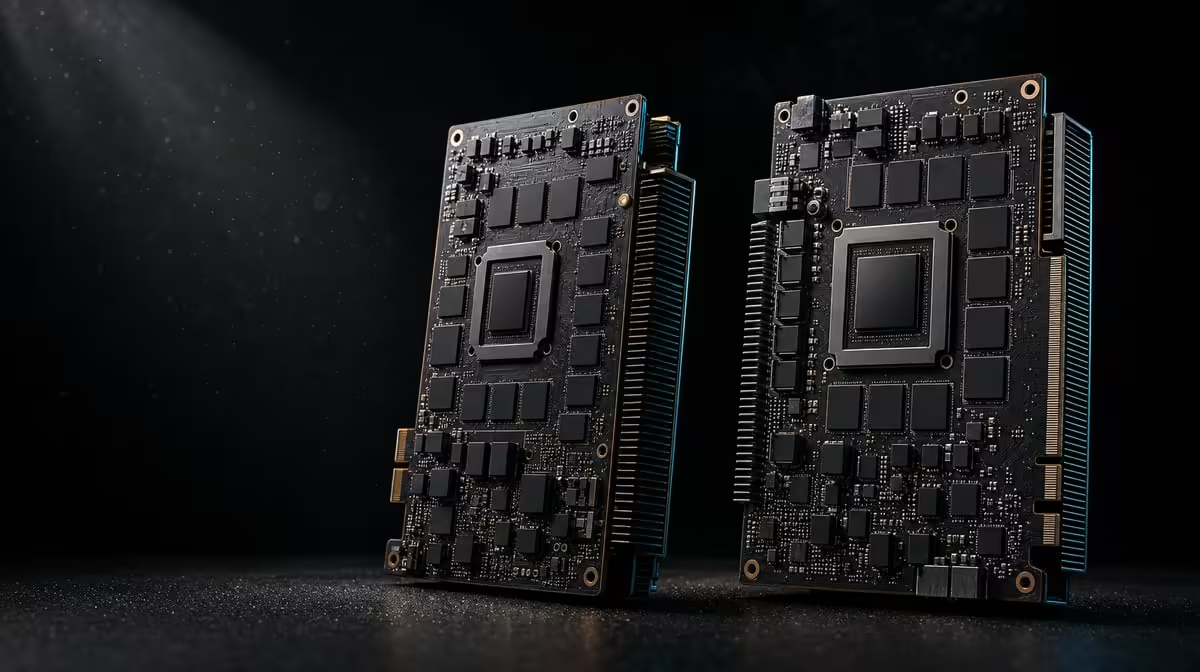
A newer memory generation is meaningful, but it never operates apart from the processor and software. GDDR7 versus GDDR6X should be judged through capacity, complete GPU design and the jobs that need to keep data close to graphics processing.
Quick Answer
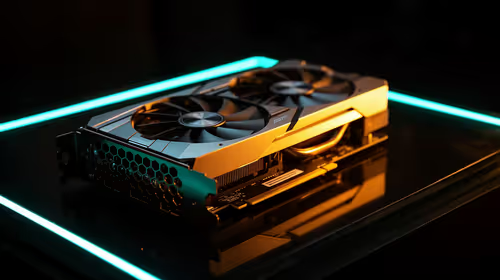
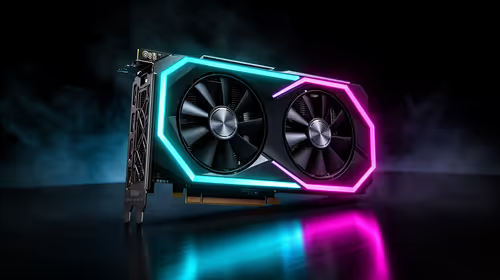
The ASUS TUF RTX 5090 costs R73,599 and provides 32GB of GDDR7. Compared with GDDR6X, GDDR7 is the newer graphics-memory generation, yet games, AI tools and creative applications gain only when the full card and their workload can use that configuration.
🧠 Separate generation from capacity
GDDR7 names the graphics-memory generation. The 32GB figure states how much is present. Those two facts answer different questions and should both appear in a comparison.
A card with newer memory is not automatically faster than every card using an earlier type. GPU architecture, memory system, software behaviour and workload all contribute. Comparing only the letters after GDDR removes too much of the product.
Capacity matters when a working set approaches a smaller pool. High-resolution game assets, complex creative data or an AI model may create that pressure, but the actual application has to be observed.
Memory allocation is not identical to productive need. Software may reserve space in advance, so a large displayed number should be interpreted alongside performance and project behaviour. Look for a repeatable limitation, not merely a monitoring bar that is not empty.
Browse Evetech's ASUS GPU collection and write memory generation and capacity in separate columns.
🎮 Match memory to the job
For games, test the titles, resolution and settings you intend to use. A game that remains limited by the processor will not gain a universal frame-rate increase simply because 32GB is available.
For creation, use a representative scene, timeline or image set. Observe memory demand and completion behaviour at the output quality that matters. Large capacity can preserve headroom, while software without the appropriate acceleration path may barely use it.
AI work should be split into model fit and processing. The RTX 5090 is rated at 3352 AI TOPs, while its GDDR7 pool holds working data. A project needs suitable software before either resource has practical value.
When a model cannot fit in the available graphics memory, the application may reduce the workload, move data elsewhere or decline to run. The response depends on the tool. Confirm that behaviour before deciding how much headroom is required.
System memory is different from VRAM. Installing a graphics card with 32GB does not add that capacity to the CPU's normal memory pool, and it does not replace adequate RAM for host-side work.
Use Evetech's NVIDIA graphics-card listings to compare whole configurations after the workload is defined.
📊 Build an evidence-led comparison
Choose two or three cards that suit the platform and price range. Record GPU model, memory type, capacity, outputs and cooling features, then attach measured results from the same game or application.
Keep versions and settings fixed. If texture quality, model precision or output dimensions change, the comparison no longer isolates the hardware choice. Include whether the task completed correctly, not merely quickly.
Track responsiveness during the run too. A creator may value being able to inspect a scene or continue editing while a large data set remains available. That practical improvement can matter even when the final export-time change is modest.
At R73,599, this RTX 5090 needs more than a generational label to justify the spend. Its five outputs, PCIe 5.0 support, patented vapor chamber and axial-tech fans can add relevant value, but only when those details match the build.
Price the complete alternative, including any platform changes it demands. A less expensive card that already fits the case and handles the measured project can deliver better value than unused memory capacity.
Check Evetech's GPU best sellers after completing the table and review current availability at decision time.
Frequently Asked Questions
What is the central difference between GDDR7 and GDDR6X?
They are different generations of graphics memory, with GDDR7 being the newer one.
How much GDDR7 memory does this RTX 5090 provide?
It carries 32GB of GDDR7.
Does newer memory guarantee higher gaming frame rates?
No. The complete GPU, game, processor, settings and other constraints shape frame rate.
Why does capacity matter for AI and creative workloads?
It can hold larger working data sets when compatible software needs that space.
Can 32GB compensate for software without GPU acceleration?
No. Capacity cannot make an unsupported application direct suitable processing to the GPU.
How should buyers compare two different memory configurations?
Compare the complete cards using the same real project or game, while recording memory use and output.
Is GDDR7 the same as the PC's system memory?
No. It is graphics memory on the card, separate from the RAM used by the host system.
Need memory that serves a real project?
Compare Evetech graphics cards by generation, capacity and measured application behaviour, then fund the configuration your workload can use.