The jump from 1080p to 4K quietly doubles or triples how much graphics memory an editing timeline demands, and the jump toward 8K workflows pushes that number further still. Anyone budgeting for a new machine needs an honest answer to how much is actually enough, and the short version points toward a 24gb creator graphics card as the sensible ceiling for both resolutions rather than a mid-range compromise.
Quick Answer
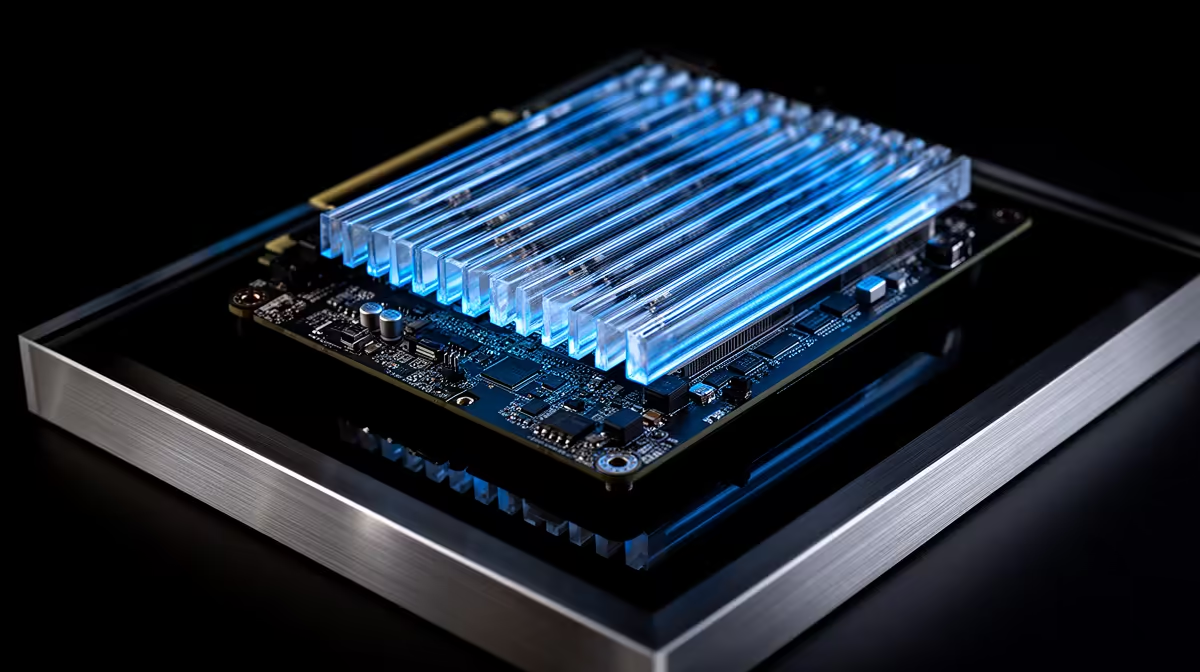
Content creators working in 4K typically need somewhere between 12 and 16GB of VRAM for comfortable editing, while early 8K workflows push that comfortably past 20GB once effects and colour grading are added. The ASRock Pro B60 Creator offers 24GB of GDDR6 for R14,399, covering both resolution tiers with room to spare rather than sitting right at the edge of what either demands.
📺 What 4K Editing Actually Costs In Memory
A 4K timeline with a handful of layers, some colour correction and standard effects generally sits within the 12 to 16GB range most editors are used to planning around. Add multiple 4K sources, heavier grading or several simultaneous effects passes, though, and that figure climbs quickly, which is where cards sitting right at 12 or 16GB start to show their limits.
Twenty-four gigabytes gives enough buffer that a moderately complex 4K project never comes close to the ceiling, which matters most for creators who add layers and effects as a project develops rather than planning the full complexity upfront.
🎥 Why 8K Pushes Past 20GB So Quickly
Eight-K source footage carries roughly four times the pixel data of 4K, and that scales directly into decoded frame size, cached previews and effect buffers. Early 8K workflows regularly push past 20GB once a project includes any meaningful grading or compositing, which is exactly the territory where a 24GB pool stops being generous and starts being necessary.
🧮 Matching Memory Capacity To Realistic Project Growth
Buying exactly enough memory for today's projects is a common mistake, since most creators end up working with larger files and heavier effects stacks within a year or two. A 192-bit memory bus paired with a 2400 MHz Xe2-HPG clock ensures the full 24GB is actually usable at speed, rather than capacity that sits unused because the card cannot move data fast enough to take advantage of it.
Full specifications are available on this product page, and similar cards can be browsed within the workstation graphics range. For other configurations from the same manufacturer, ASRock's GPU selection is worth a look too.
Frequently Asked Questions
How much VRAM does typical 4K video editing require?
Most 4K projects with standard effects and colour work sit comfortably within 12 to 16GB, though heavier grading pushes that figure higher.
Is 20GB really the threshold for 8K workflows?
Early 8K editing with meaningful grading or compositing regularly exceeds 20GB, which is why a 24GB pool offers a more comfortable margin than sitting right at that line.
Does more VRAM than needed today provide any real benefit?
Yes, since project complexity tends to grow over time, extra headroom now avoids hitting a memory ceiling partway through a future project.
Can this card handle both 4K and 8K workloads without switching hardware?
Yes, its 24GB capacity covers both resolution tiers, removing the need for separate cards depending on project resolution.
Why does the memory bus matter as much as total VRAM capacity?
A wider bus lets data move in and out of the memory pool fast enough that the full capacity actually gets used rather than becoming a bottleneck itself.
Ready to size your VRAM to your export resolution?
View the Pro B60 Creator card part of Evetech's creator graphics cards, tagged at R14,399, built to size VRAM correctly for 4K and 8K export work.