Quick Answer
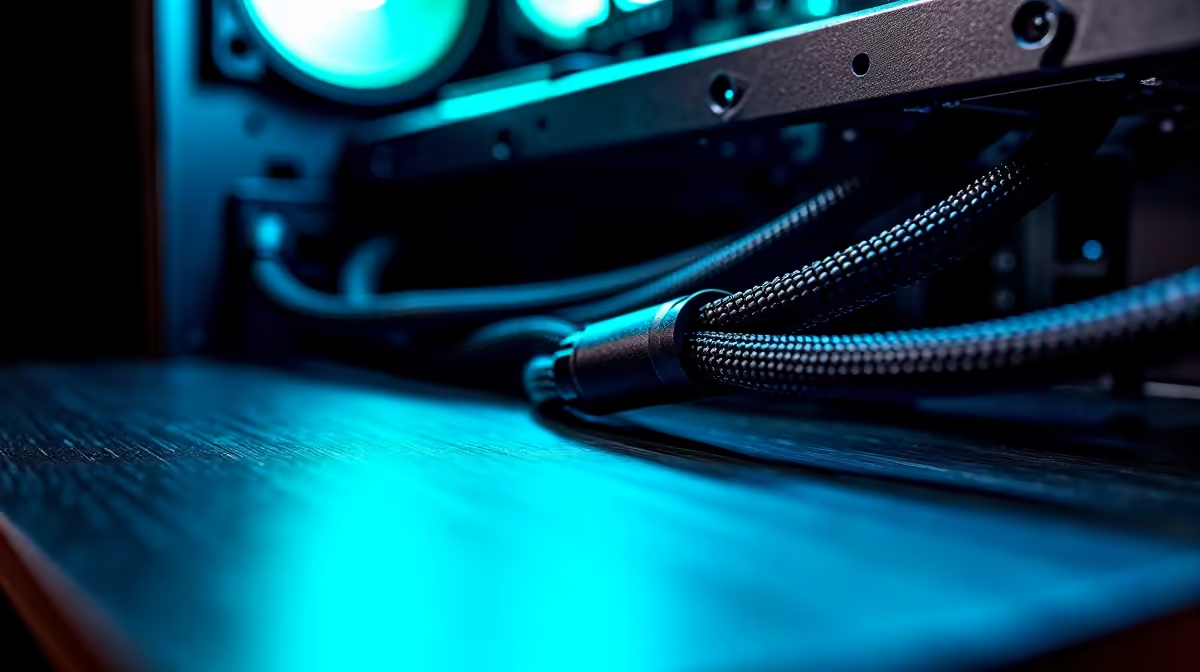
Cable management in a PC case involves routing power supply cables behind the motherboard tray, using the case's built-in tie-down points and velcro straps, and planning your cable paths before installing components. A clean build improves airflow, makes future upgrades easier, and looks great through a glass side panel.
Tools and Supplies You Need Before You Start
Good cable management does not require expensive tools, but having the right supplies on hand makes the job much easier:
- Velcro cable ties (reusable and safer for cables than zip ties)
- Zip ties (for permanent routes where aesthetics matter less)
- Cable combs (for GPU and EPS cables if you want a clean look)
- A flat-head screwdriver or guitar pick (to help route cables through tight grommets)
- Zip tie cutters (safer than scissors for trimming flush)
If your case has rubber grommets in the motherboard tray cutouts, check that they are seated before you start routing. Most mid-tower and full-tower cases include grommets, but some budget cases omit them. Check PC cases at Evetech if you are also shopping for a case with good cable management features.
Step-by-Step Cable Routing Process
Step 1 - Plan before you connect. Look at your case's cable routing channels - typically a gap of 15-30 mm behind the motherboard tray. Identify where the grommets are and mentally map which cables will pass through which openings. The 24-pin ATX cable, the EPS (CPU power) cable, and the GPU power cables are the three you should plan first because they are the thickest.
Step 2 - Install the PSU first. Mount the power supply before installing any other components. Route the cables you will need through the back panel before plugging them into anything. It is far harder to route cables after the motherboard, GPU, and drives are installed.
Step 3 - Run the EPS cable early. The EPS (4-pin or 8-pin CPU power) cable goes from the PSU at the bottom or rear to the top-left of the motherboard. This is the longest run and the most awkward to route after other components are in. Run it before the motherboard goes in, or immediately after the motherboard is mounted and before anything else.
Step 4 - Install the motherboard and drives, then route 24-pin ATX. The 24-pin main power connector routes through the right side of the motherboard tray, entering near the DRAM slots. Use the grommet closest to the 24-pin connector for a clean entry. Bundle excess length behind the tray.
Step 5 - GPU power cables last. Wait until the GPU is seated to route the GPU power cables. Route them from behind the tray and bring them up through a grommet just below the GPU. Cable combs on the PCIe cables make a visible difference if your case has a glass side panel.
Step 6 - Tie and bundle. Use velcro ties at every case tie-down point. Bundle cables heading in the same direction together. Avoid running cables across the main airflow path between your intake fans and the GPU.
Reliable Everyday Performance
If you are building a PC in South Africa and plan to use a UPS, add a UPS power cable and surge protector to your cable management plan from the start. Run the UPS cable to a fixed point at the back of your desk and keep it out of foot-traffic areas. Avoid daisy-chaining extension cords from the UPS - a direct connection to the PC and monitor is safer and reduces voltage drop during power transitions. Good cable management behind your desk is as important as inside the case.
Frequently Asked Questions
Do modular PSUs make cable management easier? Yes, significantly. Fully modular PSUs let you connect only the cables you need, eliminating unused cable bundles stuffed behind the tray. Semi-modular PSUs keep the 24-pin and EPS cables permanently attached but let you choose other cables. Both are better than non-modular PSUs for cable management.
What is the best way to hide excess cable length? Coil and velcro-tie excess cable length behind the motherboard tray. Most mid-tower cases have enough depth behind the tray to hide 150-200 mm of excess. Avoid tight coils on power cables as this can cause heat build-up in extreme cases.
Does cable management actually improve airflow? Yes, especially in compact cases. Cables routed through the front of the case can block airflow from front intake fans to the GPU. A tidy build with cables routed behind the tray or along the edges keeps the airflow path clear and can improve GPU temperatures by 2-5 degrees Celsius under sustained load.
Ready to Find Your Perfect Match? Shop PC cases and components for your build at Evetech