


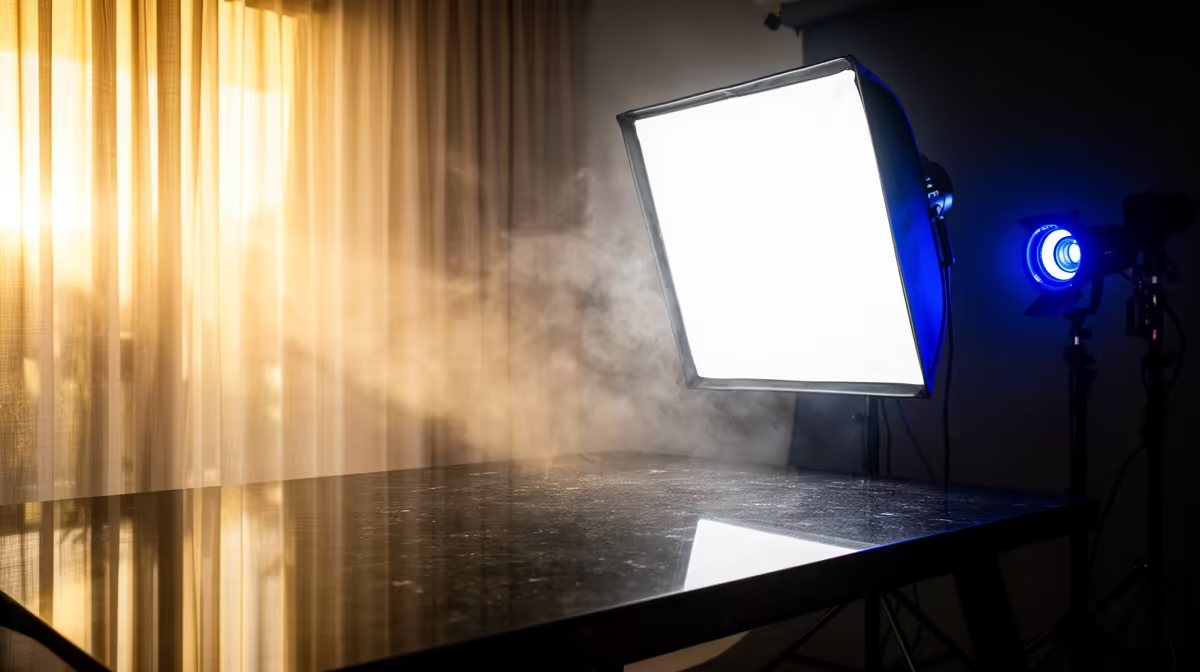
Filming indoors in South Africa means wrestling with sun that moves fast and hits hard. A patch of direct midday light through an east-facing window can double the brightness on one side of your face, then creep off-frame ten minutes later, leaving a completely different exposure on your second take. The fix for managing harsh SA sunlight indoors is not finding a clever angle -- it is removing the variable entirely so your softboxes do all the work.
Quick Answer
Block the window with a blackout blind so sunlight stops shifting your exposure mid-shoot. Then light entirely with softboxes set to 5500K daylight. This gives consistent, repeatable brightness every session regardless of the time of day or cloud cover outside.
🌗 Why Moving Sunlight Wrecks a Take
The sun tracks roughly 15 degrees across the sky per hour. At that rate a patch of direct light drifts several centimetres across your face every minute. For still photography that movement barely matters. For video it means your editor finds a face that is correctly exposed in one clip and blown out on the same side in the next.
The problem is worse in the strong midday light common across Joburg and Cape Town summers. When the angle is high, the sun punches through a window and carves hard shadows under the nose and chin that no softbox can counterbalance once they are baked into the footage.
🔧 Setting Up the Blackout Layer
A blackout blind rated for photographic use blocks between 95 and 100 percent of incoming light. Standard blackout curtains help but rarely achieve a full block -- a thin strip leaking around the edge is enough to create uneven colour when it catches the side of the face.
If a permanent blind is not practical, black polypropylene fabric taped or clamped over the frame gives the same result at lower cost. Test it by filming a grey card at your usual ISO and shutter, then stepping outside and checking whether your histogram moves. If it stays flat, the block is working.
⚡ Replacing Sunlight With Controlled Softboxes
Once the window is blocked, two 45W softboxes give you everything the window was providing, minus the unpredictability. Position one as a key light at 45 degrees to your face and one as a fill at lower power on the opposite side. Set both to 5500K daylight. If any sunlight leaks past the blind, it blends with daylight-balanced softboxes rather than adding a warm cast to one side of the frame.
Fix your camera to manual exposure, set the shutter to 1/50 second to stay in step with SA mains frequency, and lock ISO and aperture. The image will not shift between takes.
Pro Tip ⚡
Tape a sheet of white foam board flat against the wall opposite your key light. It acts as a free fill reflector, opening shadow detail without a second stand. In a tight koshuis room or small Joburg flat, this saves floor space while keeping the shadow side of the face visible.
Frequently Asked Questions
How do I stop sunlight changing my exposure between takes?
Fit a blackout blind or opaque fabric over the window and shoot entirely under softbox lighting. With the window sealed and your softboxes at fixed power, every take in that session will match in brightness and colour regardless of what the weather is doing outside.
Why does a moving sun patch cause continuity problems for video?
The patch brightens everything it touches and then drifts away. Because video exposure is locked once per session, that temporarily brighter area reads as overexposed against the rest of the frame and will not match adjacent clips shot only minutes apart, even with no camera change.
Can I use morning sun as a key light instead of blocking it?
Early or late when the angle is low and the colour is warm, sunlight through a sheer curtain can work. Harsh midday sun at steep angles carves deep under-nose shadows and blows highlights. For consistent results across a full shoot day, artificial lighting is more reliable than waiting for the right natural window.
What colour temperature should indoor studio bulbs be set to?
5500K daylight is standard for video work. If any window light leaks past the blind, bulbs at 5500K blend with it rather than creating a split-tone where one side of the face reads warm and the other reads cool. Keep both softboxes at the same temperature.
Will sheer curtains alone give enough diffusion to shoot without softboxes?
Sheer curtains scatter direct sun and reduce the sharpest midday shadows, but the output still tracks with the sun's movement. A blackout layer plus softboxes removes both the movement and the hard edges. For one-off portraits in soft morning light, curtains may be sufficient; for repeatable video work, full control is more reliable.
Ready to take full control of your studio lighting? Browse the softbox and continuous lighting range at Evetech and build a setup that gives you the same clean, consistent exposure every single session.










