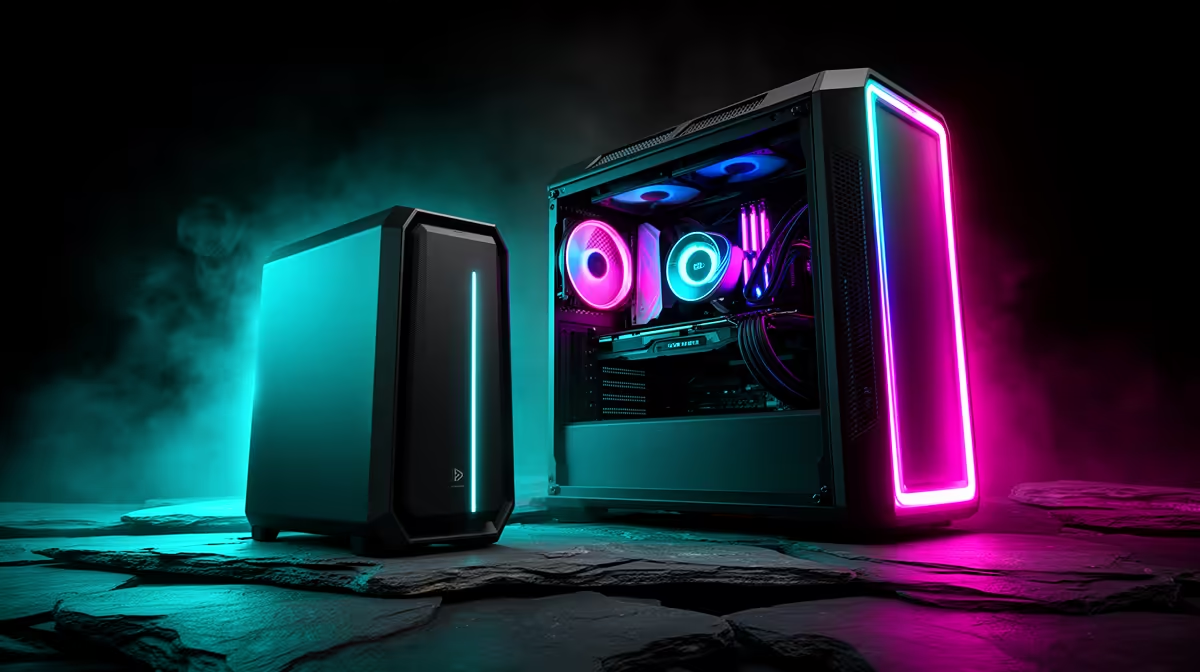
Desk space evaporates fast once a full tower, a monitor arm and everything else in your setup fights for the same surface. A gaming mini pc sidesteps that entirely, though the real question isn't whether it fits, it's what you trade away to get there, and whether that trade suits how you actually play.
Quick Answer
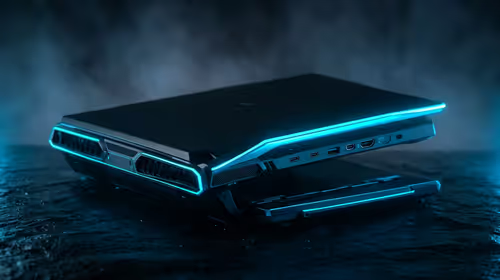
The ASUS GR70 costs R66,399 and gives up some future upgrade room for a footprint far smaller than a full tower. With sixteen Ryzen 9 9955HX cores and an 8GB RTX 5070 inside, most players never notice the missing case volume once they're actually in a match.
🖥️ Size Against Upgrade Room
A full-size desktop wins on raw expandability: extra drive bays, room for a bigger cooler, and easier component swaps years down the line all favour a large case. This machine answers that with 32GB of onboard memory alongside a terabyte-class NVMe drive already fitted, so the parts that matter most day to day are covered from the start rather than left as future purchases.
🎮 Performance Sits in the Same Class
A smaller chassis does not mean smaller specs here. The RTX 5070's 8GB handles ray tracing and high frame rates the same way it would in a larger case, while Wi-Fi 7 and a 2.5G LAN port cover networking without needing extra add-in cards.
📦 Where the Real Compromise Shows Up
The honest trade-off is internal access and thermal headroom, not gaming power. A full tower has more room for airflow and easier swaps later, while this Ryzen 9 and RTX 5070 build prioritises a compact, ready-to-use setup instead. For buyers who are not planning frequent internal upgrades, that trade is easy to accept.
🔌 Who Actually Suits Which Option
A full tower still makes sense for anyone who treats swapping parts as a hobby, wants a specific cooling loop, or expects to replace individual components every couple of years. This kind of build suits the opposite priority: set it up once and spend more time gaming than maintaining hardware. Shared housing, small apartments and dorm rooms all tend to favour the smaller footprint too, since a tower and matching monitor setup can eat more desk and floor space than many rooms comfortably allow. To compare footprints side by side, Evetech's mini PC lineup lists the current range, and checking pricing on graphics cards is worth doing if a discrete GPU upgrade for an existing tower is the alternative you are weighing instead.
Frequently Asked Questions
Is a mini PC actually as powerful as a full tower?
For gaming, yes in most cases, since this machine uses the same class of CPU and GPU found in mid-tower builds.
What do you actually lose by choosing this format?
Mainly internal upgrade room and airflow space, since a full tower makes later component swaps and cooling upgrades easier to carry out.
Does the compact size limit connectivity?
No, it still offers HDMI, DisplayPort, Thunderbolt-enabled USB-C, Wi-Fi 7, Bluetooth 5.4 and 2.5G LAN despite the smaller chassis.
Is R66,399 reasonable for this class of machine?
Given the sixteen-core processor, 8GB RTX 5070 and terabyte of storage included, that price sits in line with similarly specced towers.
Can storage or memory still be upgraded later?
Some paths remain possible depending on the specific model, but a mini PC generally offers less internal room than a tower for adding extra drives or memory down the line.
Ready to decide between a mini PC and a full tower?
Browse this RTX 5070 mini rig on Evetech's mini PC lineup, marked at R66,399, a useful reference for judging a compact build against a full-size desktop.