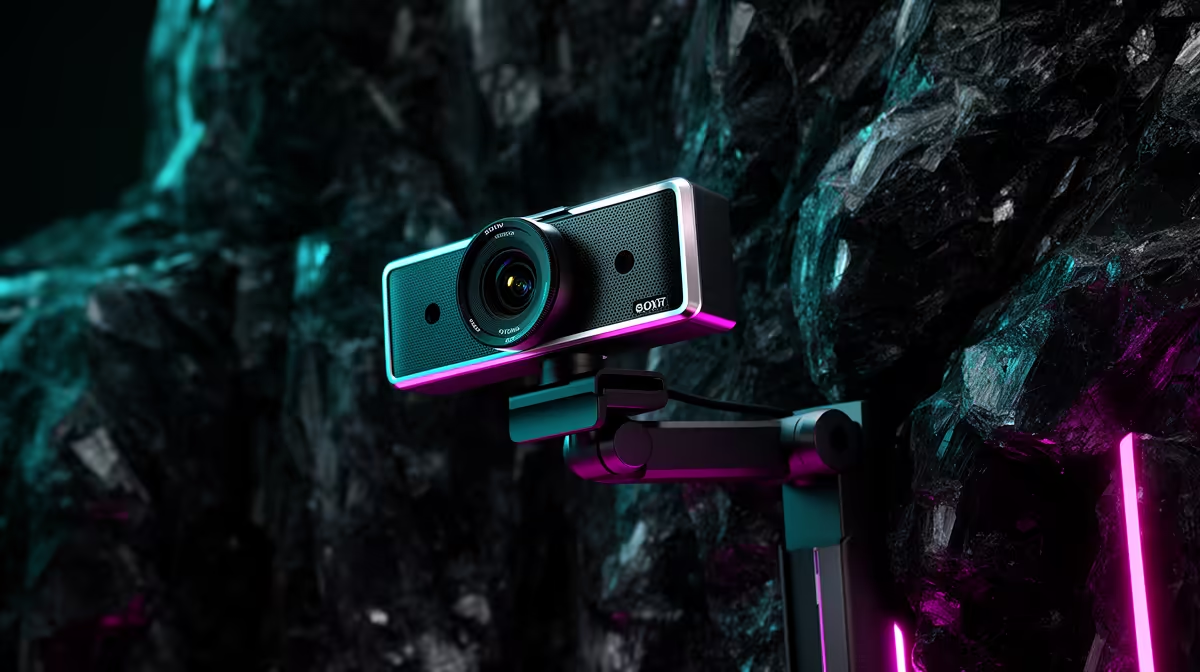
Mobile-first content has changed what a streaming setup needs to handle. Short-form video lives in a 9:16 frame, and if your webcam mount cannot rotate the camera between landscape and portrait, you need two separate recording setups to serve both formats. The right mount solves this without buying a second camera, keeping the same lens covering a desktop broadcast one moment and a vertical mobile clip the next.
Quick Answer
A ball-head mount or tilt-head tripod lets you rotate the webcam 90 degrees for portrait orientation. Enable rotation in your streaming or recording app to flip the 16:9 signal to 9:16. A monitor clip handles landscape only; a tripod is needed for stable portrait framing.
🔧 Monitor Clips vs Tripods: Which Mount Handles Rotation
A standard monitor clip attaches to the bezel and positions the camera looking straight ahead. Most are designed for landscape use and either do not swivel 90 degrees or, if they do swivel, produce an unstable hold at the rotated angle because the clip's grip was designed for the horizontal weight distribution of a landscape-oriented camera.
For portrait orientation, a desktop tripod is the more reliable choice. A compact tripod with a tilt-and-swivel head, around 25 to 35cm in working height, positions the camera at desk level and allows a true 90-degree rotation to portrait without the weight balance issue that affects monitor clips. The camera is now tall rather than wide, and the tripod's broad base keeps it steady without any forward droop.
A ball-head tripod mount is the most flexible option. A single locking knob releases the ball, you rotate the camera to any angle including portrait, and re-locking the knob holds the position firmly. Many travel tripods under R400 use this design and work well for desk-mounted webcam use.
📱 Getting the 9:16 Signal Into Your App
Rotating the camera physically turns the image on its side. To your streaming or recording software the signal still arrives as 1920 by 1080 in landscape. You need to tell the software to rotate and crop it to true 9:16, which most modern stream apps handle through a scene transform or video filter.
In OBS, right-click the webcam source, select Transform, and set rotation to 90 or 270 degrees, then set the output canvas to 1080 by 1920 for a true portrait export. TikTok Live handles the rotation natively when you select the vertical streaming option. The resulting frame uses the sensor's 1080-pixel width as the portrait height, with a 4K source retaining more detail before downscaling.
🎯 Eye Level and Camera Height in Each Orientation
Camera height and angle matter differently in each orientation. For landscape streaming, the camera typically sits on the monitor bezel and looks down slightly, which is the standard convention. For portrait content, the camera should sit closer to face height, because a 9:16 frame with a top-heavy composition, too much space above the head and a chin at the bottom, looks awkward on a phone screen.
Position a portrait-oriented camera so your face sits in the upper third, with your upper body filling the lower portion. This matches the scroll-stop composition that performs on vertical platforms. A 30cm desk tripod usually gets the lens close to the right height for a seated presenter, and a small tilt adjustment locks the framing.
Frequently Asked Questions
How do I rotate a webcam properly for portrait-format streaming?
Attach the webcam to a ball-head mount or a tilt-head tripod, turn the camera 90 degrees until the lens is oriented vertically, and lock the head. Then go into your recording or streaming software, rotate the video source to match, and set the output canvas to 1080 by 1920 for true 9:16 portrait output.
Will turning my webcam to portrait change its resolution?
The sensor resolution stays the same but the aspect ratio of usable footage changes. A 1080p landscape sensor rotated to portrait uses its 1080-pixel horizontal width as the new vertical height, producing a 1080-pixel-tall output. You lose the portions of the frame that were left and right in landscape, which now fall outside the portrait crop, trimming the horizontal field of view.
What mount holds a webcam at the right height for a desk setup?
A weighted desktop tripod of around 25 to 35cm in extended height positions the camera near face level for a seated presenter. Look for a model with a 1/4-inch thread fitting, which is the standard webcam mount thread, and a head that locks firmly when set to portrait orientation without creeping under the camera's weight.
Can a heavy webcam slip on a thin monitor bezel in landscape?
It can, particularly if the clip's rear counterbalance is not matched to the camera weight. Most monitor clips specify a maximum camera weight on the packaging, typically 100 to 200g. If your camera is near the upper limit, look for a clip with an adjustable rear foot or counterweight to prevent the front from drooping forward over time.
Ready to set up a webcam that switches between landscape and portrait without buying a second camera?
Browse the webcam mounts and tripods at Evetech to find the right rotating mount for your desk, whether you are building for streaming, short-form video, or both.