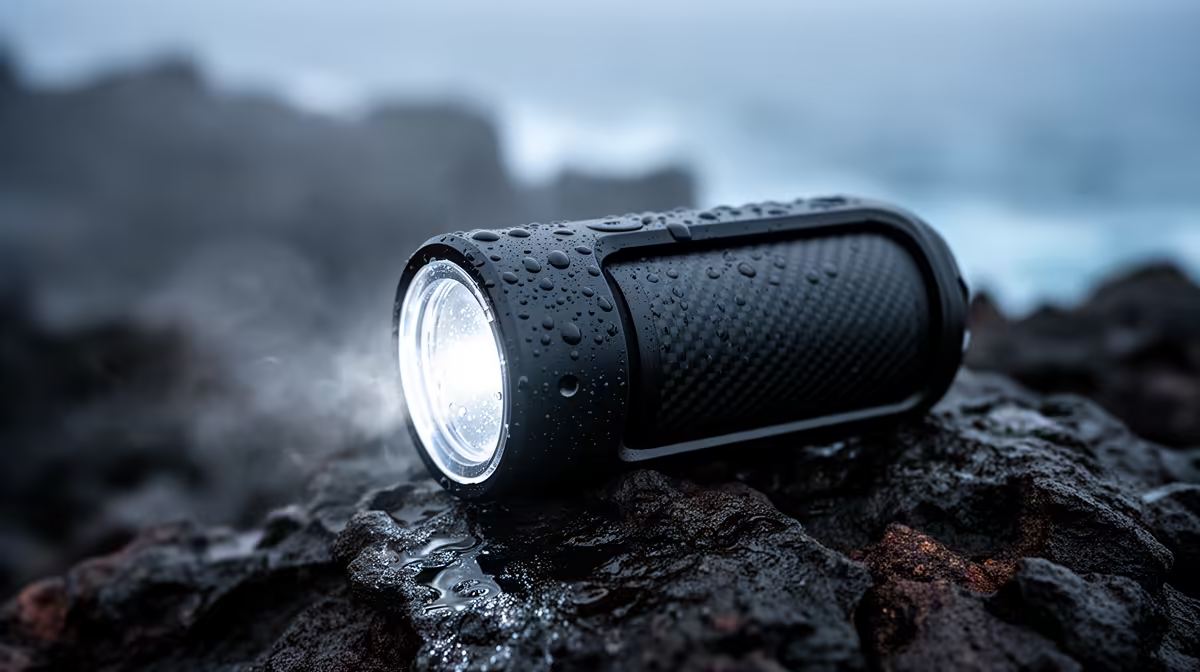
Coastal South Africa is rough on electronics. The sea air rolling into Cape Town from Table Bay and the humidity sitting over Durban's beachfront carries fine salt particles that settle invisibly on every surface they touch, including the contacts, cooling vents, and LED panels of your portable lighting gear. Protecting portable lighting from coastal humidity and dust is not complicated, but it requires consistency. One careless storage session after a beach shoot undoes months of careful handling.
Quick Answer
Store lighting gear in a sealed hard case with silica gel sachets after every coastal shoot. Wipe all surfaces with a dry microfibre cloth within the hour to remove salt residue before it dries and bonds. A few small habits extend gear life significantly in Cape Town and Durban conditions.
🌊 What Coastal Air Actually Does to Your Gear
Salt does not corrode metal in a dramatic, visible way. It works slowly, settling on connector pins and binding points in a thin layer that is almost impossible to see until the damage is done. On LED driver boards, oxidised contacts create resistance that eventually shows up as flickering output or a panel that refuses to power on. On adjustment knobs and tilt mechanisms, the residue builds up over months and turns smooth controls stiff.
Humidity accelerates the process. High relative humidity, common in Durban through summer, means condensation can form on cold metal surfaces when you bring gear from an air-conditioned vehicle into warm outdoor air. That moisture layer is the carrier that lets salt and fine sand particles bond more aggressively to your gear than they would in dry Highveld conditions.
🔧 Case Ratings and Storage Choices
Hard cases rated IP65 or above seal out fine beach sand that scratches lens surfaces and blocks a light's cooling vents. Foam-lined cases cushion gear against transit while the sealed lid keeps humidity and particles out. Use closed-cell foam rather than open-cell: open-cell traps moisture, closed-cell repels it.
Silica gel sachets do the heavy lifting inside the case. A few 50-gram desiccant packets actively pull moisture from the enclosed air, keeping internal humidity low enough to prevent condensation on cold components. Recharge them every few months in a low oven for an hour.
✨ Post-Shoot Cleaning Habits
The single highest-impact habit is wiping gear down within the hour, before any salt mist dries and crystallises on the housing. A dry microfibre cloth handles the outer casing, handles, and mounting points. For connector contacts, a cotton bud with isopropyl alcohol clears oxidation from XLR pins and power ports cleanly; let it evaporate before reconnecting.
After wiping down, let gear breathe at room temperature for thirty minutes before sealing the case. Closing it while still warm traps residual moisture. A light rain cover is worth carrying during coastal shoots to shield panels from sudden sea spray before it ever reaches the housing.
Frequently Asked Questions
How does salt air cause damage if I cannot see it settling?
Fine salt particles are small enough to enter open ports, settle on circuit board contacts, and coat connector pins without forming a visible crust initially. The damage accumulates over many exposures as the salt draws moisture and creates micro-corrosion on metal surfaces. The first visible sign is often a flickering panel or stiff control that was smooth six months ago.
Do silica gel packs make a meaningful difference in a hard case?
Yes. A sealed case with a few desiccant sachets holds internal humidity well below the level where condensation forms on cold components. Without them, a sealed case traps whatever humid air was present when you closed it. Refresh the sachets every two to three months and they continue working effectively.
What should I clean after a beach or harbour location shoot?
Wipe the outer housing, handles, tilt joints, and all connector ports with a dry microfibre cloth. For metal contacts and pins, a cotton bud with isopropyl alcohol removes any salt film. Check cooling vents for fine sand and clear them gently. The goal is removing all residue before it dries and bonds.
Is it safe to seal gear away straight after a shoot?
Not immediately. Let gear cool to ambient room temperature first, roughly 30 minutes after a shoot, before closing it into a sealed case. Sealing hot gear traps residual moisture from operation. Once it has reached room temperature, add the silica gel sachets and close the lid.
Does the same care apply to gear stored at home near the coast?
Yes. If your studio or storage space is within a few kilometres of the ocean, normal indoor storage without sealed cases still exposes gear to elevated humidity and background salt air. A sealed case with desiccant packs is the standard even for gear that rarely leaves home in coastal cities.
Ready to protect your location lighting investment? Browse the portable lighting range at Evetech and pair it with the protective cases and accessories built for South African on-location work.