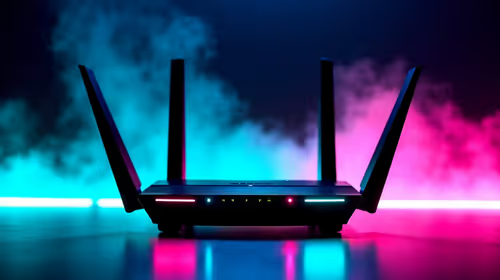
A reboot that restores the internet every few days is a clue, not a maintenance plan. To solve a router needing constant reboots, inspect firmware, heat, power and resource load until the failure has a repeatable cause.
Quick Answer
A reboot can clear a temporary software state, reset a radio or recover a failing connection, but it does not prove a memory leak or overheating. Daily reboot dependence can also come from old firmware, a weak power adapter, ISP hand-off trouble, excessive load or one bad client. Record the fault before restarting, check logs and temperature, update through the manufacturer and test the supplied power path. Scheduled reboots hide evidence. Replace the router when a repeatable fault remains after safe, supported checks.
Capture the failure first
Note whether Wi-Fi disappears, Ethernet fails, internet access drops or the admin page stops responding. Check indicator lights and whether every device is affected.
Ping the router and an approved external target. A clean first hop with no internet points beyond the client radio. A dead first hop across Ethernet and Wi-Fi points towards the router or power.
Save logs through the supported interface before rebooting because volatile entries can disappear.
Check heat, power and firmware
Give the router clear ventilation on a stable surface. Remove dust around vents without opening the case and keep it away from sun or another hot device.
Use the manufacturer-supplied power adapter or an approved exact replacement. A wrong voltage, polarity or current rating can damage equipment. Replace a damaged lead through the support route.
Install current firmware from the manufacturer and keep a settings backup. A firmware update can fix a known leak or radio bug, but it is one diagnosis step rather than a guarantee.
Test the load
Disconnect abandoned clients, pause heavy transfers and watch whether stability returns. Reintroduce normal calls, streams and downloads in stages.
If failure arrives during a full upload, test bufferbloat and router CPU load where exposed. If one client triggers it, update that device and check for a network loop or faulty Ethernet link.
Ask the ISP about its gateway or line when the router remains reachable but the WAN session drops.
Keep any scheduled reboot disabled during the diagnosis. If the manufacturer or ISP asks you to use one as a temporary measure, record its time and the next failure. A workaround should not erase the support case.
Decide when replacement fits
Unsupported firmware, swelling or damaged power hardware, repeatable overheating, failing ports and crashes under ordinary supported load justify action. Stop using equipment with a burning smell or physical damage and follow safe support guidance.
Compare routers and networking equipment for current firmware support, ports and measured household load. Check current accessories only for a compatible network lead or approved interface need.
FAQ
Does daily rebooting prove a memory leak?
No. It can reset several faults. Logs, firmware history, load and power tests are needed to narrow the cause.
Is an automatic reboot a good fix?
It can hide the pattern and interrupt users. Use it only as a short documented workaround while you diagnose.
Can the power adapter cause instability?
Yes. Use the supplied or manufacturer-approved specification and replace damaged power parts through a safe route.
Capture the next failure before rebooting, then test firmware, ventilation, power and load one at a time until the fault has a repeatable cause.