Quick Answer
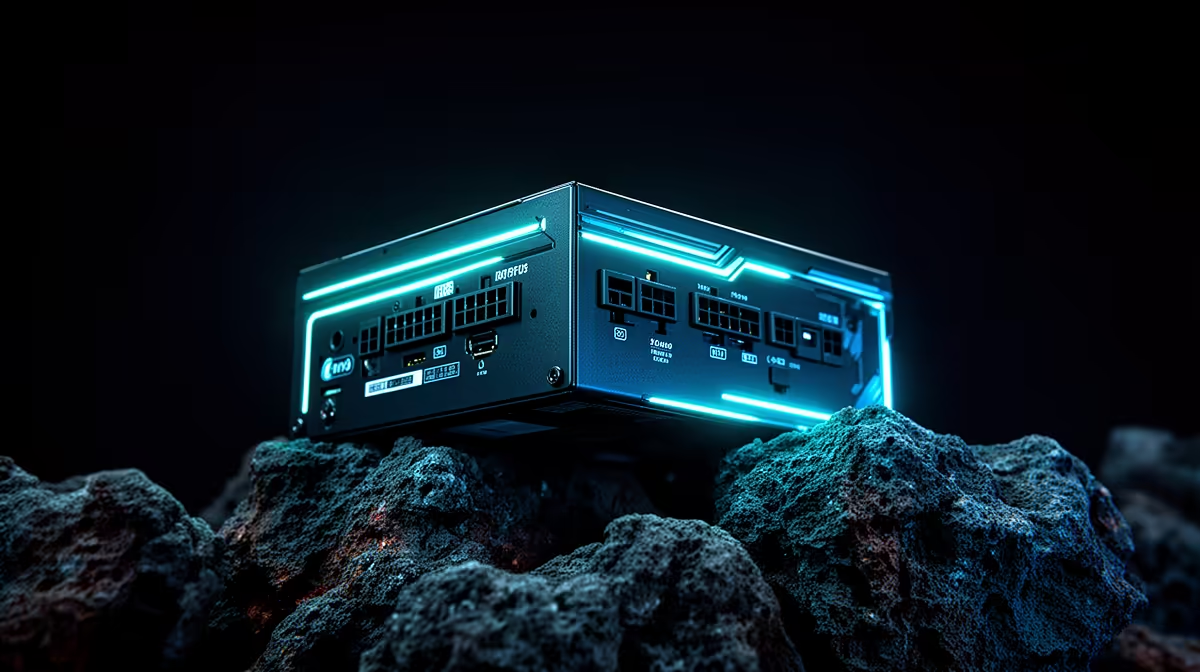
For an RTX 5080 build, choose a quality 1000W PSU if you are pairing it with a high-end CPU, many drives, or quiet power headroom; choose 850W only for a lean, well-planned gaming build with a reliable Gold-rated unit. The connector quality matters as much as the wattage number.
Why 1000W Is Safer
A high-end GPU can create short power spikes, and a stronger PSU handles those spikes with less fan noise and more reserve. A Ryzen 7 9800X3D gaming build can be fine on less power than a Ryzen 9 or Core i9 workstation, but headroom keeps the system calmer. Choose ATX 3.0 or ATX 3.1 with the correct 12V-2x6 or 12VHPWR support.
When 850W Still Works
An 850W Gold unit from a reputable line can work if the build is simple: one GPU, one mainstream high-end CPU, a few SSDs, and no extreme overclocking. Do not reuse an old unknown PSU just because the label says 850W. Cable condition, platform quality, and warranty age matter.
SA Budget Fit
On a R20,000 supporting-parts budget, the PSU is not where to cut corners. Broadly reserve R2,000-R4,500 for a serious high-end PSU class, then confirm live Evetech stock. A Corsair RMx, Seasonic Focus, Super Flower Leadex, or ASUS ROG Thor-class unit gives a sensible reference point.
FAQ
Will 850W damage an RTX 5080?
Not if it is a quality unit and the full build power draw is sensible. Problems come from weak platforms, poor cables, and too little headroom.
Do I need ATX 3.0 or ATX 3.1?
It is strongly preferred for new high-end GPU builds. Native connector support reduces adapter clutter and makes cable routing cleaner.
Is Platinum efficiency required?
No. Gold quality is often enough, while Platinum can reduce waste and heat slightly. Build quality matters more than the badge alone.
Buyer Check
Buy the PSU for the next GPU as well as this one; native cable support and headroom save more trouble than a small upfront saving.