




Magnetic vs Clamp Phone Mounts: Which Car Mount Is Best for You?
Choosing between magnetic vs clamp phone mounts for your car? Discover the pros, cons, and stability features to ensure your device stays secure on every drive. 📱🚗
Read moreIs a transparent phone mount the key to clearer windshield views? 🚗 We analyze if these see-through accessories actually reduce obstruction while driving or if they’re just a clever marketing gimmick. Find out which mount keeps your dash clean. 📱

The marketing claim sounds straightforward: a clear phone mount reduces windscreen obstruction. But is that actually true, and does it hold up over time? A sceptical look at transparent phone mount designs reveals a more complicated picture than the packaging suggests.
A transparent mount does reduce the bracket's visual footprint, but the phone itself remains fully opaque and is the primary obstruction. Transparency helps at the margins. Additionally, clear polycarbonate housings can yellow within 12 to 18 months under direct sun, negating the benefit. The verdict: useful but not transformative, and long-term clarity depends on material quality.
A mount's clear housing makes the bracket body harder to notice, which is genuinely useful. But the obstruction a driver actually experiences is mainly the phone. A 6.5-inch smartphone covers roughly 95 square centimetres of windscreen. The bracket arms around it might add another 10 to 20 square centimetres. So transparency tackles the smaller portion of the problem. If your real concern is forward visibility, the placement of the mount matters far more than whether the bracket is black or clear. A transparent mount in the wrong position is still a hazard; a small black mount positioned below your natural sightline may obstruct less in practice.
Polycarbonate is the standard material for clear phone mounts, and it is not naturally UV-stable. South African sun, particularly through a north-facing windscreen in Joburg or on the Cape Flats, accelerates photo-oxidation. Within 12 to 18 months, many budget clear mounts develop a yellow-amber tint. A yellowed mount is no longer transparent, it is simply a discoloured bracket, and the original benefit has evaporated. Higher-quality mounts use UV-stabilised polycarbonate or pair a clear housing with a coated surface. These typically cost R200 to R400 and hold their clarity considerably longer. Inspect any clear mount after its first summer before trusting the marketing claim.
A transparent mount earns its place when two conditions are met: the material is UV-stabilised so clarity persists, and the mount has a genuinely small footprint rather than a large clear body that is still visually present. For drivers using the mount daily over a year or more, the material matters. For occasional use, a compact opaque mount placed correctly is often equally effective. The clearest practical benefit of a transparent design is aesthetics inside the cabin, which matters for many drivers even if the safety uplift is incremental. Price bands of R150 to R350 cover most reputable options; anything below R120 is likely standard polycarbonate that will haze.
Marginally, yes. The bracket becomes harder to notice at the periphery. The phone itself is still fully opaque, so the primary obstruction is unchanged. Positioning the mount low on the windscreen has a bigger impact on visibility than the mount's colour.
Under direct South African sun, budget clear mounts made from standard polycarbonate can begin hazing within one summer. By 18 months, many show a visible amber tint. UV-stabilised grades last significantly longer but cost more.
Yes, mounts that specify UV-stabilised polycarbonate or use a clear hard-coated housing hold their clarity better. Keeping the mount away from direct sun when parked, such as using a windscreen shade, also extends its useful life.
There are plastic polishing compounds that can reduce surface hazing, but yellowing caused by deep oxidation through the material is not reversible. Polishing helps with surface scratches and mild haze but will not return a deeply yellowed mount to clear.
Neither is categorically preferred by traffic law; both are subject to the same windscreen-obstruction rules. The key compliance factor is positioning, not colour. A clear mount placed in a problematic sightline is as non-compliant as an opaque one in the same spot.
Looking for a mount that genuinely delivers what it promises? Check out Evetech's full selection of car phone mounts, including compact designs built to perform in SA conditions across every season.
Marginally, yes. The bracket becomes harder to notice at the periphery. The phone itself is still fully opaque, so the primary obstruction is unchanged. Positioning the mount low on the windscreen has a bigger impact on visibility than the mount's colour.
Under direct South African sun, budget clear mounts made from standard polycarbonate can begin hazing within one summer. By 18 months, many show a visible amber tint. UV-stabilised grades last significantly longer but cost more.
Yes, mounts that specify UV-stabilised polycarbonate or use a clear hard-coated housing hold their clarity better. Keeping the mount away from direct sun when parked, such as using a windscreen shade, also extends its useful life.
There are plastic polishing compounds that can reduce surface hazing, but yellowing caused by deep oxidation through the material is not reversible. Polishing helps with surface scratches and mild haze but will not return a deeply yellowed mount to clear.
Neither is categorically preferred by traffic law; both are subject to the same windscreen-obstruction rules. The key compliance factor is positioning, not colour. A clear mount placed in a problematic sightline is as non-compliant as an opaque one in the same spot.
Choosing between magnetic vs clamp phone mounts for your car? Discover the pros, cons, and stability features to ensure your device stays secure on every drive. 📱🚗
Read more
Are compact magnetic phone mounts worth it for South African commuters on a budget? 🚗 Discover if these affordable gadgets offer the stability you need for daily drives and long road trips. Stay connected safely without breaking the bank! 📱
Read more
Discover why magnetic phone car mounts are the top choice for South African drivers. 📱 Learn how to choose the perfect vent mount for your vehicle and ensure a secure, hands-free experience on every road trip. 🚗
Read more
Discover how SecureGrip vent clip mounts provide superior stability for your smartphone. Learn the mechanics behind the clamp and why it matters for your daily drive. 📱🚗
Read more
Stop struggling with bulky mounts. We break down the essential compact car phone holder features that ensure stability, safety, and ease of use for your daily commute. 🚗💨 Find your perfect fit.
Read more
Discover how 360 rotatable phone mounts transform your viewing experience. We break down design mechanics and rotation range benefits to help you choose the perfect setup for your car, desk, or studio. 📱✨
Read more
Windows 11 spatial sound greyed out needs an output-device check before a headset purchase. Select the intended playback device and look for Windows Sonic for Headphones. Speaker, HDMI and headphone routes can expose different spatial sound options.
DisplayPort 2.1 vs DisplayPort 1.4 for aAA single-player gaming Difference explained is mostly about compatibility, budget, upgrade path, and setup fit. SA buyers should check device support and real needs before expecting a clear win from either.
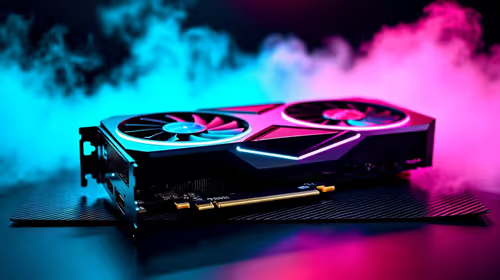
RTX 4080 too expensive? Cheaper SA alternatives should solve the exact workload without overbuying. Compare nearby options by GPU tier, VRAM, cooling, and PSU headroom, local warranty path, and total build balance before moving to a product page.
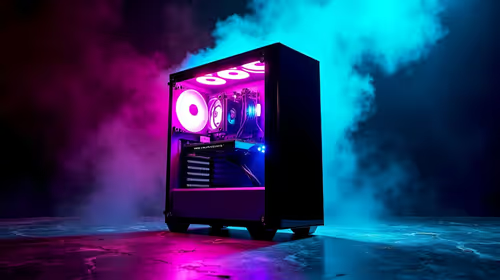
Recommended build for Hollow Knight Silksong at R100 000 SA buyer's guide frames a dream-class PC around more than one game. Balance flagship graphics, premium CPU, 32GB or more RAM, fast SSDs, quiet cooling and power quality.

Windows 11 Ethernet unidentified network needs a cable, router and PC comparison before a reset. Test a second device and run the network troubleshooter. Save adapter drivers and custom settings before using network reset as the final step.

Steam processing Vulkan shaders is graphics preparation rather than a normal game download. On Linux, compare progress and repeat launches before deleting caches. A driver or game change can alter the work, so gather evidence before paying for a new GPU.

Steam discounts and events are moving towards personalised recommendations in early 2027. A firm start date is still pending. The change concerns promotional visibility, so compare the actual rand price and game requirements before making a purchase.
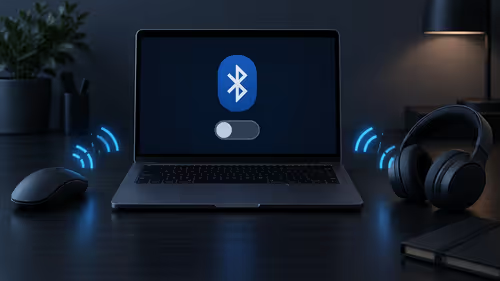
Windows 11 Bluetooth toggle missing can mean the radio is not being detected or enabled. Start with a complete power-off, then check the adapter and drivers. Pairing a new mouse cannot repair an absent Bluetooth control, so isolate the PC first.
Windows 11 spatial sound greyed out needs an output-device check before a headset purchase. Select the intended playback device and look for Windows Sonic for Headphones. Speaker, HDMI and headphone routes can expose different spatial sound options.

NACON Revolution 5 Unlimited adds a control screen, TMR sticks and charging dock. The controller targets PS5 and PC use, with a dedicated PC mode. Match your games and connection route before treating its premium features as a reason to replace a working pad.

GeForce NOW October 2026 games include 25 planned additions, with six in the first week. Store release dates do not guarantee instant cloud access. Check the exact game, store version, regional service and connection before changing your PC budget.

DGX Spark 64GB is a new local-AI configuration scheduled for 23 October. Its smaller unified memory pool changes workload planning. Compare model size, context and concurrency with the existing 128GB system before requesting a South African quote.