The ability to flip between portrait and landscape with a single twist sounds minor until you are mid-call on speaker and need to switch to GPS, or until you want to film a horizontal clip without repositioning the whole mount. 360 rotatable phone mounts handle that switch in one motion, and understanding the mechanism behind them helps you pick one that stays put rather than slowly drifting back.
Quick Answer
A 360-degree rotatable phone mount is worth having for any mixed use across driving, desk work, and content capture. Ball-joint mechanisms give the most freedom of movement and cost R150 to R400 for reliable options. Look for a locking collar rather than friction-only tension to keep the chosen angle secure.
🔄 How Ball Joints and Pivot Heads Actually Work
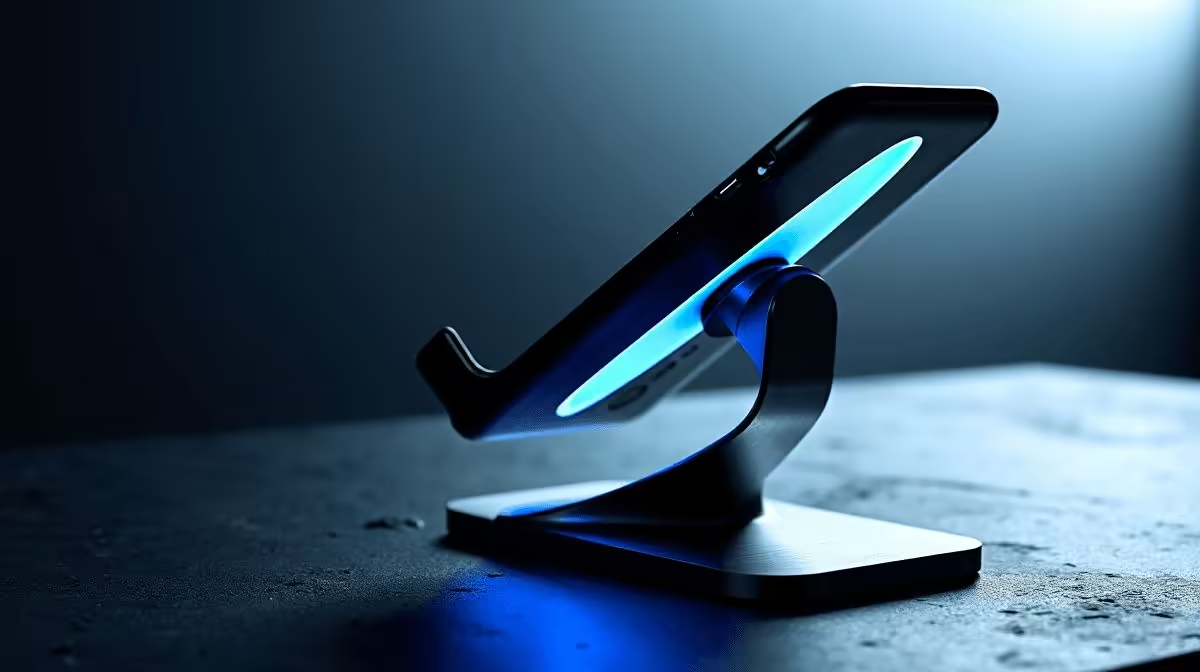
There are two dominant rotation designs. The first is a full ball-and-socket joint: a metal or hardened plastic ball seats inside a socket and a locking collar or tension screw clamps the ball in position. You adjust the angle, tighten the collar, and the phone stays exactly where you put it. The second design is a pivot-and-click head that rotates in discrete steps, usually 90-degree increments, and snaps audibly into each position.
Ball joints give infinite positioning freedom, which matters when your car vent, desk arm, or tripod mount sits at an angle that does not conveniently line up with a 90-degree step. The trade-off is that worn ball joints lose their grip tension over time. Pivot-click designs never drift but limit you to their preset stops.
For content studios, full ball joints are preferred because filming angles rarely land on a cardinal compass point. For car navigation, the 90-degree click stops are usually sufficient because portrait and landscape are the two practical options.
🚗 Rotation in the Car: Vent Mounts, Dash Pads, and Navigation Modes
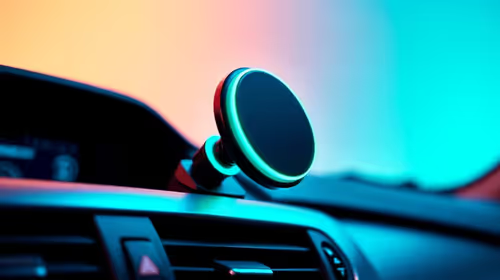
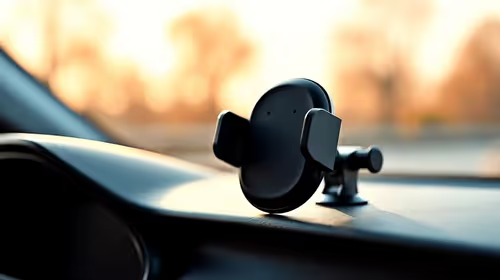
Most car phone mounts orientate the device in portrait by default because vent clip geometry usually aligns that way. The trouble is that portrait navigation cuts off road context on either side, especially on wide multi-lane roads. A 360-degree mount lets you flip to landscape in under two seconds without fumbling with cables or clips.
Vent-mounted ball joints do face one specific challenge in SA: Highveld and Western Cape summer temperatures mean the plastic around some budget ball joints can soften enough to let the phone sag. Mounts rated for temperatures above 60 degrees Celsius or those with metal socket housings hold their tension far better through a baking car interior.
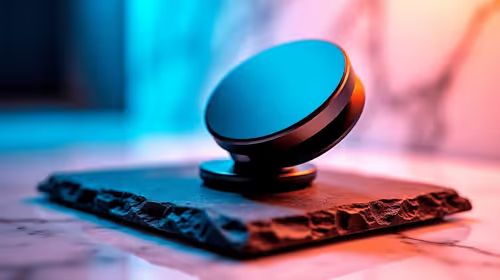
Magnetic 360-degree mounts combine rotation freedom with quick release, which is useful if you get out of the car frequently and do not want to leave your phone visible. The magnet plate attaches once to your case and the mount itself can pivot freely.
🎥 Rotation Across Desk and Content Studio Contexts
Content creators benefit from 360-degree rotation in a different way than commuters. A desk arm with a rotating head lets you switch from a front-facing setup for video calls to a tilted-down angle for filming your keyboard or workspace, to full portrait for TikTok-format recording, all without unmounting the phone.
Key considerations for studio or home-office use are the head rotation range versus the arm rotation range. Some mounts rotate at the arm base only, which changes the viewing direction but not the portrait or landscape orientation of the phone face. True 360-degree head rotation changes both. Confirm which axis rotates before purchasing if orientation switching is important for your workflow.
Frequently Asked Questions
What is the difference between a ball joint and a pivot joint on a phone mount?
A ball joint rotates freely in any direction and locks at infinite angles via a collar or screw. A pivot joint moves on a single axis and usually clicks into preset stops. Ball joints are more versatile; pivot joints are more consistent and do not drift.
Can a 360-degree mount hold a heavy flagship phone without sagging?
Yes, if the ball joint uses a metal socket and the tension collar is adequately tightened. Mounts with plastic-only ball housings tend to soften under heat and lose grip. Choose one with a stainless or zinc-alloy ball and socket for heavy devices above 220 g.
How do I tighten a loose ball joint on a phone mount?
Most ball joints have an external locking ring or screw. Rotate it clockwise to increase tension. If the joint is still loose when the screw is fully tightened, the internal ball socket has likely worn and the mount should be replaced.
Are magnetic 360-degree mounts safe for phones with wireless charging coils?
Standard neodymium magnet plates do not damage wireless charging hardware, but the metal plate itself can block the charging pad's signal. Remove the plate before placing the phone on a wireless charging surface, or use a case with a built-in magnet ring designed to stay clear of the coil area.
Does a 360-degree mount work with a pop socket or grip ring on the back of the phone?
It depends on the mount type. Clip-style mounts accommodate a pop socket because they grip the sides of the phone. Magnetic mounts require a flat back surface, so a protruding pop socket will prevent full magnet contact unless it is removed first.
Want a mount that adapts to every angle you need?
Check out Evetech's selection of phone mounts and accessories to find a 360-degree option suited to your car, desk, or content setup.