Quick Answer
Here is the practical take for SA gamers. For a GPU, the core uses thermal paste and the memory and VRM use thermal pads, you need both, not one or the other. If you repaste, replace the pads too with the correct thickness, or VRAM temperatures can spike by 10 to 20C and throttle a card worth R12,000 or more.
Paste vs pads on a GPU
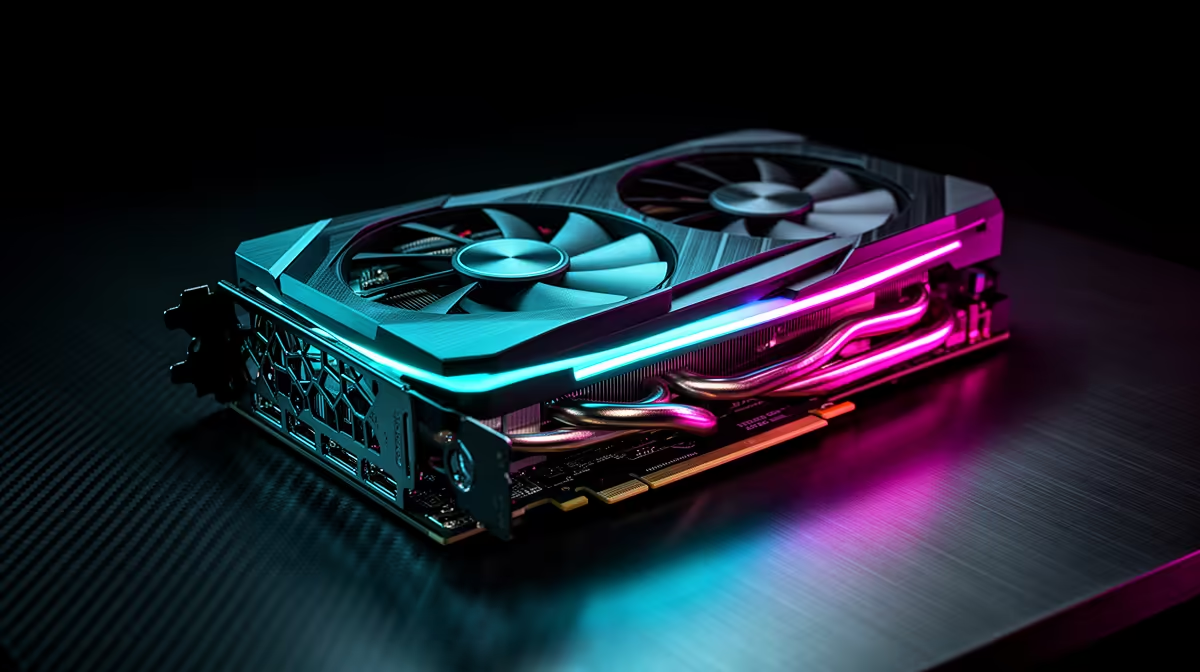
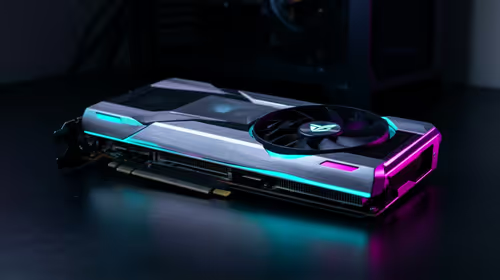
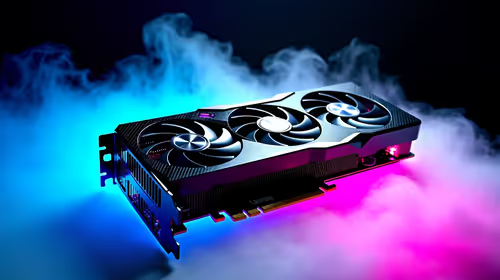
A graphics card cools two things differently: the GPU die contacts the heatsink through thermal paste, while the memory modules and power stages transfer heat through thermal pads of specific thicknesses. They are not interchangeable. If you open the card to repaste the core, measure and replace the pads with the same thickness, getting this wrong leaves a gap that sends VRAM temperatures up 10 to 20C. For most owners, leave both alone unless temps have clearly risen.
When to leave it alone
If your GPU sits in the mid-60s to low-70s Celsius under load, the factory paste and pads are fine and opening the card risks damage and warranty loss. A dust clean of the fans and fins usually fixes rising temps without touching paste or pads at all.
When to replace paste and pads
Do both together if load temps have climbed, the card throttles, or you are already inside for a clean. Use a quality non-conductive paste on the core and pads matched to the original thickness on memory and VRM. Mismatched pad thickness is the most common cause of post-repaste overheating, so measure first.
FAQ
What happens if I use the wrong pad thickness?
VRAM and VRM temperatures can spike 10 to 20C because the pad fails to bridge the gap properly. Always match the original thickness when replacing pads.
Does a GPU use paste or pads?
Both. The core uses thermal paste against the heatsink, while memory and VRM use thermal pads of set thicknesses. You cannot substitute one for the other.
Should I replace pads when I repaste?
Yes, if the card is already open and aged. Replacing both paste and correctly-sized pads together gives the best, most reliable temperatures.
Cool your GPU correctly.
If you repaste, replace pads with the matching thickness too, or leave both alone if temps already sit in the mid-60s to low-70s C.