


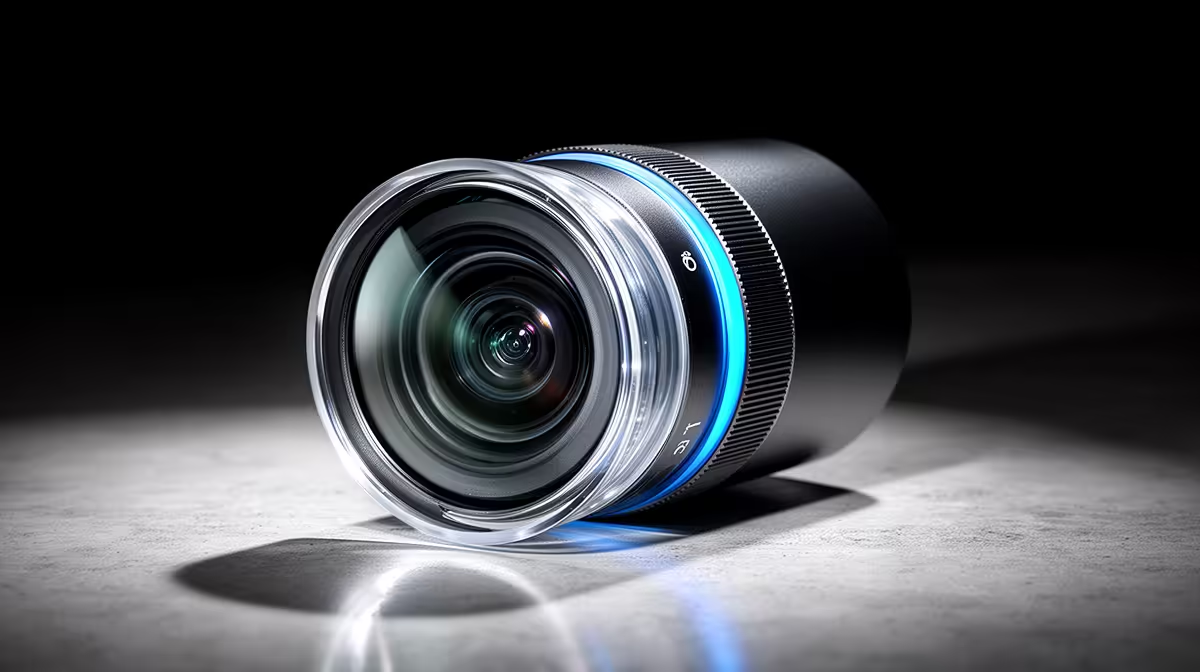
Camera marketing is full of sensor brand names that sound impressive but rarely come with a clear explanation of what they do differently. STARVIS is one of the more substantive ones. It refers to a construction method Sony developed for camera sensors, and understanding it matters for anyone choosing a webcam for low-light shooting or zoomed video capture.
Quick Answer
A STARVIS sensor uses a back-illuminated design to capture more light per pixel, producing clean video in dim conditions where standard sensors grain up. Hybrid optical zoom then uses the sensor's high resolution to magnify by cropping, keeping sharpness where digital zoom would blur.
🔆 What the STARVIS Sensor Design Actually Changes
Standard CMOS sensors place their wiring circuitry in front of the light-sensitive layer, occupying space that could otherwise be capturing light. Sony's back-illuminated structure flips this: the wiring sits behind the photodiodes, so a greater proportion of each pixel's surface faces incoming light without obstruction. More light per pixel means the sensor reaches a usable signal at lower light levels before amplification introduces noise.
This matters in the conditions real rooms present. A streaming setup under standard ceiling lights in the evening, a workspace near a window in winter afternoon light, an indoor interview without dedicated lighting. These are where a back-illuminated sensor stays cleaner than a conventional chip of the same size.
🔧 Hybrid Optical Zoom Without a Moving Lens
Traditional optical zoom uses moving glass elements to change focal length. Hybrid zoom uses the sensor itself: a high-resolution capture is cropped into when you zoom, using real pixel data to deliver a magnified view without scaling up processed output. That is why hybrid zoom stays sharp where digital zoom blurs.
The limit is the sensor's resolution beyond the crop. A 12 megapixel sensor at 3x covers 1.3 megapixels, which holds at standard streaming resolutions but softens if pushed further.
⚡ Choosing a Camera With These Features
Check the minimum illumination figure, listed in lux. Lower is better. A STARVIS camera at 0.05 lux performs meaningfully better in dim conditions than one rated at 1 lux.
Confirm hybrid zoom is genuine sensor-crop zoom, not digital interpolation. Some cameras list a single zoom figure that blends optical, hybrid, and digital without distinguishing them.
Frequently Asked Questions
How does a STARVIS sensor maintain cleaner footage in low light?
Back-illuminated construction positions the light-sensitive layer at the surface with wiring moved behind it. Each pixel captures a larger share of available light, so the sensor builds a usable signal with less electronic amplification. Reduced amplification is what keeps footage clean rather than noisy.
Is hybrid zoom the same as regular optical zoom?
No. Traditional optical zoom moves lens elements physically. Hybrid zoom crops into the high-resolution sensor's captured area, using real pixel data to deliver a magnified view without any moving glass.
How far can hybrid zoom go before quality drops?
At moderate magnifications, typically up to 2x or 3x, hybrid zoom holds close to native sharpness. As the crop grows more aggressive, fewer real pixels cover the output frame and the image begins to soften, though it remains ahead of equivalent digital zoom at the same level.
Can a STARVIS webcam handle a completely dark room?
No sensor overcomes the total absence of light. STARVIS cameras still require some illumination. A modest lamp or small LED panel dramatically improves results by giving the sensor something to resolve.
Does hybrid zoom work mid-stream without interrupting the feed?
Yes. Software-controlled hybrid zoom adjusts the crop in real time, so the level can change during a live broadcast without cutting the feed. The transition is smooth at moderate zoom steps.
Ready to get cleaner low-light video and smart zoom in one camera? Browse the STARVIS webcam range for streaming, conferencing, and content creation setups that need performance beyond basic daylight conditions.










