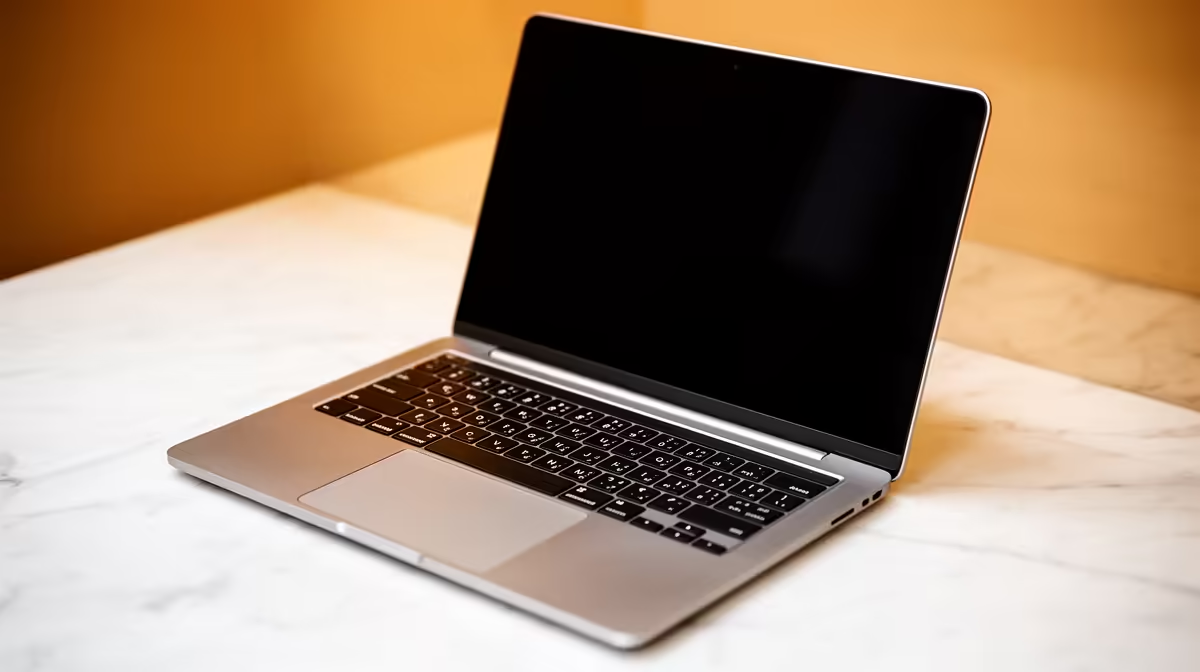
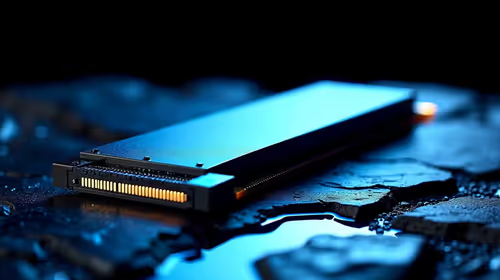
A slow laptop can tempt you into a full replacement when one bottleneck is causing the pain. The upgrade or replace decision becomes clearer after you measure memory, storage, temperatures and the software your next modules require.
Quick Answer
Upgrade when the processor still supports your course and one measurable bottleneck is holding the laptop back. An SSD transforms a machine that still boots from a hard drive. More RAM helps when memory fills during normal coursework. Replace when the operating system or required software is unsupported, the chassis or board has a costly fault, or the processor cannot handle the next modules. Check upgradeability and get a written diagnosis before spending.
Find the bottleneck
Open Task Manager during the slow task. Memory near full while the processor has room points towards RAM pressure. A mechanical drive pinned at high use during boots and launches makes an SSD a strong candidate.
High processor use during one required simulation can mean the CPU is the limit. A memory upgrade will not turn an old entry chip into a modern workstation. Heat can also throttle performance, so check cooling and fan condition.
See what the laptop accepts
Find the exact model code and service information. Some laptops solder memory to the board, while others have one or two slots. Storage can use a 2.5-inch SATA drive, an M.2 SSD or another format.
Check supported capacity and whether opening the chassis affects the service route. A competent technician can confirm the part and clone or reinstall the drive. Back up before any work.
Compare with the remaining degree
An inexpensive refresh can make sense before final year when the laptop already runs every required application. It buys smoother writing, research and multitasking without moving the whole setup.
Replacement makes more sense when several limits arrive together: weak battery, cracked hinge, unsupported software, full memory with no upgrade path and a slow processor. Add the repair and upgrade totals, then compare them with a named current machine.
Browse current everyday laptops and higher-performance notebook options against the next two years of software.
Protect the semester during the work
Do the upgrade before a quiet week, not the night before submission. Store the removed drive safely and leave its contents alone until the new system, backup and university applications have all been tested. Make sure account recovery works before wiping anything.
Make the final-year call
If only a few months remain, reliability can matter more than perfect speed. A small RAM or SSD refresh is useful when it can be fitted and tested without disrupting a dissertation. A laptop with random shutdowns, board faults or unsupported security updates deserves a firmer replacement plan.
Ask what happens after graduation too. A sound upgrade can carry the machine into job applications, while a narrow repair may only delay a failure. Judge the spend against the work still ahead and the value of a dependable computer once the degree ends.
FAQ
Does more RAM fix every slow laptop?
No. It helps when memory is the bottleneck. Storage, processor, cooling or software can cause the same complaint.
When does an SSD make the biggest difference?
When the laptop still uses a mechanical hard drive. Booting, launching and file work become much more responsive.
What is the clearest replacement sign?
Required software no longer runs safely or several hardware faults make the repair total poor value for the degree time left.
Measure memory, drive and processor use during your slowest course task, then upgrade only the part that proves it is the limit.