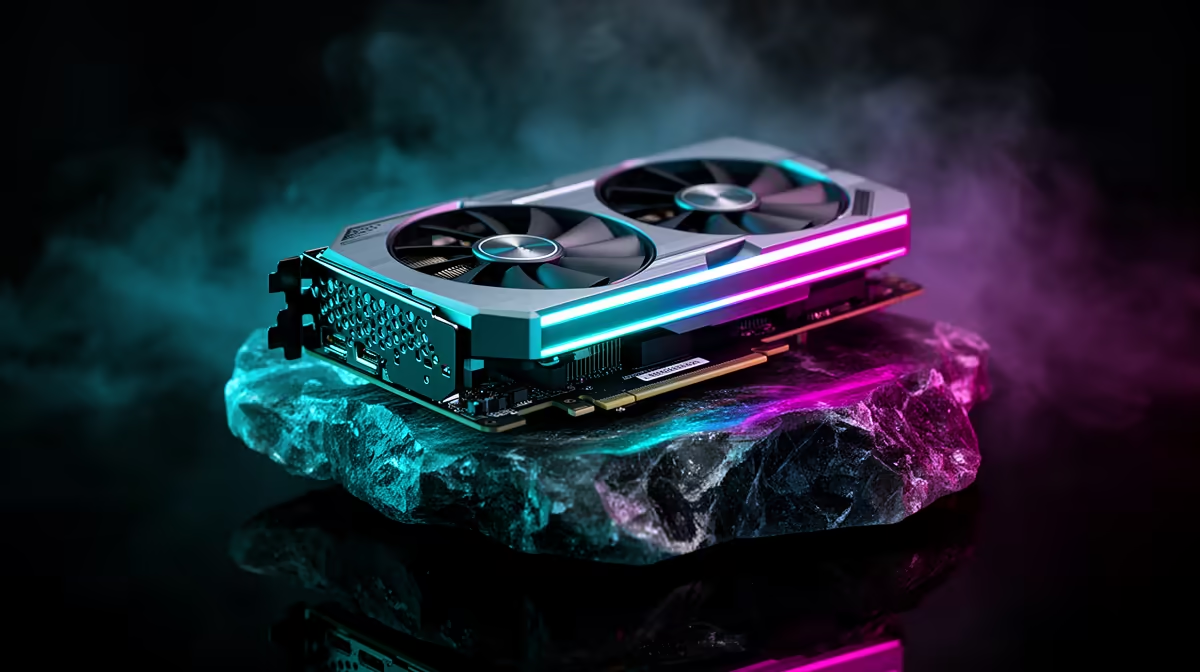
Upgrading the GPU in a prebuilt can be worth it, but the PSU is only one checkpoint. Wattage, connector type, physical card clearance, motherboard layout and case airflow all need to fit the exact replacement.
Quick Answer
Read the PSU model and label inside the PC. Compare its continuous output, 12V capacity, age and native GPU connectors with the new card maker's guidance. Replace a weak or proprietary unit through a compatible route instead of forcing adapters into the build.
Use the power-supply range and current PSU best sellers to compare named units. Record exact prices as of July 2026 and avoid using the cheapest broad-category item as your PSU budget.
Check More Than the Wattage
A 650W label does not describe build quality, protections or how much power is available on 12V. Find the full model, rated temperature, connectors and warranty. Age and unknown history weaken the case for reusing it.
Modern GPUs can need a native 12V-2x6 or several eight-pin connectors. Use the cable arrangement specified by the PSU and GPU makers. Seat every plug fully and avoid tight bends at the card.
Proprietary Parts Can Block the Swap
Some prebuilts use non-standard motherboard power connectors, PSU dimensions or case mounts. A standard ATX replacement may not fit or connect. Check the service manual and manufacturer support before buying.
Measure GPU length, height and thickness. Drive cages, front fans and side panels can collide with a card that looks suitable from the rear slot count.
Test the Whole Upgrade
Check whether the CPU can feed the new GPU at your resolution. Confirm firmware support and enough case airflow. A high-power card in a sealed case may throttle or make every fan loud.
After installation, run a sustained game and combined load while watching power, temperatures and clocks. Stable frame times and safe connectors prove the upgrade better than a successful first boot.
Check Firmware and Display Outputs
Update the prebuilt through its supported firmware route before removing the old card. Some systems need UEFI settings changed for a newer GPU. Keep a photograph of the original settings and confirm the replacement appears at the expected PCIe link.
If the CPU has integrated graphics, identify which rear video ports belong to the motherboard. They can keep the desktop usable during troubleshooting, but the monitor should connect to the new graphics card for gaming.
Price the PSU as Part of the Card
Add a compatible quality PSU, required cabling and any case fan to the graphics-card total. A cheaper high-power GPU can become poor value when the prebuilt needs several supporting parts.
Compare that cost with a lower-power card that fits the existing system and with a complete replacement PC. The best upgrade is the one the whole prebuilt can run safely.
FAQ
Is PSU wattage the only GPU requirement?
No. Quality, 12V output, connectors, physical fit and case cooling also matter.
Can I use power adapters for a new GPU?
Use only arrangements approved for the exact PSU and card. A proper native cable or PSU replacement is safer than improvisation.
Will every prebuilt accept a standard PSU?
No. Proprietary dimensions and motherboard connectors can prevent a direct replacement.
Identify the installed PSU and every connector, measure the case and approve the full GPU power path before ordering the card.