Quick Answer
Vibration from a hard drive is typically caused by imbalanced platters, loose mounting, drive failure, or the drive seeking across a fragmented disk. Minor vibration is normal, but excessive vibration or clicking sounds indicates potential drive failure and requires immediate data backup and drive replacement.
A vibrating hard drive is one of those PC symptoms that ranges from completely harmless to a critical warning sign depending on the character and intensity of the vibration. In South African desktop builds where HDDs are still widely used for bulk storage - given that a 4TB HDD at R1,200 to R1,800 offers capacity that SSDs can't match at the same price - knowing how to interpret and address drive vibration is a practical skill. Don't ignore it, but don't panic immediately either.
Identifying the Type of Vibration
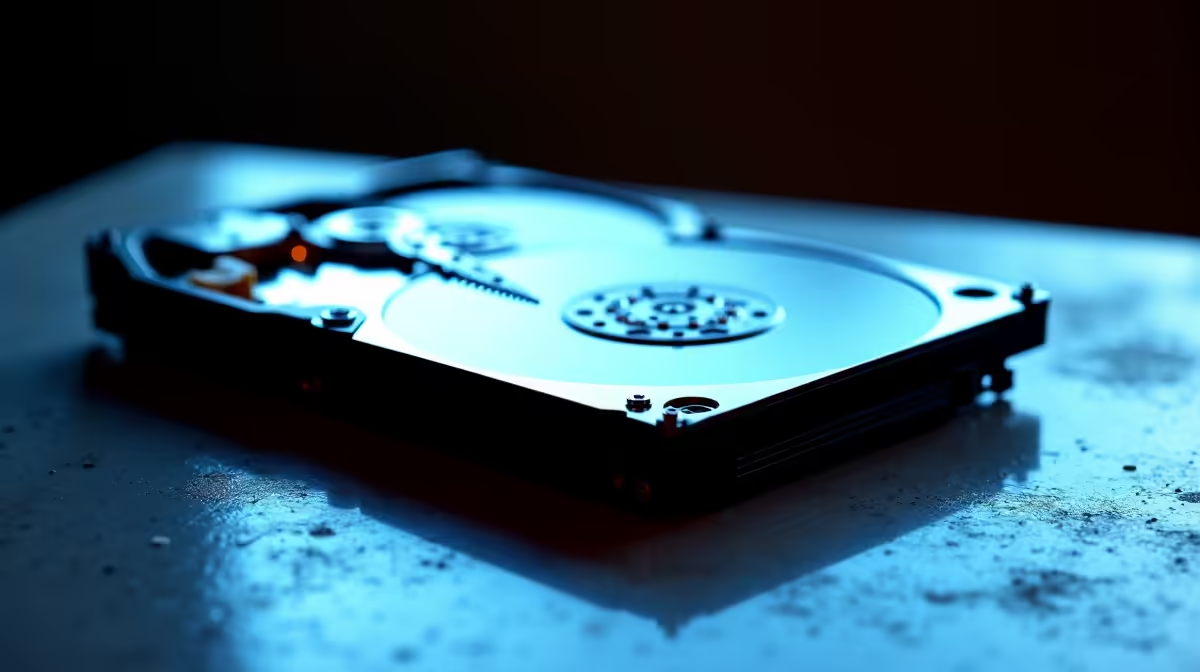
Not all hard drive vibration is the same. Light, rhythmic vibration that you can feel through the case when the drive is reading or writing heavily is normal seek vibration - the drive's read/write head assembly moving across the platters creates mechanical motion. This is expected and harmless. What you're listening for is vibration that has changed in character recently: has it become louder, more erratic, or accompanied by clicking, grinding, or ticking sounds? Those changes signal a mechanical problem. A drive that was previously quiet and is now vibrating significantly has either developed a platter balance issue, a bearing problem, or is heading toward failure.
Touch the case while the drive is running. If the vibration transmits strongly through the case panels, your mounting is likely loose or the drive is making contact with something it shouldn't. A loose drive bay screw or a drive sitting without rubber dampeners against a metal tray is enough to amplify normal seek vibration into alarming case resonance.
Fixing Vibration From Mounting and Installation
The most common and easiest fix is checking your drive mounting. Open your case and check that all four drive bay screws are tight and that the drive is seated properly in its tray. If your drive bay uses hard-mounted screws directly into the drive frame without rubber grommets, adding anti-vibration rubber screws (available at most PC component stores) will reduce resonance transmission significantly. If your case has a 3.5-inch drive cage that rattles, the cage itself may be loose from the chassis - check its mounting points. Cases with rubber-suspended drive cages handle this better, but any loose point in the assembly amplifies vibration.
When Vibration Means Drive Failure
If your drive makes clicking, grinding, or repetitive ticking sounds alongside the vibration, this is the classic sign of a head crash or bearing failure. Back up your data immediately - do not wait, do not run disk checks first. Use the drive only as much as necessary to copy your most critical files. Run a SMART diagnostic using CrystalDiskInfo or HWiNFO64 to check for reallocated sectors, pending sectors, or uncorrectable errors. Any non-zero count in the reallocated sectors attribute indicates the drive has already started mapping around bad areas. Spinning down and replacing the drive before total failure is far better than discovering the failure during a write operation.
Frequently Asked Questions
Q: Is it normal for a hard drive to vibrate when loading large files?
A: Light vibration during heavy read/write activity is normal. The drive heads seek across the platters creating mechanical movement. If the vibration is mild and consistent with disk activity, it's not a concern.
Q: Can I fix a vibrating hard drive with software?
A: Defragmenting can reduce seek intensity by organising data more efficiently, which may reduce vibration slightly. But if vibration is caused by a mechanical issue, no software fix exists - physical inspection and potentially replacement are required.
Q: How do I tell if my hard drive is about to fail?
A: Run a SMART check with CrystalDiskInfo. Elevated reallocated sector counts, spin-up time anomalies, or a SMART status of Caution or Bad are the primary indicators. Back up immediately if any of these appear.