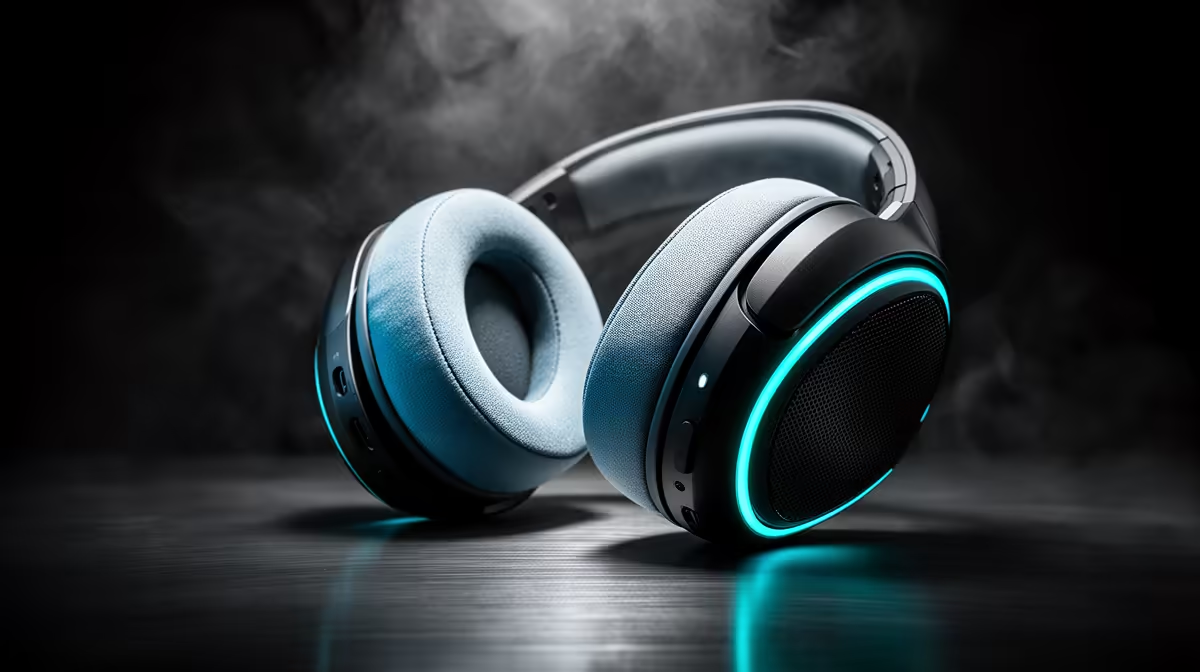
Stereo and virtual surround are two ways of delivering direction through two ear cups. A game with a strong binaural headphone mix can place cues cleanly in stereo. Another title may send multichannel audio that a spatial processor turns into a convincing headphone field. Test the game's intended path before declaring one superior.
Quick Answer
Select Headphones in the game and start with every external surround effect off. Test front, side, rear and vertical cues in a replay or training area. Then enable one virtual-surround or spatial system and repeat at matched loudness. Keep the path that improves location without smearing attacks, distance or tonal balance.
Start with the audio products mixed into Evetech's frequently chosen peripherals, then widen the desk search through its PC gaming add-ons. A 7.1 badge on a two-driver headset describes processing or input support, not seven physical directions around your head.
Start With the Game Mix
Many competitive games build a headphone HRTF or binaural renderer into the engine. It uses game-object positions before the signal becomes stereo. Adding headset virtual surround afterwards can process that binaural result again and blur cues.
Other games output ordinary stereo or surround channels. A Windows or headset spatial renderer may help convert those channels for headphones. Read the game's current audio options and use one spatial stage.
Set dynamic range and music separately. Loud bass and compressed explosions can mask steps regardless of the channel method.
Compare More Than Footstep Volume
Listen for the angle where a sound moves behind you, whether above and below remain distinct, and how distance changes. A processor that makes footsteps louder but places every cue close to your head has traded information.
Match loudness between modes. Virtual surround can change gain and EQ, making the louder choice seem clearer. Lower the louder path until voices and a reference tone feel equal.
Use the same headset, replay and frame rate. Head tracking, room simulation and reverb should remain off unless they are the feature under test.
Check the Output Configuration
Set Windows to the actual headset endpoint. A USB headset can expose separate Game and Chat devices, and choosing the narrow chat path for the whole game can reduce bandwidth. Keep the default format at a device-supported rate and disable duplicate enhancements.
Analogue headphones connected to a motherboard or interface need the correct speaker configuration before any virtualiser. When a renderer expects 7.1 input, feeding it an already downmixed stereo signal gives it less direction to work with.
Keep Profiles Per Game
One shooter may have excellent built-in HRTF while another benefits from Windows spatial audio. Save the choice per title in notes or software profiles. Recheck after a major game audio update because mixing and spatial support can change.
Do not use footsteps as the only test. Dialogue intelligibility, explosions and music should remain comfortable during a full session.
FAQ
Is stereo always better for competitive games?
No. It works well with strong game binaural audio, while other mixes can benefit from one compatible spatial renderer.
Should I enable game HRTF and headset 7.1 together?
Avoid double processing unless the game or headset maker documents that combination.
Does virtual surround add physical speakers?
No. It filters audio for directional perception through the two headphone drivers.
Test the game's native headphone mix first, add one spatial renderer at matched loudness and keep the mode that preserves direction, distance and clean attacks.