Quick Answer
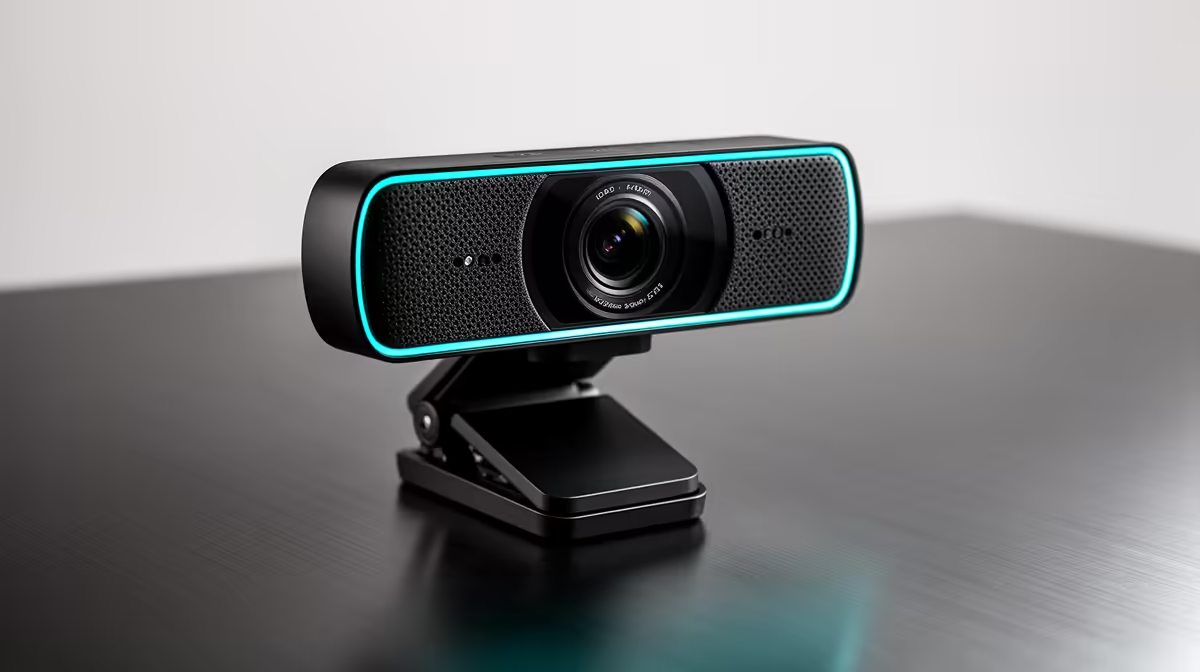
Choose the webcam around the job it must do every day. Price, compatibility and one measurable target matter most. A sensible South African shortlist starts around R450-R2,000 and should include a known option such as Logitech C920s before moving to premium picks.
Clean Signal First
For calls, lectures and streams, clarity beats decorative extras. A Logitech C920s or Razer Kiyo X gives a realistic baseline around 1080p 30fps in the R450-R2,000 band. In a home theatre gaming, echo, desk vibration and background voices often decide the result before the spec sheet does.
Place the device close to the user and away from hard reflective surfaces. That setup change can beat a pricier model used badly.
SA Buyer Checks
Local buying is about stock, warranty handling and whether the product suits the room it will live in. For a home theatre gaming, that can mean Teams, Zoom and lecture calls from SA homes. Treat R450-R2,000 as the sensible band; spending above it should buy a clear gain such as more ports, lower noise, stronger cooling or longer useful life.
When To Spend More
The costly mistake is buying around the wrong symptom. Cheap webcams become expensive when they force replacement cables, adapters, extra cooling or another upgrade. Move up only when the next model gives a measurable gain, such as 720p to 1080p video or a stronger 1080p 30fps baseline. Skip premium when the benefit is mostly cosmetic.
FAQ
What is a sensible budget for webcams in South Africa?
Most buyers should start around R450-R2,000. Move higher only when the spec, warranty or performance target is clearly better.
Which spec should I check first?
Check sensor quality, autofocus and low light before styling. For this category, 1080p 30fps and 720p to 1080p video are more useful than a vague premium label.
Is it safe to buy the cheaper option?
Yes, if it fits the device list, room layout and support needs. Do not buy cheap if it removes a must-have feature for the home theatre gaming.
{
webcam that solves the first daily annoyance, then keep spare budget for the next part that affects real use.
}