Quick Answer
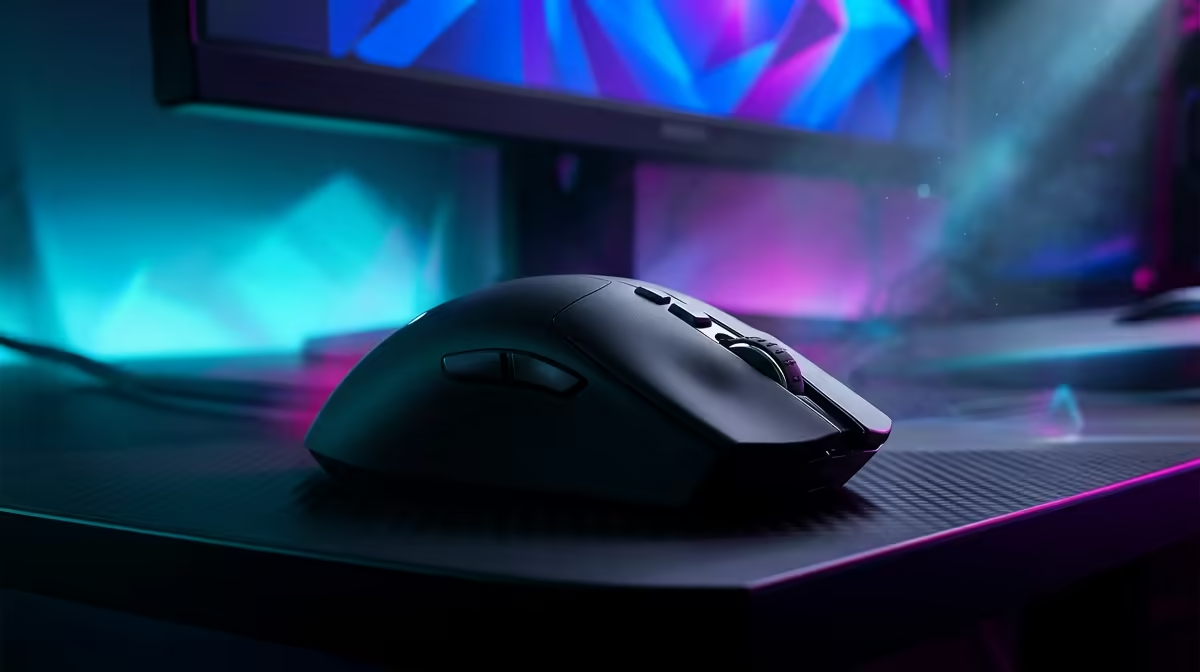
Under 60g means the mouse weighs less than 60 grams, placing it firmly in the ultralight category. For mobile gaming, this translates to reduced wrist fatigue on long sessions, easier bag transport, and faster flick movements especially in FPS titles.
Why Weight Matters for Mobile Gamers 🎮
When you are gaming on the move, every gram adds up across a day of lectures, LAN travel, or desk-to-couch shifts. A mouse at 58g versus 90g feels dramatically different after two hours of continuous play. The sub-60g benchmark became the performance sweet spot because it keeps the mouse light enough for rapid micro-adjustments without sacrificing structural rigidity. Mice like the Razer Orochi V2 hit around 60g in Bluetooth mode (battery removed) and demonstrate that ultralight wireless is achievable without a honeycomb shell. For South African students trekking between res and campus labs, a sub-60g mouse slips easily into a pencil case or side pocket.
How Weight Affects Actual Performance 🖱️
Below 60g, the hand exerts less sustained force to move the mouse, which reduces tremor and improves precision on low-sensitivity settings. Pro players who compete at 400 to 800 DPI rely on low-weight mice to sweep large mats without straining forearm tendons. For mobile setups where you may be using a small mousepad on a laptop bag or hotel desk, a lighter mouse also recovers faster after large swipes. The catch is battery: cutting weight usually means a smaller cell, so expect 70 to 150 hours rather than 200-plus hours. Check the mAh spec alongside the weight figure when comparing models.
Choosing the Right Sub-60g Mouse for Your Setup 💼
Not every ultralight mouse suits every grip style. Palm grip players tend to prefer slightly heavier shells (65 to 75g) for stability, while claw and fingertip grip users benefit most from sub-60g designs. If you travel frequently between SA cities for LAN events or university visits, prioritise a model with a USB-A dongle that stores inside the mouse body, since losing a 2.4 GHz receiver mid-trip is an expensive inconvenience. Locally, sub-60g wireless mice are currently stocked at Evetech starting around R800 to R2,500 depending on sensor tier and brand.
Weigh Your Pouch First ⚡
Before buying, check your existing travel bag weight. If your laptop bag already runs over 3 kg, shaving 30g on a mouse makes a noticeable cumulative difference when combined with a lighter pad and slim keyboard. SA students on a NSFAS budget should also factor in whether a charging cable is included, since replacing proprietary cables locally can cost R150 to R300.
FAQ
Does a lighter mouse reduce accuracy for slow, precise movements?
Not inherently. Accuracy at slow speeds depends more on sensor quality and mouse feet than on mass. A sub-60g mouse with a 3395 optical sensor and PTFE feet tracks precisely at any speed; the weight mainly affects how quickly you accelerate and stop the pointer.
Is under 60g worth it if I only play on a desk at home?
If you never travel, weight matters less than sensor polling rate, click latency, and ergonomics. That said, extended desktop sessions also benefit from lighter mice because sustained lateral movement is less tiring over a four-hour gaming night.
What battery life should I expect from a sub-60g wireless mouse?
Most sub-60g wireless mice offer between 70 and 180 hours per charge depending on whether 2.4 GHz or Bluetooth is active. Bluetooth typically extends life by 30 to 50 percent, making it the smarter choice when you only need cursor-level precision on a long commute.
Ready to cut the weight on your gaming setup? Browse Evetech's range of lightweight wireless gaming mice, with options starting under R1,000, suited for travel, LAN play, and daily campus use.