South African summers are brutal on your gaming rig. When the ambient temperature spikes in December, does your rig sound like a Boeing taking off? That jet-engine roar means your cooling system is working hard... but maybe not smart. Learning exactly what is a fan curve and how to optimise it for your PC is the ultimate trick to balance icy temperatures with whisper-quiet operation. Let us fix that noise.
Understanding the Basics of PC Cooling 🔧
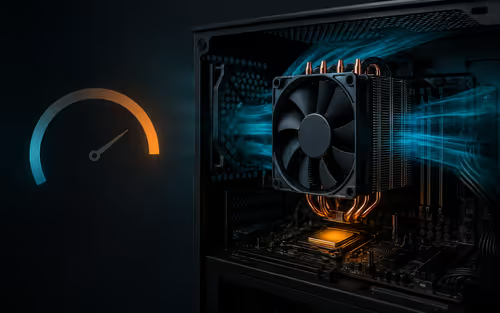
Before tweaking any software, you need to know how your system handles heat. A fan curve is simply a graph. It tells your cooling fans exactly how fast to spin at specific temperatures. For example, if your processor hits 60 degrees Celsius, the curve dictates whether the fan spins at a quiet 40% or a noisy 80% speed.
If you are rocking one of our premium pre-built PC setups, the default curve is usually set for maximum safety. It keeps the hardware cool but can get unnecessarily loud during light workloads.
Why You Need to Optimise Your Fan Curve
Factory settings are rarely perfect for every environment. Sometimes fans ramp up aggressively over a minor temperature spike. This causes annoying revving sounds while you simply browse the web.
By taking manual control, you extend the lifespan of your fans and keep your sanity intact. This applies whether you are hunting for the best gaming PC deals or upgrading an older rig. Even users buying modern gaming laptops can benefit from built-in control software to manage thermals. Every machine needs a custom touch to perform at its peak in our warm climate.
Cooling Pro Tip ❄️
Always leave a slight delay or step-up time in your BIOS fan settings. This prevents your fans from instantly spinning up when your CPU briefly works hard to open an app, keeping your room completely peaceful.
How to Set Up the Perfect Curve 🚀
Are you ready to tweak your system? You can adjust these settings directly in your motherboard BIOS or via software like Fan Control.
Start by setting a quiet baseline. Keep your fans around 30% speed when the system is idling below 40 degrees. Next, create a gradual slope. Ramp up to 60% speed when temperatures hit 65 degrees while gaming. Finally, set a 100% speed failsafe for when things cross 80 degrees. This prevents severe thermal throttling.
If your system still struggles with heat after tweaking, your hardware might be the actual bottleneck. It might be time to browse our latest CPU coolers to find a robust thermal solution. Sometimes a beefy air cooler or a sleek liquid AIO is exactly what you need. You can grab these upgrades for a steal by checking out our daily component specials. Saving ZAR on a cooler means more budget for games.
Ready to Keep Your Rig Ice Cold?
Don't let thermal throttling ruin your next gaming session. Whether you need a massive liquid cooler or a brand-new airflow case, we have the best prices in South Africa. Explore our massive range of PC cooling specials and build your ultimate quiet powerhouse today.