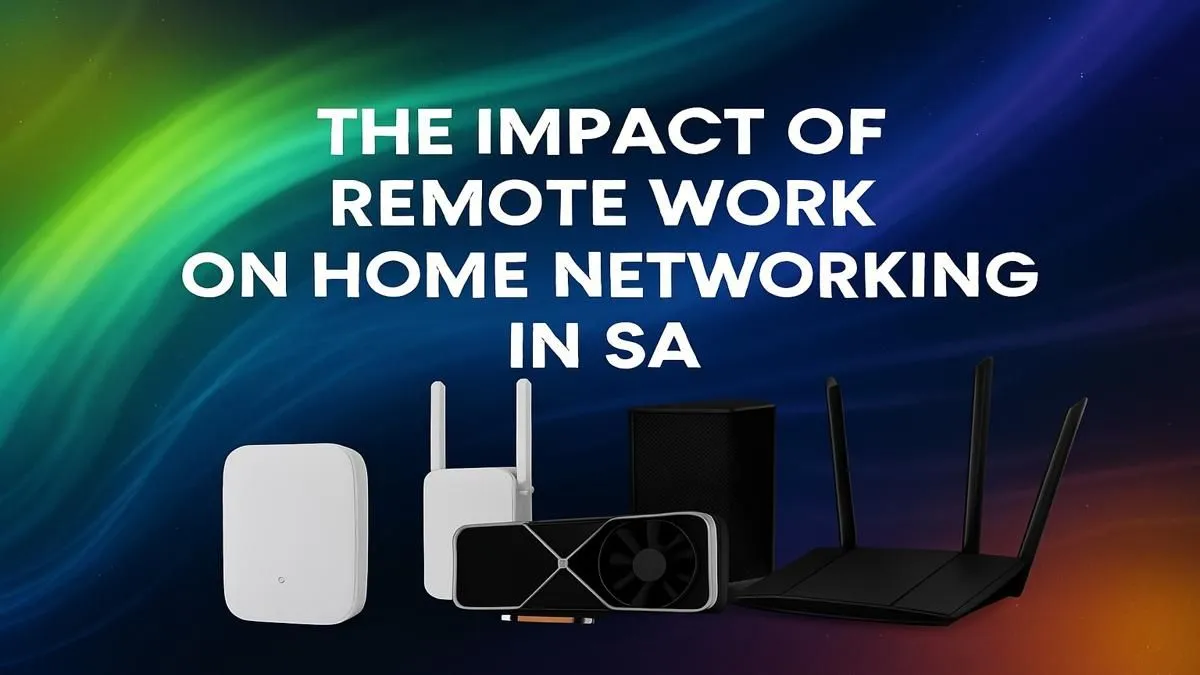
Is your Wi-Fi choking during a crucial Teams meeting while the rest of the house streams Netflix? You’re not alone. For many South Africans, the shift to remote work has turned the home network into the most critical—and often frustrating—piece of infrastructure. A stable connection is no longer a nice-to-have; it’s your livelihood. This guide will help you diagnose the bottlenecks and build a robust setup for seamless home networking for remote work in SA. 🚀
Why Your Fibre Connection Feels Slow
You're paying for a fast fibre line, so why does your connection still buffer? The problem often isn't your ISP, but the hardware inside your home. The free router your provider gave you is usually a basic model, built to a budget. It struggles when multiple devices—laptops, phones, smart TVs, and gaming consoles—all demand bandwidth at the same time. This creates a digital traffic jam, and your work video call is the first casualty.
Optimising your home networking for remote work in SA starts with identifying these weak points. Is your office in a Wi-Fi "dead zone"? Does your connection drop when you move between rooms? Answering these questions is the first step toward a permanent fix.
The Heart of Your Home Office Network: The Router
Think of your router as the traffic controller for all your internet data. A basic one can’t handle the demands of modern remote work, which includes high-resolution video calls, large file transfers, and constant cloud syncing. Upgrading this single piece of hardware can deliver the most significant performance boost.
When choosing a new router, look for features like Wi-Fi 6 (802.11ax). This newer standard is designed specifically for high-density environments, meaning it excels at managing dozens of connected devices without slowing down. Investing in one of the latest powerful wireless routers is the foundation of a reliable WFH network setup. It ensures data flows smoothly to every device, from your work laptop to your smart geyser.
Pro Tip: Find the Clearest Channel 📡
Your neighbour's Wi-Fi can interfere with yours, causing slowdowns. Use a free Wi-Fi analyser app on your phone to see which channels are most congested in your area. Log into your router's settings and manually switch your Wi-Fi to a less crowded channel (like 1, 6, or 11 for 2.4GHz) for a quick and easy performance boost.
Eliminating Wi-Fi Dead Zones for Good
Brick walls, multiple floors, and even large appliances can block Wi-Fi signals, creating frustrating dead zones where your connection disappears. If your home office is far from the router, you've likely experienced this. Fortunately, you have excellent options to ensure wall-to-wall coverage.
Mesh Systems vs. Range Extenders
For most double-storey or larger homes in SA, a Mesh Wi-Fi system is the ultimate solution. It uses multiple nodes placed around your house to create a single, seamless network with one name and password. You can walk from the lounge to the patio without your Zoom call ever dropping.
If you only have one or two specific problem areas, a more budget-friendly solution is one of our effective wireless range extenders. These devices pick up your existing Wi-Fi signal and rebroadcast it, extending its reach into a previously dead zone like a home office or entertainment area.
Don't Let Old Hardware Be Your Weakest Link
Your network is only as strong as its weakest component. If you have a brand-new Wi-Fi 6 router but your laptop is a few years old, it might not have the hardware to take advantage of those faster speeds. Your PC or laptop's internal network card can be a hidden bottleneck in your remote work network setup.
Thankfully, this is an easy and affordable fix. A simple USB wireless adapter can instantly upgrade your older machine to the latest Wi-Fi standards. It's a plug-and-play solution that takes minutes to install and can dramatically improve your connection stability and speed, ensuring your hardware keeps pace with the rest of your upgraded network. ✨
Building a reliable home network is an essential investment in your productivity and peace of mind. By systematically upgrading from the core router outwards, you can create a flawless online experience. Stop letting lag and buffering dictate your workday and explore Evetech’s complete range of wireless networking solutions to build the perfect digital foundation for your career.
Ready to Banish Buffering for Good?
A rock-solid home network is the key to stress-free remote work in South Africa. Stop tolerating dropped calls and endless loading screens. Explore our massive range of wireless networking gear and find the perfect hardware to conquer your workday.