AM5 on a Budget: Why Platform Beats CPU Speed
Quick Answer
AM5 can be the stronger budget choice when you plan a later CPU upgrade and can afford the motherboard and DDR5 memory without weakening today's GPU. A faster processor on a dead-end or short-lived platform may win now, but its next step can require a new board and memory.
Choose from a written three-year plan. Socket longevity helps only when firmware, board support and the future processor all line up.
Price the Platform as a Group
Compare CPU, motherboard, memory and cooler together. A cheap AM5 processor can sit beside a board or DDR5 kit that pushes the complete build over budget.
Protect the graphics card required by your games. Moving to AM5 is a poor trade when it forces a GPU tier that misses the starting target.
Use gaming PC deals to inspect complete platform balances. Check PC best sellers for alternatives, then open each specification.
Start With Enough CPU
The entry processor should run the games and applications you own. Do not buy a weak placeholder that makes the PC frustrating until an upgrade arrives.
Compare exact-CPU tests with the planned GPU. At 1440p, a GPU limit can narrow processor differences. High-refresh esports and simulation can expose them.
Look at one-percent lows, not core count alone. Architecture, cache, clock behaviour and game engine all matter.
Check the Board Beyond the Socket
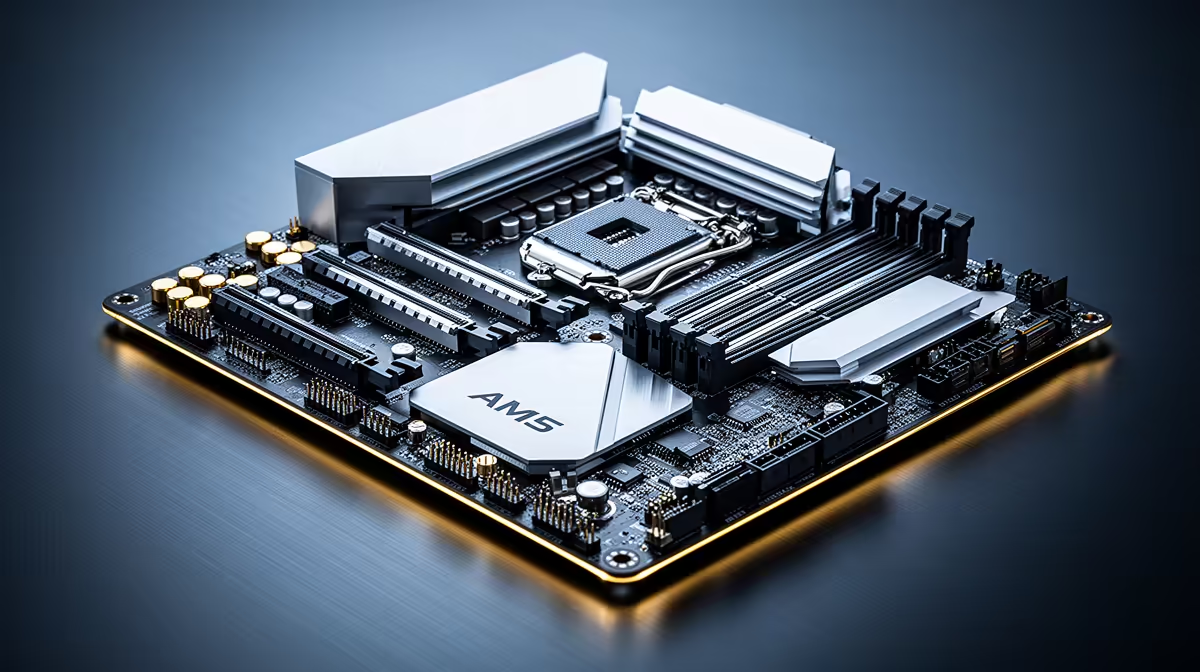
AM5 identifies the socket, not the quality or features of every motherboard. Check CPU support, firmware, power delivery, memory compatibility, M.2 slots, network and rear ports.
A later processor may require a firmware update. Confirm the board maker's support list and update method. Some boards can update without a working CPU; others need the current chip installed.
Do not pay for expansion you cannot name. Keep the features that support the starting machine and planned processor.
DDR5 Is Part of the Commitment
AM5 desktop boards use DDR5. Choose enough capacity, a matched kit and a speed the platform can run with stable settings.
Start at defaults, then enable a supported memory profile after the PC passes. Very high rated speeds can create tuning work that does little for a budget game target.
The kit may carry to the next AM5 CPU when the board supports it. It is less likely to survive a future memory-generation change, so avoid calling it permanent.
Write the CPU-Only Upgrade
Name the class of processor you expect to add and why. Maybe a later simulation workload needs more cores, or a future GPU needs more frame-rate headroom.
Check whether the board and cooler can support that power level. Leave enough power-supply capacity for the complete future pairing.
If the plan has no date, workload or target, it is not worth a large premium today. Buy the faster current configuration.
Compare the Fallback Platform Fairly
Put the non-AM5 option beside it with the same GPU, memory capacity, SSD and power supply. Record current game performance and the complete cost of its next CPU step.
That later step may reuse the board and memory, or it may require both to change. Check the actual support list instead of calling any older socket a dead end.
If the alternative is much faster today and you replace whole PCs rather than CPUs, its lower upgrade flexibility may not matter. Ownership habits belong in the calculation.
Leave Room for the Graphics Card
A CPU platform can survive several graphics cards when the case, power supply and processor headroom support them. Name the first likely GPU class and check clearance, native connectors and expected CPU balance.
Do not buy a huge power supply for an imaginary flagship. Leave reasonable headroom around a card that fits your monitor plan.
A budget AM5 system with integrated graphics can stage the GPU purchase, but the starting games must run on that integrated chip. Find exact-processor tests before using the promise.
Validate Firmware and Memory
Build at default settings. Confirm firmware version, memory capacity, storage health and temperatures before enabling an EXPO profile.
Run a full memory test and the three games used to choose the platform. Save the stable settings and board model.
Before a later CPU swap, update firmware through the documented path while the current processor is available if required. Check cooler mounting and thermal needs again.
Price the Upgrade Twice
At purchase, write the expected CPU-only cost and the fallback cost of CPU, board and memory. Recheck both when the upgrade date arrives.
Market and support conditions may change. If the planned chip is poor value then, keep the current CPU or rebuild. The AM5 choice gives an option; it does not force you to use it.
FAQ
Is AM5 always better for a budget PC?
No. It makes sense when the complete platform fits and the upgrade path has value. Current game performance still comes first.
Will every future AM5 CPU work in my board?
Do not assume it. Check the board maker's CPU list, firmware requirement and power support for the exact chip.
Should I accept a weaker GPU to get AM5?
Only when the lower GPU still meets the game target and the CPU upgrade plan is worth the trade.
Compare CPU, board, DDR5 and cooler as one AM5 cost, then keep it only if today's games pass and a named CPU-only upgrade remains credible.