So, you're building a new Ryzen PC in South Africa... lekker! You've picked your CPU, but now you're stuck on the motherboard. It’s the classic showdown: B550 vs X570. One is the budget-savvy champion, the other the feature-packed beast. Choosing the right one is crucial for your rig's performance and future potential. Don't stress, we're here to break it down so you can spend your ZAR wisely and get back to gaming.
B550 vs X570: It's All About the Lanes ⚡
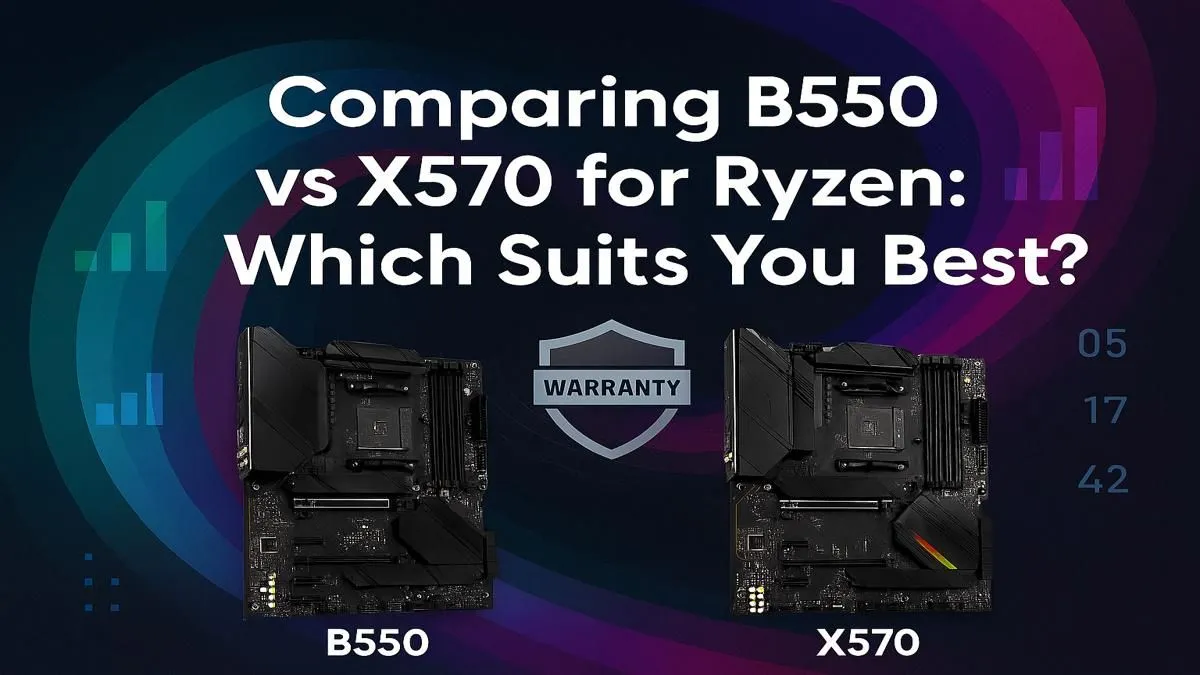
The biggest difference between these two chipsets boils down to one thing: PCI Express (PCIe) lanes. Think of these as digital highways for your components. Both B550 and X570 support the super-fast PCIe 4.0 standard, but they distribute it differently.
- X570: This is the full-fat PCIe 4.0 experience. The connection from your CPU and the connection from the chipset itself are all PCIe 4.0. This means your top graphics card slot, all your M.2 SSD slots, and other expansion slots can run at maximum speed simultaneously.
- B550: This is the smarter, more focused approach. You still get PCIe 4.0 directly from the CPU for your main graphics card and one primary M.2 NVMe SSD. However, the chipset itself connects to other M.2 slots and PCIe slots using the older (but still very fast) PCIe 3.0 standard.
For most gamers, this distinction is key. The B550 gives you speed where it matters most, without the extra cost of wiring up everything for a standard most components don't even use yet. You can browse a wide variety of AMD motherboards to see how manufacturers implement these features.
The Case for B550: Perfect for Most Gamers
Let's be honest. How many of us are running three ultra-fast PCIe 4.0 NVMe SSDs at once? For the vast majority of South African gamers and everyday users, the answer is none.
This is where the B550 chipset shines. It delivers the essential next-gen features without the enthusiast-level price tag. You get:
- Full GPU Speed: Your graphics card gets a direct, unimpeded PCIe 4.0 x16 lane to the CPU. No compromises here. 🚀
- One Ultra-Fast Drive: Your primary M.2 slot also gets a direct PCIe 4.0 connection, perfect for your operating system and favourite games.
- Excellent Value: B550 boards are generally more affordable, allowing you to put more of your budget towards a better GPU or CPU.
If your plan is to build a powerful gaming PC with one graphics card and one or two SSDs, a B550 motherboard is almost certainly the right choice. It's the undisputed king of price-to-performance for the AM4 platform. Check out our great selection of AMD B550 motherboards to find the perfect fit for your budget.
Check Your VRMs! 🔧
When choosing a motherboard, especially for an unlocked Ryzen CPU, don't just look at the chipset. Pay attention to the Voltage Regulator Modules (VRMs). Better VRMs with good heatsinks deliver cleaner, more stable power to your CPU, which is crucial for hitting and maintaining high boost clocks or for manual overclocking. A high-end B550 can often outperform a budget X570 in this regard!
When to Choose X570: For the Hardcore Enthusiast
So, who actually needs an X570 motherboard? This chipset is aimed squarely at power users, content creators, and PC enthusiasts who push their hardware to the absolute limit.
You should consider an X570 if you:
- Need Maximum Storage Speed: You're a video editor or data scientist who needs multiple PCIe 4.0 NVMe SSDs running in a RAID configuration for mind-blowing transfer speeds.
- Use Multiple Expansion Cards: You need to run a second GPU, a high-speed networking card, or a video capture card without sacrificing bandwidth to your primary components.
- Crave the Best of Everything: You're an enthusiast who wants the most feature-rich platform available for AM4, often with more USB ports, better networking, and more robust power delivery.
The X570 is about removing every possible bottleneck. It's overkill for most, but for those who need it, there's no substitute.
What About the Future? AM5 and Beyond ✨
While the B550 vs X570 debate is important for anyone building on the legendary AM4 platform, it's also worth looking ahead. AMD has since moved on to the new AM5 socket, which brings support for DDR5 memory and PCIe 5.0. If you're building a brand-new, top-tier system today, you might consider this next-generation platform.
The new chipsets follow a similar logic. The mainstream choice for AM5 builders will be the excellent B850 motherboards, offering a balanced feature set. For those who demand the absolute cutting edge, the high-end X870 motherboards will provide the ultimate in connectivity and performance for years to come.
B550 vs X570: The Final Verdict for Your Build
So, which Ryzen motherboard is right for you?
- For 95% of Gamers and PC Users: Get a B550. It offers the most important next-gen feature—PCIe 4.0 for your GPU and main SSD—at a much more palatable price. It's the smart, efficient, and high-performance choice for any modern gaming rig.
- For Hardcore Creators and Enthusiasts: Get an X570... but only if you know you'll use its specific features, like multiple PCIe 4.0 drives. Otherwise, a top-tier B550 or a jump to the newer AM5 platform might be a better investment.
The choice is about honestly assessing your needs. Don't pay for features you'll never use. Build smart, and you'll have a fantastic PC that dominates for years.
Ready to Build Your Ryzen Rig?
Choosing between B550 and X570 comes down to your specific needs and budget. Whether you're a mainstream gamer or a power user, the right foundation is crucial. Explore our massive range of PC components and find the perfect parts to power your next build.