



Fix Monitor stuck at 60Hz checks on DDR5 build
Monitor stuck at 60Hz on DDR5 build needs careful display-chain checks, not a single-part blame. Test the screen, cable, port, scaling, drivers, and setup context before replacing hardware.
Read moreBest gaming setup for music production should be shortlisted around the job it must do. South African buyers should compare fit, performance, compatibility, and upgrade room, warranty path, and upgrade room before treating any pick as best.
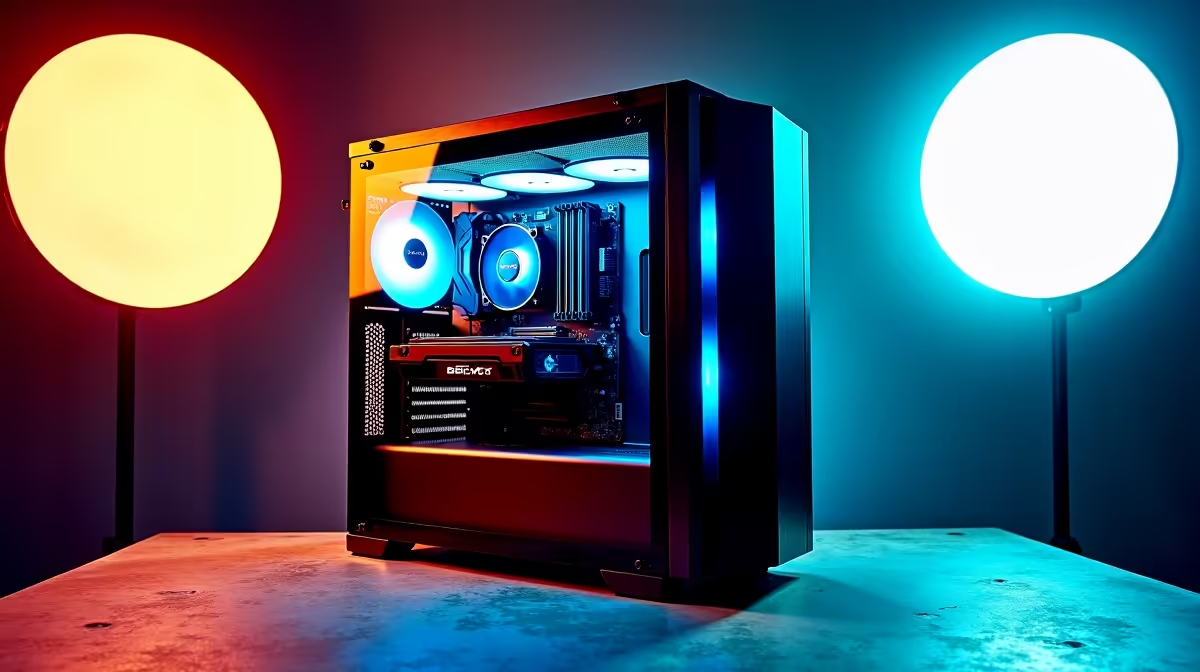
A Hermanus music-production setup needs a strong multi-core CPU, fast RAM, and quiet storage more than a gaming GPU. A Ryzen 7 or Core i7, 32GB RAM, a 1TB NVMe SSD for samples, and a quiet cooler handle large DAW projects with many tracks and plugins, with the tower around R20,000 to R28,000. Use a separate fast SSD just for sample libraries so instruments stream cleanly without dropouts. A modest GPU is fine here, since a DAW leans on the CPU and RAM rather than the graphics card.
Audio work is CPU-heavy: every software instrument and effect plugin adds processing load. An eight-core CPU lets you run dense sessions without crackles or dropouts. 32GB RAM is the practical target for sample-based production, since orchestral and large sample libraries load into memory and 16GB fills quickly.
A fast NVMe SSD dedicated to sample libraries means instruments stream cleanly without stutter, and a separate drive for projects keeps things organised. A quiet build matters near a microphone, so a low-noise cooler and case help recordings stay clean. A modest GPU is fine, since DAWs lean on the CPU, not graphics.
No, DAWs rely on the CPU and RAM, not the graphics card. A modest GPU that drives your monitors is enough, so put the budget into the processor and memory.
32GB is the comfortable target, especially for sample-based work where large libraries load into memory. 16GB works for smaller projects but fills quickly.
A noisy cooler or case fan can bleed into microphone recordings. A low-noise build keeps your takes clean, which is why quiet components are worth choosing.
Use a separate fast SSD just for sample libraries, kept apart from your projects and Windows drive. Streaming samples from a dedicated NVMe drive avoids the dropouts that kill a recording session.
Monitor stuck at 60Hz on DDR5 build needs careful display-chain checks, not a single-part blame. Test the screen, cable, port, scaling, drivers, and setup context before replacing hardware.
Read more
Recommended build for Genshin Impact at R60 000 should justify the spend with high-end parts that help beyond one title. SA buyers should prioritise GPU headroom, large SSD space, reliable power and quiet cooling for long-term use.
Read more
Atomic Heart stuttering on RX 9070 XT points to frame pacing, driver, or settings issues first. Check display mode, shader cache, overlays, background load, and thermals before replacing parts.
Read more
Cell C Fibre Polokwane packet loss can come from Wi-Fi, drivers, router settings, Ethernet, line faults, or game-server routing. Start with local checks before replacing parts or escalating support.
Read more
University of Cape Town residence: compact should be shortlisted around the job it must do. South African buyers should compare wattage, efficiency, protection, and connector support, warranty path, and upgrade room before treating any pick as best.
Read more
Setting up a running local LLMs rig in Hermanus should be shortlisted around the job it must do. South African buyers should compare fit, performance, compatibility, and upgrade room, warranty path, and upgrade room before treating any pick as best.
Read more
Steam game recording black screen needs a fresh capture and export test before a hardware upgrade. Check the recording mode, free space and whether another game records correctly. Community reports suggest testing broadcasting settings, but that is not a universal fix.
MSI Stealth 16 RTX 5070 specs need an exact SKU check because current listings disagree on GPU memory. One UK listing says 12GB while MSI's family table says 8GB. Confirm the supplied configuration rather than assuming either describes every machine.
SHIELD TV Pro price increase means a higher US price for the existing streaming box. NVIDIA confirmed the change starts on 2 October and cited component costs. Compare playback needs, regional service access and the full local quote before buying.

Is a transparent phone mount the key to clearer windshield views? 🚗 We analyze if these see-through accessories actually reduce obstruction while driving or if they’re just a clever marketing gimmick. Find out which mount keeps your dash clean. 📱
Steam game recording black screen needs a fresh capture and export test before a hardware upgrade. Check the recording mode, free space and whether another game records correctly. Community reports suggest testing broadcasting settings, but that is not a universal fix.

Windows 11 two finger scroll not working needs a gesture and driver check first. Test pointer movement and scrolling in more than one app, inspect Touchpad settings and use Windows Update or the laptop maker's driver. A new mouse is only a workaround.
Windows 11 Insider 26220.9587 is a Beta preview released on 2 October. Microsoft lists Unicode text support, Settings performance work and a Cloud Rebuild entry point. These are preview changes, not a reason to move your only working PC onto a test build.
MSI Stealth 16 RTX 5070 specs need an exact SKU check because current listings disagree on GPU memory. One UK listing says 12GB while MSI's family table says 8GB. Confirm the supplied configuration rather than assuming either describes every machine.
Steam game recording black screen needs a fresh capture and export test before a hardware upgrade. Check the recording mode, free space and whether another game records correctly. Community reports suggest testing broadcasting settings, but that is not a universal fix.
Windows 11 two finger scroll not working needs a gesture and driver check first. Test pointer movement and scrolling in more than one app, inspect Touchpad settings and use Windows Update or the laptop maker's driver. A new mouse is only a workaround.
MSI Stealth 16 RTX 5070 specs need an exact SKU check because current listings disagree on GPU memory. One UK listing says 12GB while MSI's family table says 8GB. Confirm the supplied configuration rather than assuming either describes every machine.
Windows 11 Insider 26220.9587 is a Beta preview released on 2 October. Microsoft lists Unicode text support, Settings performance work and a Cloud Rebuild entry point. These are preview changes, not a reason to move your only working PC onto a test build.