




Fix stuttering on a Steam Deck in South Africa
Stuttering on a steam deck usually needs a settings, driver, thermal, or power check first. Work through safe SA troubleshooting steps before replacing parts or assuming a full upgrade.
Read moreBuilding a 240HZ esports rig for couch needs careful context before choosing parts. Use this guide to check parts, settings, compatibility, cooling, and upgrade timing for a South African gaming PC without relying on live stock, price, or benchmark promises.
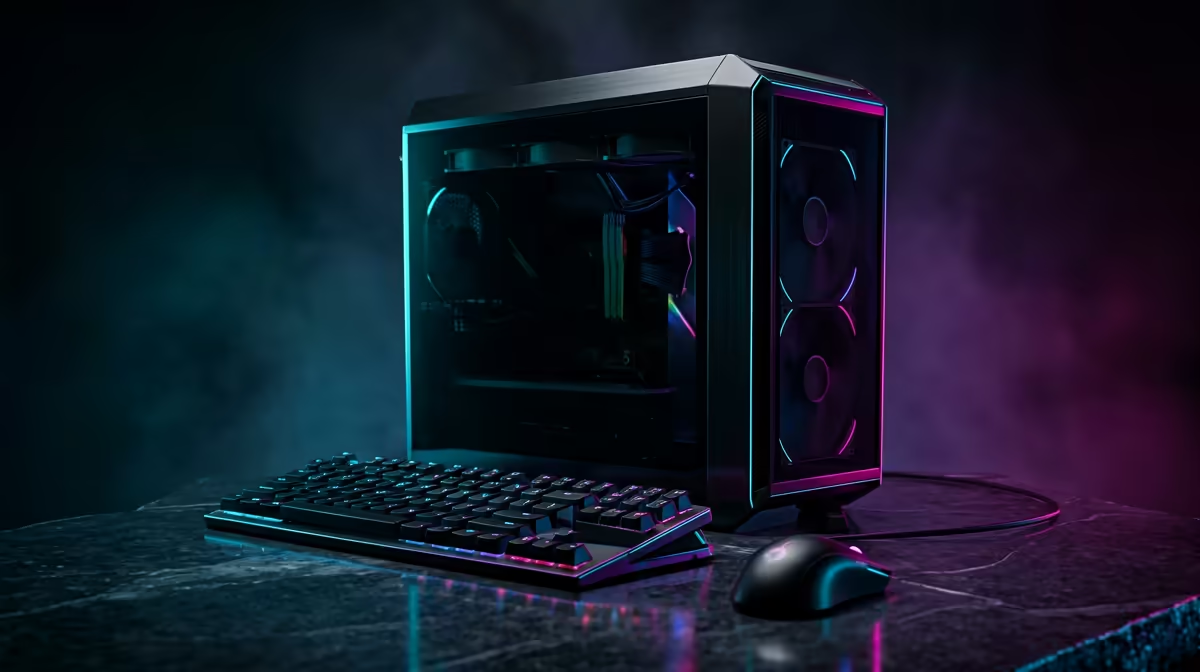
The smart way to approach a 240Hz build for couch co-op gaming is to size the graphics card to the panel first, then fill in the rest of the platform around it.
Centre this build on an RTX 5070 with DLSS frame generation and an Intel Core Ultra 5 245K, which can chase a 240Hz target in lighter titles. Round it out with 16GB of DDR5-6000 and a 2TB Gen4 NVMe SSD, then spend anything left on the panel or cooling.
Couch co-op builds favour quiet running, controller-friendly setups and steady frame times on a living-room screen. With an RTX 5070 with DLSS frame generation driving the display, set quality so the screen stays fed instead of idle. A 240Hz panel only feels fast when frame times stay flat, so tune settings to hold near 204 fps rather than chasing a spiky peak.
Single-thread speed matters as much as core count for this job. An Intel Core Ultra 5 245K with 16GB of DDR5-6000 keeps things steady for couch co-op gaming and avoids stutter when the load climbs. Rand pricing on imported parts moves with the exchange rate, so budget a small buffer above the sticker.
Plan two intake and one exhaust fan so the GPU holds boost clocks for couch co-op gaming through a warm SA day.
Fit a 2TB Gen4 NVMe SSD so installs and project files have space, then power it with a 750W 80+ Gold PSU for clean rails and headroom. South African summer ambient temperatures run high, so plan two intake and one exhaust fan from the start.
Weight the budget toward the part that gates couch co-op gaming, then balance the rest. A small step up in GPU tier does more for couch co-op gaming than RGB or a flashier case ever will. South African summer ambient temperatures run high, so plan two intake and one exhaust fan from the start.
For couch co-op gaming, an RTX 5070 with DLSS frame generation hits the value mark, pushing the display comfortably while the CPU keeps pace. Move up only if your targets grow later.
Yes for esports and lighter games, where an RTX 5070 with DLSS frame generation with an Intel Core Ultra 5 245K holds about 204 fps. The hardest AAA scenes will be lower at this resolution, which is normal.
Couch co-op builds favour quiet running, controller-friendly setups and steady frame times on a living-room screen. Put your first extra Rand there, then balance the rest of the platform around that priority.
List your main games, target resolution and budget ceiling, then size couch co-op gaming to that list so you never overpay for a spec you won't feel.
Stuttering on a steam deck usually needs a settings, driver, thermal, or power check first. Work through safe SA troubleshooting steps before replacing parts or assuming a full upgrade.
Read more
Quantity surveying students should prioritise a sharp ultrawide that keeps plans, schedules and cost sheets readable during long South African study sessions. Screen width helps comparison work, but PDF annotations, laptop output and native resolution matter just as much.
Read more
Watching rugby and sport does not usually need a podcast recording setup unless you also record commentary, reaction clips or a sports podcast. For this USB microphone record, the existing price facts are creator GPUs from RTX 5070 Ti 16GB R12,700 to RTX PRO 4000 24GB R16,700, plus RTX PRO 6000 96GB R151,700 for high-end workstation work.
Read more
A mid-range gaming PC is the sensible first build when South African buyers want gaming headroom without chasing the top tier. The given parts span RX 7600 around R4,650, RTX 5060 around R4,800, RTX 5070 around R13,100, Ryzen 5 5500 at R1,100 and Ryzen 7 7800X3D at R6,400.
Read more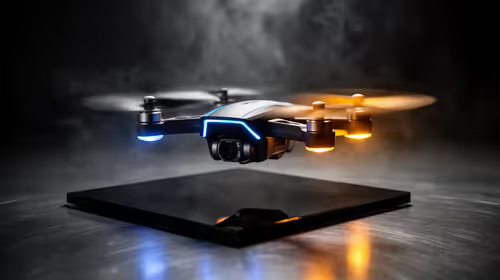
Around R10,000, the home security angle should stay focused on whether a camera drone is the right tool for checking a property, not on replacing fixed security gear. Verify available drone SKUs in SA and think through where any captured footage will be stored.
Read more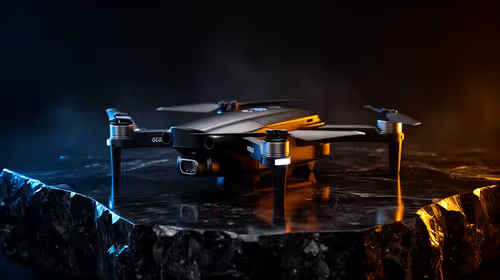
Common SA content-creator drone problems often come from buying the drone before checking the footage workflow. Fix the risk early by verifying drone SKUs and planning SSD, NAS, portable SSD and creator rig capacity for 4K editing.
Read more
Word typing overwrites text when overtype mode replaces characters at the insertion point. Turn off overtype and its Insert-key control in Word options, then test on a spare line before editing the document again.

Audio-Technica ATH-AWX7000 is a closed-back wired headphone model with wooden housings. Its premium materials and supplied analogue cables make source compatibility, comfort and your actual listening needs more important than a launch-price conversion.
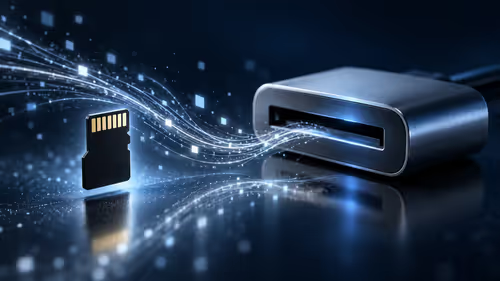
Lexar SILVER GO microSD is a UHS-I card family with a reader-dependent maximum transfer rate. Check the exact capacity, host compatibility and card reader before paying for a speed figure that your handheld or camera may not reach.

Windows AutoPlay settings control prompts and default actions when supported media or devices connect. Choose Ask me every time or Take no action where appropriate, then test with a trusted drive without formatting it.
Windows AutoPlay settings control prompts and default actions when supported media or devices connect. Choose Ask me every time or Take no action where appropriate, then test with a trusted drive without formatting it.
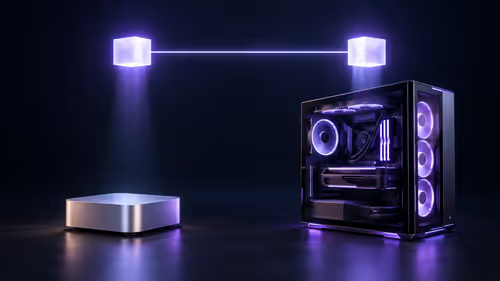
Mac mini M6 vs gaming PC for local AI: the 24GB Mac mini M6 at R25,599 gives about 18GB of AI memory, while an RX 9060 XT 16GB PC at R25,999 gives 16GB. Both reach the 14B tier; the PC games better and upgrades.
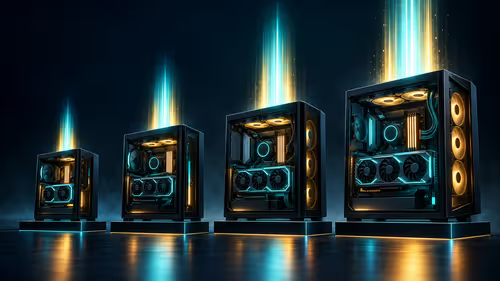
The best PC for local AI in South Africa depends on graphics memory: an Arc B580 12GB PC at R17,499 is the best value, a 16GB RX 9060 XT PC costs R25,999, and a 16GB Mac mini M6 at R17,699 reaches the same 14B tier.

The cheapest PC for local AI in South Africa is a Ryzen 5 5600 and Intel Arc B580 12GB system at R17,499, which reaches 14B models. An RX 9060 8GB PC costs R16,599 and the cheapest RTX 5060 PC R19,499.
Stuttering on a steam deck usually needs a settings, driver, thermal, or power check first. Work through safe SA troubleshooting steps before replacing parts or assuming a full upgrade.
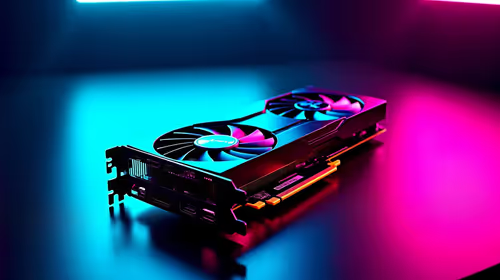
RX 7900 XTX Expedition 33 FPS across 1080p, 1440p, and 4K should be compared by preset, upscaling, VRAM use, and frame pacing. Use the guide to match settings to an SA gaming monitor.
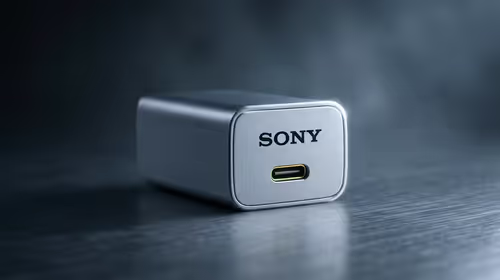
Fallout 4 cloud sync between PC and Steam Deck should be shortlisted around the job it must do. South African buyers should compare fit, performance, compatibility, and upgrade room, warranty path, and upgrade room before treating any pick as best.

Buy now or upgrade later: gaming headsets should be shortlisted around the job it must do. South African buyers should compare audio quality, mic clarity, comfort, and connection type, warranty path, and upgrade room before treating any pick as best.