Quick Answer
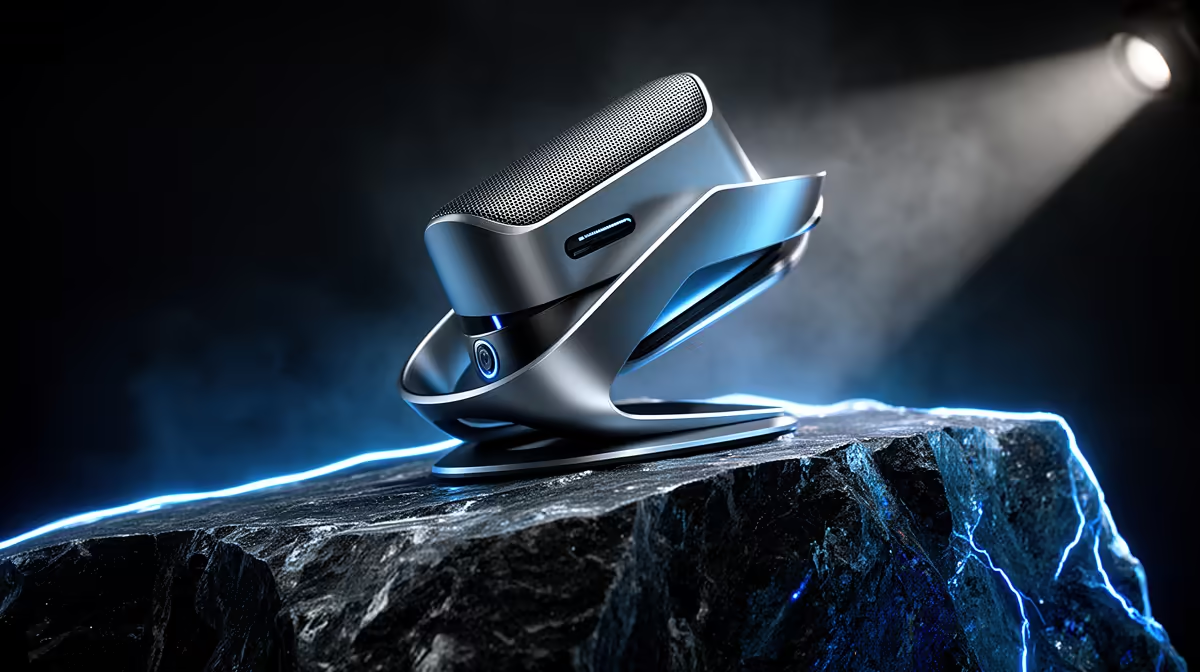
When comparing streaming microphones for an expensive, protected setup, weigh pickup pattern, connection (USB vs XLR) and build quality over headline price. A R1,800 HyperX QuadCast on a surge-protected outlet and a powered USB hub gives clean, reliable audio; the surge protector (~R300-R600) guards the whole chain.
What to compare in a protected setup
Protecting an expensive streaming setup is mostly about clean power and a tidy USB chain, not the mic capsule alone. Compare cardioid versus multi-pattern (cardioid is best for a single streamer), USB versus XLR, and self-noise. For an expensive rig, route the mic, interface and PC through a surge protector or line conditioner so a power spike does not fry the chain. A powered USB hub keeps the mic stable when several devices share the bus.
Mics and protection worth buying in SA
USB picks at Evetech include the HyperX SoloCast (R900), QuadCast (R1,800) and Blue Yeti (R2,200); pair any of them with a surge protector and a powered USB hub. If you run XLR, an audio interface should sit behind the same surge protection. A clamp boom arm (R350-R600) and pop filter (~R150) finish a clean, reliable recording chain.
Reliability over the long run
A protected USB chain means fewer dropouts and a longer mic lifespan. Set gain so peaks land around -12 to -6 dB and monitor with headphones to catch noise early. Keep the mic 10-15 cm away on a boom arm so desk knocks and keyboard noise stay out of the stream.
FAQ
Do I need surge protection for a streaming mic setup?
For an expensive rig, yes. A surge protector (~R300-R600) guards the mic, interface and PC together. It is cheap insurance against a spike taking out your whole chain.
USB or XLR for a protected streaming setup?
USB is simplest and reliable for one streamer; a QuadCast or Blue Yeti sounds excellent. XLR adds flexibility and effects but means an interface, which should also sit behind surge protection.
Will a powered USB hub help mic stability?
Yes. A powered hub keeps the mic's USB power steady when several devices share the bus, reducing dropouts and the crackle that plagues over-loaded USB ports.
mic, interface and PC through one surge protector, use a powered USB hub, and clamp the mic on a boom arm 10-15 cm from your mouth.