Quick Answer
A UCT computer science student based around Stellenbosch should buy for RAM, SSD speed and daily portability before chasing cosmetic extras. A computer science setup should start at 16GB RAM and a 512GB NVMe SSD; 32GB RAM is better if you run Docker, JetBrains IDEs, WSL, Android Studio or multiple local services. Budget broadly around R12,000-R18,000 for a non-gaming study laptop, or R18,000-R30,000 for Lenovo LOQ 15, ASUS TUF Gaming A15 or MSI Katana-style GPU models.
Laptop Spec To Start With
Use the course software as the filter. VS Code, Python, Java, SQL tools, Teams and many browser tabs are smoother on 16GB RAM than on 8GB, while a 512GB SSD fills quickly once projects, datasets and recorded lectures build up. If you want gaming after class, an RTX 4050 or RTX 4060 laptop can target roughly 60 fps at 1080p in many esports and lighter AAA titles when settings are tuned sensibly.
Digs Desk, Commute And Cooling
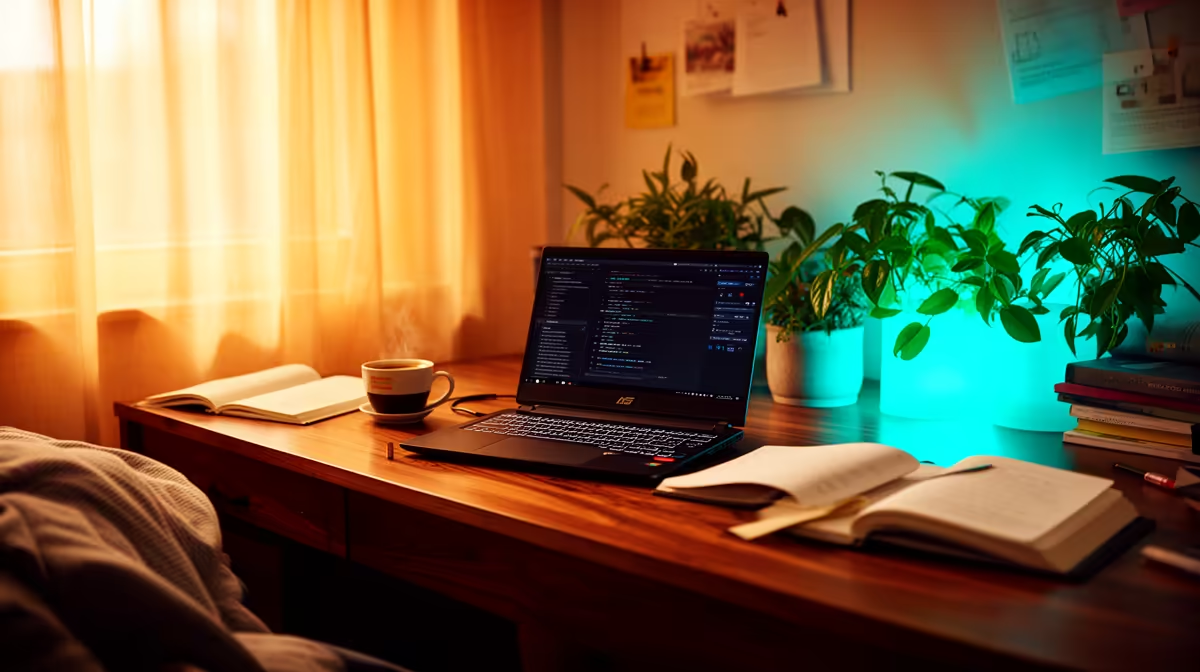
Because Stellenbosch is not next to UCT, battery life and a lighter charger matter if you commute or split time between residences. A 24-inch external monitor, laptop stand, separate keyboard and compact mouse make long assignments easier without turning a small room into a cable mess. Check fan noise under load, webcam position for tutorials, and whether the charger and HDMI cable fit the actual desk layout.
Where To Spend The Money
Spend first on 16GB or 32GB RAM, a good keyboard, a bright screen and warranty support through a local channel. Spend less on RGB, oversized chassis designs or a GPU you will not use for course work. If the laptop will be the only machine for three years, the jump from 512GB to 1TB storage is often more useful than a small CPU bump.
FAQ
Is 8GB RAM enough for computer science?
It is workable for light notes and browser work, but it is thin for VS Code, Docker, WSL and Chrome together. Choose 16GB as the minimum and 32GB if the budget allows.
What should a UCT student add to a digs setup first?
Add a 24-inch monitor, laptop stand and surge-protected multi-plug before buying decorative extras. Those three items make coding, reports and group work easier in a small room.
What budget makes sense for this setup?
A realistic full setup starts around R12,000-R18,000 for a solid study laptop plus basic accessories. GPU laptops and a monitor can push the package closer to R22,000-R35,000, so choose the GPU only when it supports your actual workload.
Setup Check
Before checkout, confirm the laptop has 16GB RAM or an upgrade path, a 512GB or larger NVMe SSD, Wi-Fi 6, and the ports needed for your monitor.