Two gaming rooms can share one clean network without leaving either machine on a weak wireless edge. A console and PC home network works best with planned cable routes, enough router ports and tested links at both ends.
Quick Answer
Put the lounge console and bedroom PC on one trusted home network, with Ethernet to each room where practical. They can share the same router without sharing one cable. A switch adds LAN ports at the far end when several fixed devices need them. Wiring improves network stability; it does not change the controller's local input link or mouse response by itself. Use router queue control for downloads, keep voice and streaming in the bandwidth plan and choose a removable surface route in a rental with written permission.
Draw the two-room path
Mark the fibre or wireless hand-off, main router, lounge console and bedroom PC. Measure safe cable routes along walls and door frames. Keep stairs, walkways and door pinches clear.
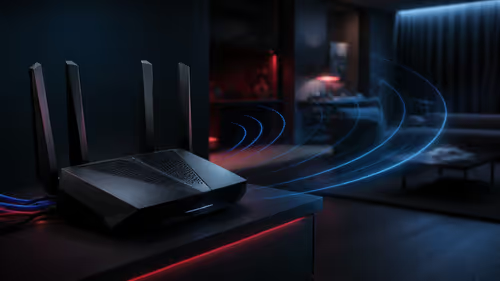
The router remains the gateway for both rooms. Avoid placing a second consumer router in normal routing mode because that creates double NAT. Use access-point mode or a supported switch at the far room.
Label both cable ends. A future console move becomes simple when the route is clear.
Wire the lounge
Run Ethernet from the main router or nearby switch to the console. Confirm link speed in the platform network test and compare packet loss.
The controller still talks to the console through USB or its supported wireless link. Ethernet affects online game traffic, party chat and downloads. It does not shorten the pad-to-console signal path.
Keep the router and console ventilated. Do not hide network hardware in a closed television cabinet when heat or radio coverage suffers.
Reach the bedroom
A direct cable gives the PC the cleanest path. In a rental, use removable clips or approved trunking after getting permission. Do not place loose cable under rugs or across a doorway.
When one cable reaches the room and several devices need it, add a Gigabit or faster unmanaged switch that matches the network. Connect the PC, access point or console to separate ports.
Check that the uplink and every client negotiated at the intended speed. One damaged lead can limit the room.
Avoid a network loop
Connect the far switch to the router with one uplink unless the equipment is configured for a supported aggregated design. Two ordinary cables between the same unmanaged devices can create a loop and flood the LAN.
Keep the switch visible enough to check its link lights and power. Do not bury it behind bedding or soft furniture. Label the lounge and bedroom ports so a future move does not duplicate the uplink.
When the far room needs Wi-Fi too, connect one access point in its documented mode. Let the main router provide addresses to both rooms.
Use Wi-Fi where cable stops
Separate bands can reduce radio competition, but they still share the router and internet line. Keep the fixed gaming device wired and reserve Wi-Fi for phones or a controller accessory that requires it.
If a mesh node serves the bedroom, use Ethernet backhaul where possible. A wireless satellite must sit where its main-node connection remains strong.
Test router ping from both rooms while another device downloads. That exposes a weak room link before an online match hides it inside server latency.
Manage simultaneous traffic
One game uses modest bandwidth, while a patch, stream or cloud backup can fill the line. Set launcher limits and schedule large transfers.
Configure smart queue management or QoS from measured speeds. Test both gamers in their usual servers while one controlled download runs.
Voice chat and streaming can share Ethernet without a special cable. They still need upload headroom. Watch loaded latency during a call or broadcast.
Keep the home secure
Use one trusted router administrator, current firmware and a strong Wi-Fi password. Put visitors on an isolated guest network.
Do not expose router administration to the internet for convenience. Save a supported configuration backup after the two-room setup works.
For shared spaces, agree which user can change QoS or schedules. Random rule changes make the next fault harder to repeat.
Complete each gaming station
Compare gaming controllers by exact console and PC support. The peripheral best-seller range can help finish both desks once you check ports, wireless mode and platform compatibility.
Test the whole evening
Play one session in both rooms, start a voice call and run a capped download. Record first-hop ping, game loss and any queue spike.
Keep the layout when both rooms remain steady. If one fails, swap its cable and switch port before changing the router.
FAQ
Should console and PC share one router?
Yes. One supported gateway simplifies NAT, security and queue control. Give each room a clean LAN path.
Does console Ethernet reduce controller input lag?
It improves online network consistency. Controller input uses its own local wired or wireless connection to the console.
Do you need a switch?
Use one when a room has more wired devices than available cable runs or router ports. Match its speed to the network.
Draw both room routes, wire the fixed devices and prove a simultaneous game, voice and capped-download session before adding mesh or another router.