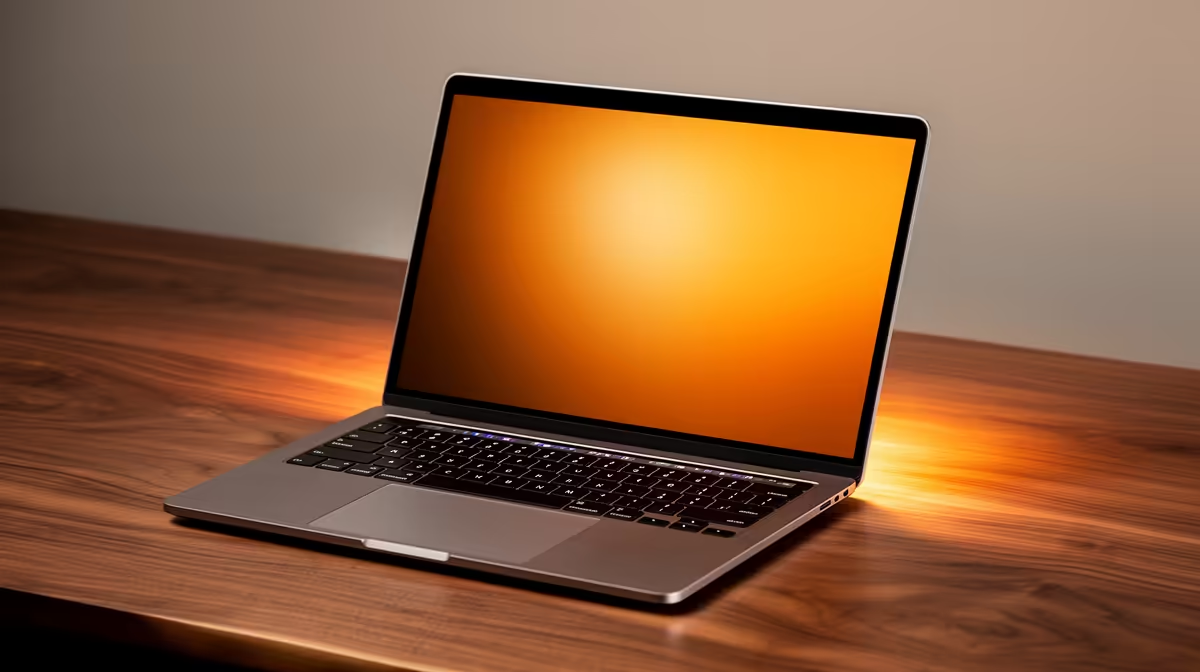
Tired of hitting render and then making coffee... for the third time? As a South African graphic designer, you know the struggle. Off-the-shelf laptops often compromise on what matters most: GPU power, RAM, or screen accuracy. But what if you could build a machine that’s perfectly tailored to your Adobe suite workflow? That’s where customizable laptops for graphic design come in, giving you the power to create without the lag. Let's dive into ZA's top picks.
Why Settle? The Power of Customisation
For creatives, the "one-size-fits-all" approach just doesn't cut it. Your workflow is unique, whether you're juggling massive Photoshop files, rendering complex 3D scenes in Blender, or editing 4K video in Premiere Pro. A standard laptop might have a great CPU but skimp on the graphics card, or offer a beautiful screen paired with not enough RAM.
This is the core advantage of choosing a customizable laptop for your graphic design work. You get to be the architect of your own creative powerhouse. By hand-picking the components that matter most to you, you invest your budget where it has the biggest impact on your productivity, ensuring a smooth, frustration-free creative process. 🚀
Deconstructing the Perfect Design Laptop: What to Prioritise
Building the ideal machine means understanding the key components and how they affect your favourite applications. Let's break down the essentials.
The CPU: Your Creative Engine (Intel vs. AMD)
The Central Processing Unit (CPU) is the brain of your operation. For graphic design, you need a balance between single-core speed (for tasks like manipulating layers in Photoshop) and multi-core performance (for rendering and exporting).
- Intel Core Processors: Often favoured for their strong single-threaded performance, making them fantastic for responsive editing in the Adobe suite. You can find powerful options across our range of Intel laptops on special.
- AMD Ryzen Processors: Known for their excellent multi-core value, they chew through rendering tasks and are brilliant for multitasking. If your work involves a lot of video or 3D, check out the latest AMD laptops on special.
Ultimately, both brands offer incredible performance. The choice comes down to your specific workflow and budget.
The GPU: The Visual Powerhouse
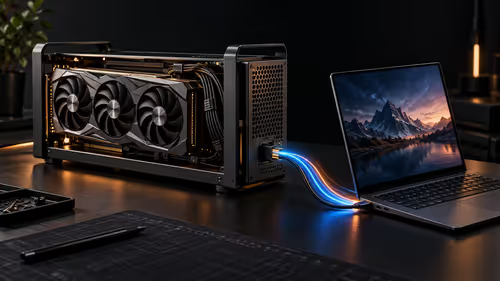
A dedicated Graphics Processing Unit (GPU) is non-negotiable. While integrated graphics can handle basic tasks, modern design software leans heavily on the GPU to accelerate everything from applying filters to rendering 3D models. An NVIDIA GeForce RTX series card is the gold standard, providing the power and dedicated RT/Tensor cores that speed up AI features and ray tracing.
This is why many designers turn to high-performance gaming laptops. They are essentially portable workstations with the top-tier GPUs needed for demanding visual tasks. Exploring the best gaming laptop deals is often the smartest way to find a machine with a powerful RTX 30- or 40-series GPU.
RAM & Storage: The Unsung Heroes
Don't underestimate Random Access Memory (RAM) and storage speed.
- RAM: Think of RAM as your digital desk space. Working with high-resolution images, multiple layers, and several apps at once consumes a lot of it. 16GB is the minimum, but 32GB is the sweet spot for serious professionals to avoid system slowdowns.
- Storage: A fast NVMe Solid-State Drive (SSD) is essential. It dramatically reduces loading times for your OS, applications, and large project files. A 1TB NVMe SSD is a great starting point, giving you speed and ample space.
The Display: Your Window to Creativity ✨
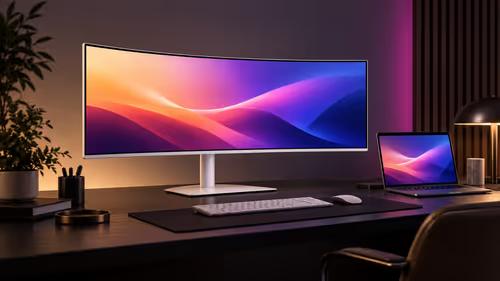
What good is all that power if you can't trust the colours on your screen? A high-quality display is critical for any graphic designer. Look for:
- Colour Gamut: Aim for 100% sRGB coverage for web work, or high Adobe RGB / DCI-P3 coverage for print and video.
- Resolution: A Full HD (1920x1080) screen is the baseline, but a QHD (2560x1440) display offers significantly more screen real estate and sharpness.
- Brightness: A brighter screen (measured in nits) is easier to use in well-lit environments.
Colour Calibration Pro Tip 🎨
Even the best laptop screens can drift in colour over time. For professional work, invest in a hardware calibration tool like a Datacolor SpyderX or Calibrite ColorChecker. Calibrating your display once a month ensures your colours are accurate and consistent, so what you see is what your clients or the printers get.
Putting It All Together: Finding Your Ideal Build
The best customizable laptop for graphic design is the one that matches your specific needs. Are you an illustrator who lives in Photoshop and Illustrator? Prioritise single-core CPU speed and a colour-accurate screen. A 3D artist or video editor? Funnel more of your budget into a powerful GPU and more RAM.
The beauty of customisation is that you don't have to pay for features you won't use. You can configure a machine that is perfectly optimised for your creative output, giving you the best possible performance for your hard-earned Rands.
Ready to Find Your Perfect Match?
The ideal creative laptop is a balance of power, precision, and personal preference. For maximum performance, choice, and value in South Africa, a custom-configured machine is hard to beat. Explore our massive range of laptop specials and find the perfect machine to bring your vision to life.