Quick Answer
Stick with ATX on a R40,000 SA budget unless you specifically need a small PC for desk space, travel, or a living-room setup. ITX is neat and premium, but ATX is cheaper to cool, easier to build, and more forgiving with high-end GPUs. The smaller case should solve a real space problem, not create a harder build for the same performance.
What ITX Changes
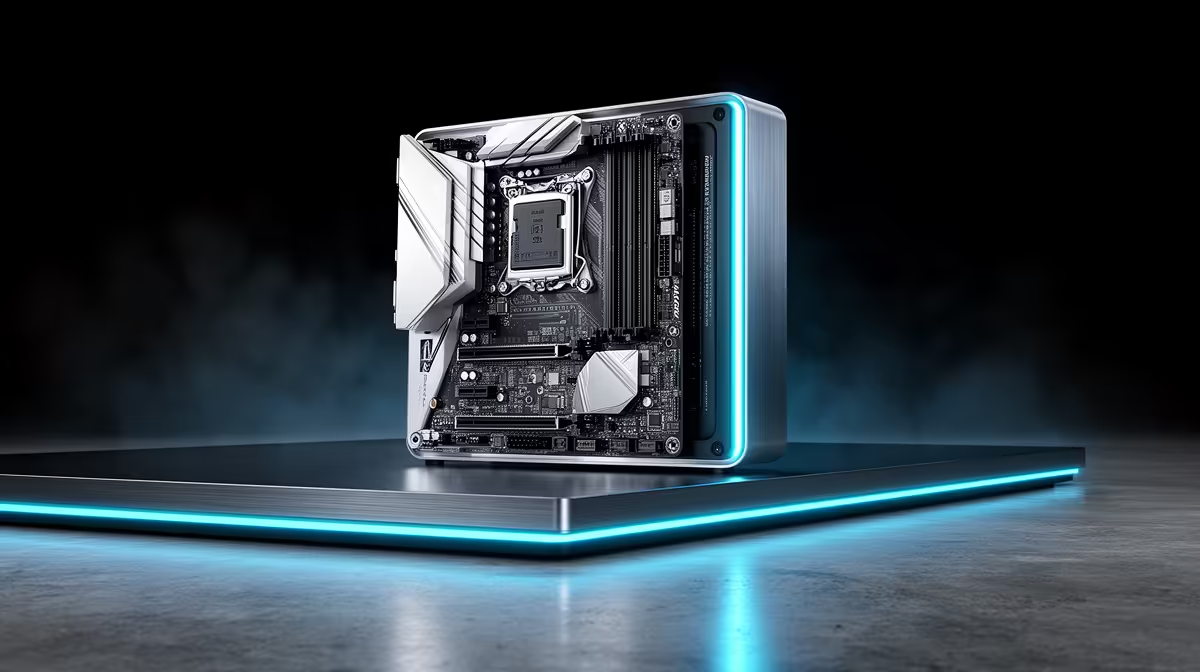
ITX builds use smaller motherboards, compact cases, shorter cable paths, and tighter cooler clearance. That can look excellent, but it limits motherboard slots, fan placement, PSU choice, and GPU breathing room. A large RTX 4080, RTX 5080, or RTX 5090-class card can make small-case planning difficult.
Why ATX Is The Default
ATX gives more room for airflow, more headers, easier cable management, and cheaper motherboard choice. On a R40,000, the money saved versus ITX can improve the GPU, monitor, PSU, or SSD. A Corsair 4000D Airflow-class ATX build is easier for a first-time builder than a compact sandwich-layout case.
SA Practical Fit
If the PC will be couriered, moved between rooms, or built by a shop, ATX gives more tolerance for transport and future upgrades. ITX makes sense for a small flat, LAN-style travel, or a clean lounge setup. Measure desk depth, floor space, and GPU length before choosing the case size.
Final Fit Check
Before the final cart, confirm the boring details that decide daily use: clearance in millimetres, cable standard, warranty path, delivery handling, and whether the part still suits the monitor, desk, and room you already use.
FAQ
Does ITX perform worse than ATX?
Not automatically. With good parts and cooling it can perform the same, but it is harder to keep quiet and cool.
Is ITX more expensive?
Usually yes. ITX motherboards, SFX power supplies, and compact cases often cost more than equivalent ATX parts.
Which is better for a first build?
ATX is better for most first builds because it has more room and fewer compatibility traps. Choose ITX after measuring carefully.
Buyer Check
Choose ITX only after confirming GPU length, PSU format, cooler height, and radiator support in the exact case you want.