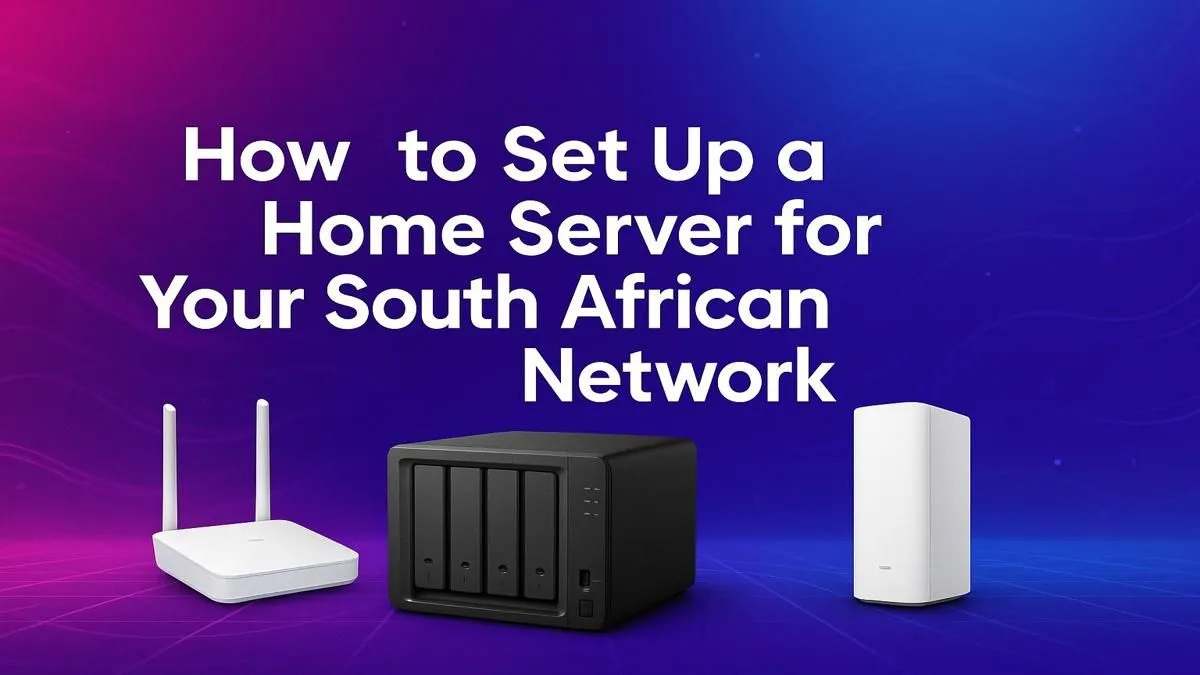
Tired of paying for cloud storage that’s never quite big enough? Dreaming of hosting a lag-free Minecraft server just for you and your mates? A home server setup in South Africa is the ultimate DIY project for taking back control of your digital life. It’s your own private cloud, media hub, and gaming powerhouse, all running from a quiet corner of your home. Let's get building! 🚀
Why Build a Home Server in SA?
Before we dive into the hardware, let's talk about the why. What can a home server actually do for you? The answer is… almost anything. A properly configured home server in South Africa can centralise your digital world in ways you never thought possible.
Here are a few popular uses:
- Your Personal Netflix: Install software like Plex or Jellyfin to organise your movies and series. You can then stream your media to any device—your TV, laptop, or phone—anywhere in the world.
- A Private, Secure Cloud: Forget monthly fees for Google Drive or Dropbox. A home server gives you terabytes of storage that you own and control. Automatically back up your family's phones and PCs to one secure location.
- Dedicated Game Hosting: Stop relying on dodgy public servers. Host your own private, 24/7 world for games like Minecraft, Valheim, ARK, or Factorio. You make the rules, and performance is excellent.
- The Brains of Your Smart Home: Run Home Assistant to create powerful automations for your lights, plugs, and other smart devices, all without relying on external cloud services.
Building a home server is more than just a utility; it's a deeply rewarding project that teaches you a ton about networking and computing.
Choosing the Right Hardware for Your Server
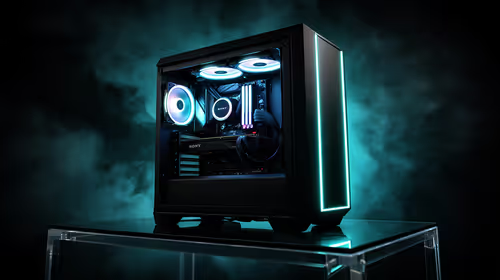
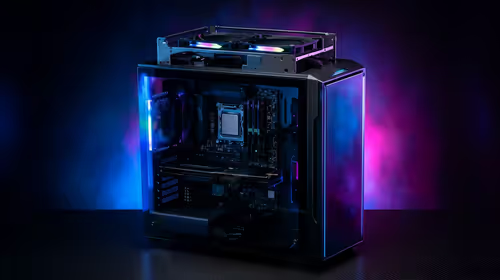
You don’t need a supercomputer to get started. In fact, many people build powerful servers by repurposing old gaming PC parts. The key is choosing components optimised for 24/7 efficiency and reliability, not raw gaming speed.
CPU, Motherboard, and RAM
For a typical media and file server, you don't need the latest Core i9 or Ryzen 9. A modern Intel Core i3/i5 or an older AMD Ryzen 5 CPU with 4-6 cores is more than enough. Focus on a processor with a lower TDP (Thermal Design Power) to keep electricity costs down.
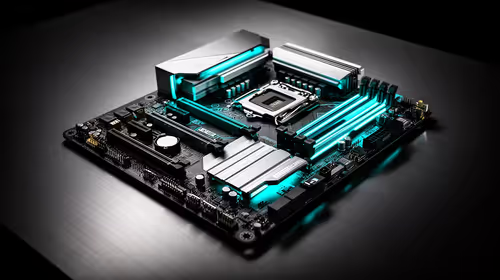
Pair it with a reliable motherboard that has enough SATA ports for all your hard drives. For RAM, 8GB is a decent starting point, but 16GB is the sweet spot for running multiple services smoothly.
Storage: The Heart of the Machine ✨
This is where you'll spend most of your budget. Your storage strategy will define your server.
- Operating System (OS) Drive: A small, fast SSD (250GB - 500GB) is perfect for installing your server's OS. This makes the system feel snappy and responsive.
- Data Drives: For mass storage, traditional Hard Disk Drives (HDDs) offer the best value in ZAR per terabyte. Look for drives designed for NAS (Network Attached Storage) use, as they are built for constant operation.
- Redundancy (RAID): To protect against data loss from a drive failure, consider setting up a RAID array. For example, with two 8TB drives in a RAID 1 configuration, one drive mirrors the other. If one fails, your data is still safe on the second.
Nailing Your Home Server Networking
Your server is useless if you can't connect to it reliably. A stable network is the unsung hero of any good home server setup in South Africa. While Wi-Fi is convenient for your laptop, your server demands the stability of a wired Ethernet connection.
A powerful and reliable wireless router is the heart of your home network, managing all the traffic to and from your new machine. Plug your server directly into it with an Ethernet cable for the best possible speed and lowest latency.
Of course, other devices in your home will still use Wi-Fi to access the server's content. If you find that the signal is weak in certain areas, causing buffering during movie night, a few well-placed wireless range extenders can make all the difference. While we always recommend a cable for the server itself, if you absolutely must connect it via Wi-Fi due to your home's layout, invest in one of the best wireless adapters available to ensure a stable signal.
Ultimately, getting your server online and accessible depends on a solid foundation of wireless networking gear. Don't let it be an afterthought in your build plan.
Docker is Your Best Friend 🐳
Instead of installing apps directly onto your server's OS, learn to use Docker. It packages applications into neat little 'containers' that are easy to manage, update, and remove without messing up your system. Tools like Portainer give you a simple web interface to manage them all, making your home server setup incredibly clean and powerful.
Choosing a Server Operating System (OS)
The OS is your server's brain. There are several fantastic, often free, options available.
- TrueNAS CORE: Built on the rock-solid ZFS file system, TrueNAS is an excellent choice for storage-focused servers. It's incredibly robust and has great data integrity features.
- Unraid: Famous for its flexibility, Unraid lets you mix and match hard drives of different sizes. It has a vibrant community and a brilliant app store that makes installing services like Plex a one-click affair. It's not free, but many find the license fee well worth it.
- Ubuntu Server (Linux): If you want maximum control and don't mind using a command line, Ubuntu Server is the industry standard. It's free, lightweight, and can be customised to do absolutely anything.
Everyday Reliability
The one challenge every South African tech project must account for. A sudden power cut can corrupt your data or even damage your hardware. The solution is non-negotiable: you need an Uninterruptible Power Supply (UPS).
A UPS is essentially a big battery. When the power goes out, it instantly takes over, keeping your server running. More importantly, good server software can communicate with the UPS. If the outage lasts longer than a few minutes, the UPS can signal the server to perform a safe, clean shutdown, protecting your precious data. For any serious home server build in SA, a UPS is not a luxury—it's essential.
Ready to Build Your Digital Hub?
A home server setup in South Africa doesn't have to be complicated or break the bank. From powerful components to essential networking gear, we've got everything you need to get started. Explore our massive range of PC components and start planning your build today!