Quick Answer
Building a clean mATX gaming PC around a curved tempered glass case requires tighter cable management discipline than an ATX build, because the shorter mATX motherboard and smaller case interior leave less room for bundling. Prioritise a fully modular PSU, route all cables before installing the GPU, and confirm case GPU clearance before purchasing your graphics card, as mATX cases vary more in internal dimensions than ATX mid-towers.
Choosing the Right mATX Case with Curved Glass 🖥️
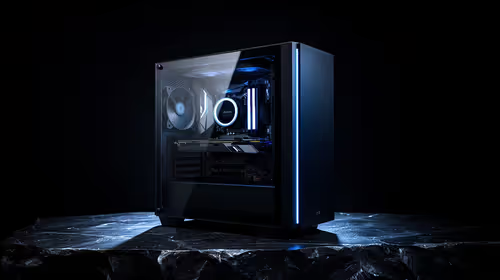
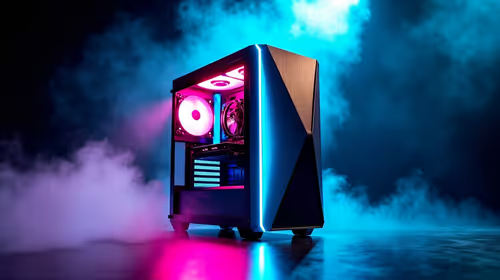
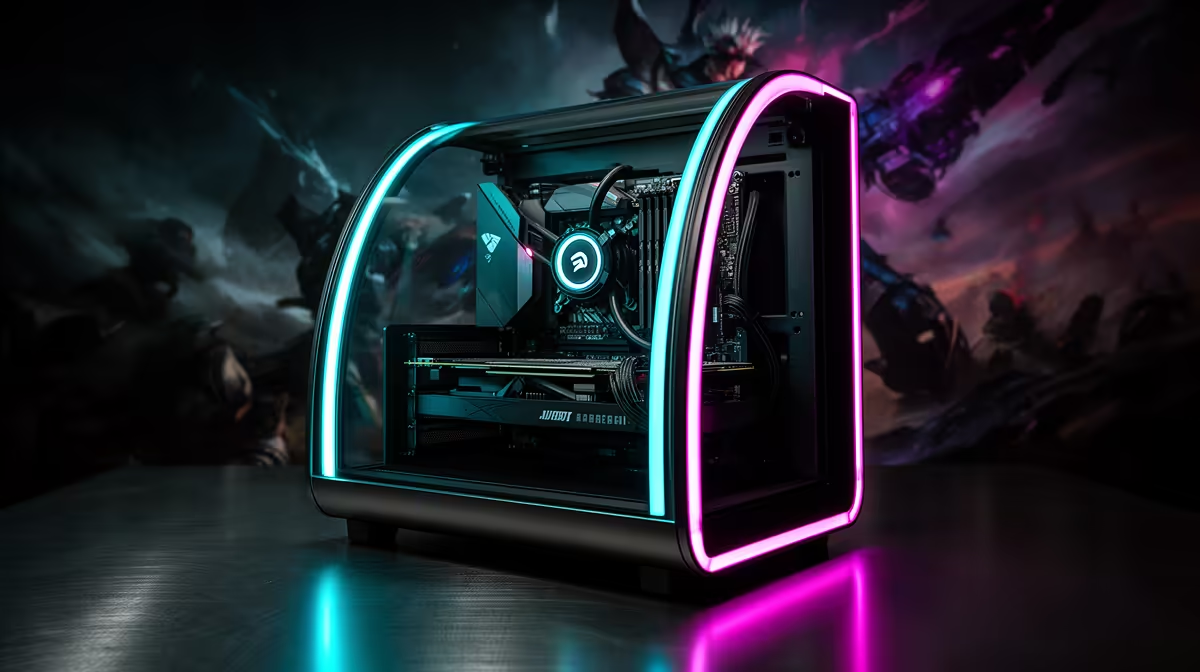
Curved tempered glass side panels are found on a subset of mATX cases positioned as premium compact builds, offering a panoramic view of the interior without the flat-panel look of standard cases. Key dimensions to check before buying: GPU clearance (300mm to 360mm is typical for mATX, though some cases reach 380mm), CPU cooler height clearance (140mm to 160mm for mATX versus 165mm to 175mm in full ATX), and whether the case supports a 240mm front radiator for an AIO if you are cooling a performance chip.
mATX Cable Management: Tighter Tolerances 🔧
The behind-tray clearance in most mATX cases is 12 to 18mm, less than the 20 to 30mm typical in ATX mid-towers. This means cables must be routed more deliberately to avoid the side panel pressing against bundled cables when closed, which can crack the curved glass panel under pressure over time.
ARGB Fans and Lighting in a Compact Build ✨
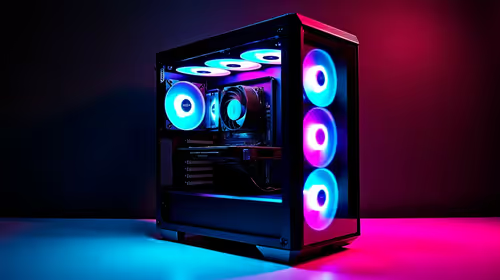
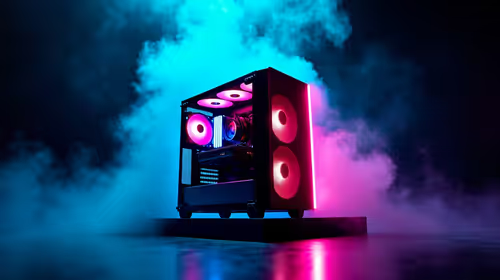
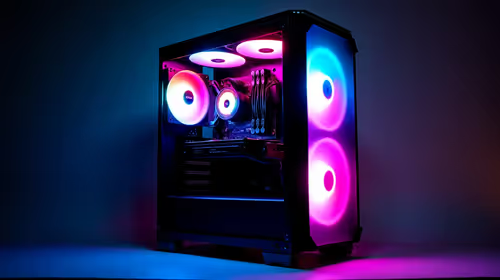
mATX cases typically accommodate two to three 120mm fans: two at the front intake and one at the rear exhaust, with some supporting a top 120mm or 240mm position as well. ARGB fans in this compact layout are visually impactful because the smaller interior concentrates the lighting effect. Connecting all fans to the case hub or a single motherboard ARGB header and setting a static colour or slow breathing pattern suits the compact showcase aesthetic.
Measure CPU Cooler Height in an mATX Build ⚡
mATX cases with curved side panels sometimes have reduced CPU cooler clearance compared to the case's listed maximum because the curve of the panel creates a narrower internal profile midway up the panel. If your mATX case lists 155mm CPU cooler clearance, add only 5mm rather than the usual 10mm as your practical headroom buffer, since the curve can reduce usable clearance at cooler mid-height. Verify by checking build photos from other builders with the same case and a similar cooler height.
FAQ
What GPU length fits most mATX cases with curved glass panels?
Most mATX cases with curved glass panels support 300mm to 340mm GPU length, which covers all mid-range and high-end dual-fan cards and most triple-fan cards below the flagship RTX 5090 tier. Confirm the specific case's clearance spec before buying an RTX 5080 or RX 9070 XT triple-fan AIB, as some mATX cases list 320mm clearance which can be borderline for 335mm cards.
Can I fit a 360mm AIO in an mATX curved glass case?
Rarely. Most mATX cases support a maximum of 240mm front and 120mm top radiator support due to their reduced internal volume. Some full-size mATX cases (420mm or taller) support 280mm front radiators. If 360mm AIO cooling is important to your build, an ATX mid-tower is the more appropriate form factor.
Is mATX a good choice for a build that needs upgradeability in SA?
mATX is a reasonable platform for a build that will be upgraded once or twice. The form factor supports full-size discrete GPUs, two to four RAM slots (sufficient for 32GB to 64GB DDR5), and typically two to three M.2 NVMe slots. The main upgrade constraint is expansion slots: most mATX boards have two PCIe slots versus four on ATX, limiting future multi-card compute configurations. For pure gaming upgrades, mATX is fully adequate.
Want a compact build that still looks stunning? Browse mATX cases at Evetech with curved tempered glass side panels and check GPU clearance specs before completing your compact build.