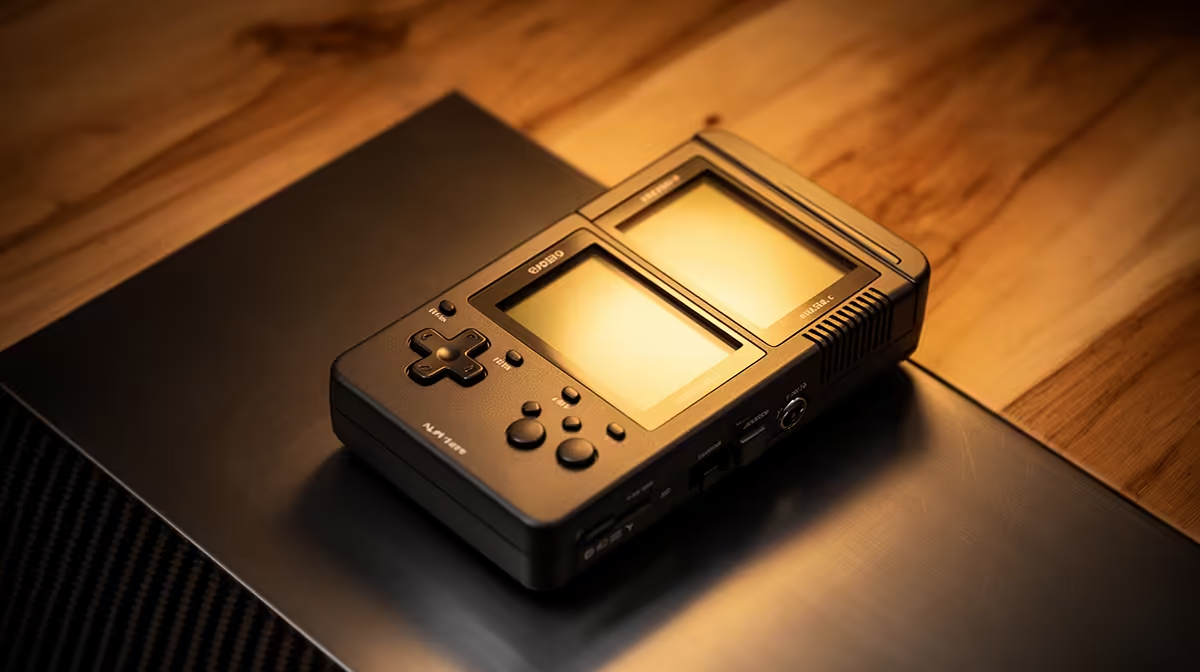
The single biggest factor in choosing custom firmware versus stock for your retro handheld is not your taste in menus, it is the chip inside the device. Allwinner, Rockchip, and a handful of other system-on-chips each have firmware that runs best on them, and matching the two is what separates a smooth setup from a frustrating one. Stock firmware will play games out of the box, but custom firmware is often the real reason these handhelds are worth buying.
Quick Answer
Match the firmware to the chip. Allwinner devices (like the RG35XX family on the H700) run best on muOS, Rockchip devices (RK3326, RK3566, RK3588) run best on ROCKNIX, and Knulli supports almost everything if you want one consistent OS across multiple handhelds. Stock works instantly for beginners; custom firmware gives you better performance, cleaner menus, and active updates.
Why stock firmware holds you back
Most budget handhelds ship with Chinese stock firmware built around a dated RetroArch build, clunky menus, and the occasional GPL compliance gap. It plays games the moment you switch on, which is genuinely useful if you have never touched emulation before. The trade-off is that it ages quickly, rarely gets meaningful updates, and gives you little control over performance tuning. For a first device or a gift, stock is fine. For anything you intend to keep, custom firmware is usually the upgrade that unlocks the hardware.
Match the firmware to the chip
Allwinner means muOS or OnionOS
If your handheld runs an Allwinner chip such as the H700 found in the RG35XX-family devices, muOS is the natural choice. It uses RetroArch as both its emulation engine and its interface, which keeps it fast and direct, with quick boot times and almost no delay between launching and playing. It stays out of your way, which is exactly what you want on a pocket device. For Miyoo Mini Plus owners, OnionOS fills the same role: it is built specifically for that device's Cortex-A7 chip and is widely regarded as one of the most polished community firmware builds in the entire handheld scene.
Rockchip means ROCKNIX
Rockchip-based handhelds, including RG353 and RG556 range devices on processors like the RK3326, RK3566 and RK3588, are best served by ROCKNIX. It is built and maintained with those SoCs in mind, so driver support and performance tend to be the smoothest path on that silicon. ROCKNIX also targets the more capable end of the retro spectrum, supporting demanding systems like PSP, Dreamcast, N64 and Saturn that Allwinner hardware cannot handle reliably.
Knulli for one OS across many devices
If you own several handhelds on different chips and want a single, consistent experience, Knulli is the answer. It supports Allwinner, Rockchip, Amlogic and more, and uses EmulationStation with box art, metadata, ratings and genre tags, making it the most console-like and visually rich of the three. The cost is speed: boot times are longer and the feature-heavy interface can feel heavier than muOS if you value snappiness above presentation.
How to switch firmware safely
- Confirm your handheld's exact chip and model, then pick the firmware that targets it.
- Use a quality microSD card, 32GB minimum and 64GB recommended, so you have room for the OS and your library.
- Flash the firmware image with a tool like balenaEtcher, which takes roughly two to five minutes.
- Insert the card, boot, and verify it loads before adding your full content. Keep your stock card untouched so you can fall back if needed.
- If the device supports two card slots, move your ROM library to the second card so future firmware reflashes never touch your saves.
For the device itself, browse the handheld gaming consoles range at Evetech and check which chip each model uses before you buy, since that decides your firmware path. The fastest-moving models tend to surface in the PC best sellers.
Frequently Asked Questions
Do I have to install custom firmware to use my handheld?
No. Stock firmware plays games immediately and is fine for beginners or gifts. Custom firmware is an optional upgrade that improves performance, menus and update support, and it is usually why enthusiasts choose a given device.
How do I know which chip my handheld uses?
Check the model's specifications before buying, or look up the device family. Allwinner H700 powers many RG35XX-class units, while RG353 and RG556 range devices use Rockchip chips, which decides whether you reach for muOS or ROCKNIX.
Is flashing custom firmware risky?
It is low risk if you flash to a separate microSD card and leave the original untouched. Flashing takes a few minutes with balenaEtcher, and if anything goes wrong you simply boot from the stock card again.
Which firmware is fastest day to day?
muOS is the snappiest because it runs RetroArch directly with minimal overhead. Knulli trades that speed for a richer, console-style library view, so the right pick depends on whether you value quick launches or presentation.