Quick Answer
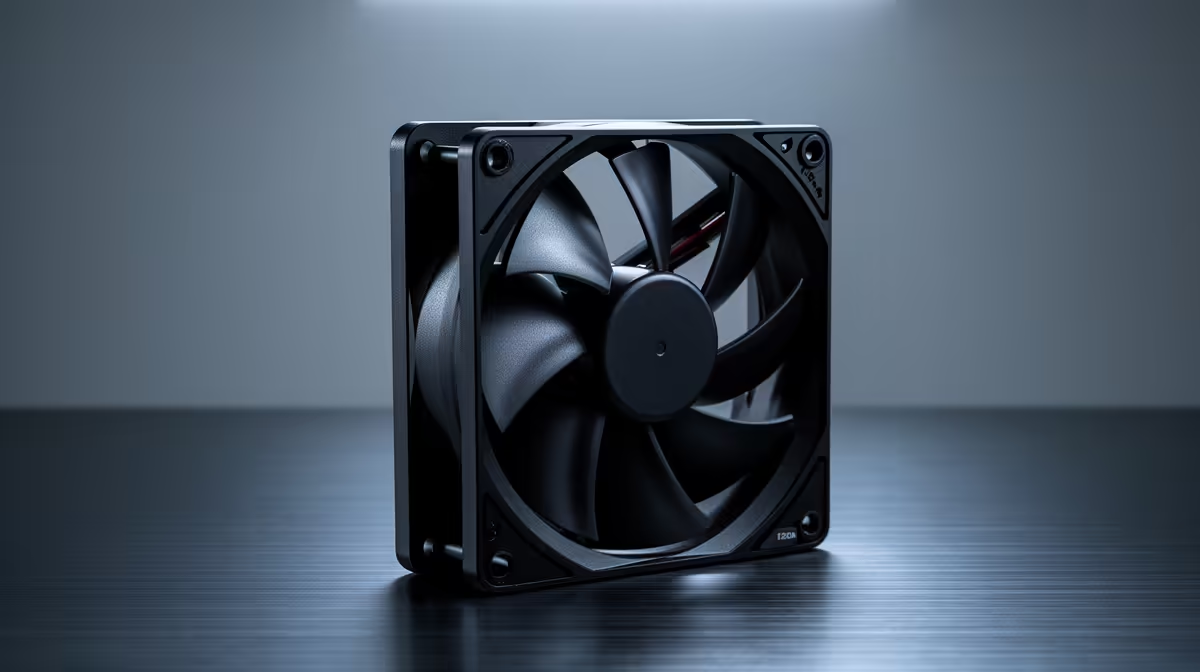
Comparing fans for an always-on server means weighting airflow (CFM), bearing longevity and PWM control over RGB or top-line specs. A reliable 120mm PWM fan with a long-life bearing (around R250 each, or roughly R1,000 for a four-fan set at Evetech) moves steady air quietly and keeps drives and CPU cool around the clock.
Longevity is the server fan priority
A home lab server runs 24/7, so fan bearing life matters most. Choose fans with long-life bearings (fluid-dynamic or similar) rated for high MTBF, so they do not fail after a year of continuous running. A reliable 120mm PWM fan that lasts is worth more than a flashy fan with a short lifespan in an always-on server.
Airflow to keep drives and CPU cool
Servers often pack multiple drives that need steady cooling, so prioritise good airflow (CFM) through the case. Two intake fans over the drive cage and one exhaust keep temperatures in check. Balanced 120mm fans suit most positions; static-pressure fans help if the case has restrictive filters or a dense drive cage.
Quiet, controlled operation
A lab server may sit in a study or cupboard, so PWM control to keep fans quiet at idle and ramp only under load is useful. Skip RGB, it adds nothing to a headless server. For an SA home lab, reliable long-life 120mm PWM fans (around R250 each) that move steady air quietly are the sensible comparison winners.
FAQ
What case fan matters most for a home server?
Bearing longevity, since a server runs 24/7. Choose long-life 120mm PWM fans that move steady air quietly and last under continuous use.
How many fans for a home lab server?
Two intake fans over the drive cage and one exhaust keep drives and CPU cool. Add static-pressure fans if the case has dense filters or a packed drive cage.
Do server fans need RGB?
No. RGB adds nothing to a headless server. Prioritise airflow, bearing life and PWM control over looks for an always-on machine.
24 7 lab server, pick long-life 120mm PWM fans, place two over the drive cage as intake and one as exhaust, and set a quiet curve that ramps only when drives or CPU heat up.