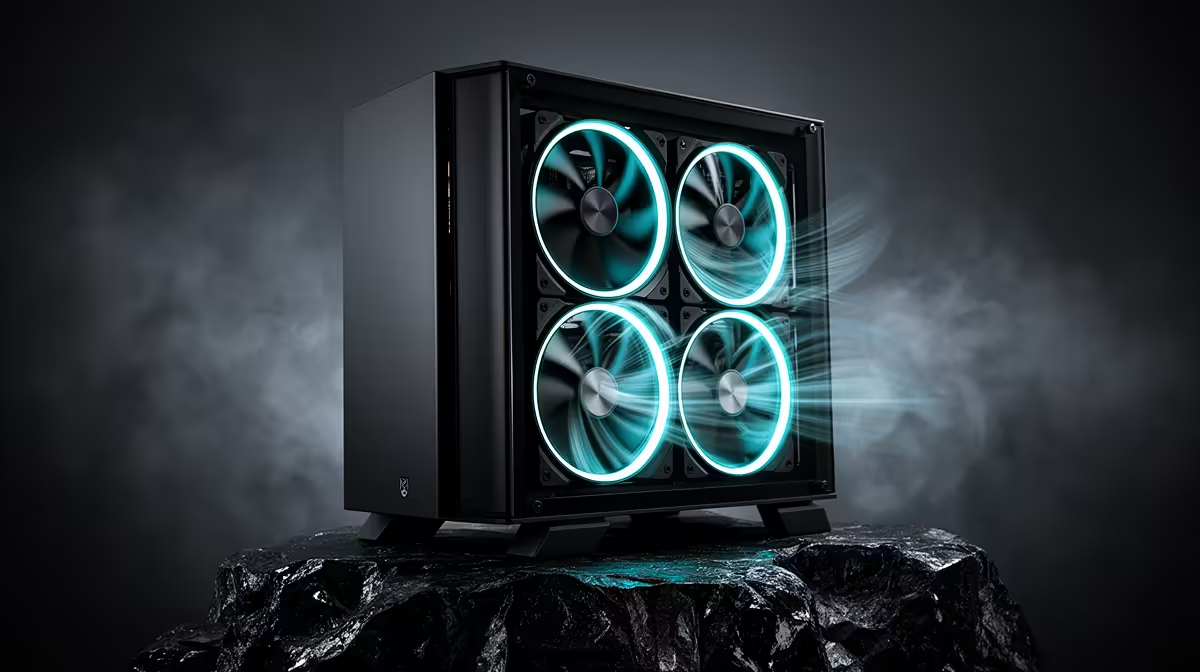
Dust building up inside a case faster than expected, or temperatures that never quite settle no matter how many fans get added, both point to the same underlying issue rather than bad luck. Getting intake exhaust fan balance right decides whether a case runs slightly pressurised and clean or slightly starved and dusty, and the difference often comes down to fan count rather than fan quality. Most builders add fans reactively without ever checking whether intake and exhaust are actually working together.
Quick Answer
Pair two Einarex EX12A fans as intake with one running as exhaust for a mildly positive-pressure build, which keeps dust intake low while still moving enough air through the case. At R249 each, running three fans in this 2:1 configuration costs a fraction of a full case fan bundle while covering most mid-tower cooling needs.
⚖️ What Positive and Negative Pressure Actually Mean
Positive pressure happens when more air enters a case than leaves it, which forces any remaining airflow out through small gaps and seams rather than pulling dusty air in through them. Negative pressure is the reverse: more air being pulled out than pushed in, which draws air, and the dust with it, through every unfiltered gap in the case rather than through the filtered intake fans. Neither extreme is disastrous, but a case running heavily negative tends to accumulate dust noticeably faster over months of use.
Why Slightly Positive Is the Usual Target
Running slightly more intake than exhaust, rather than a perfectly even count, is generally the safer default since it biases airflow toward filtered intake paths instead of unfiltered gaps. A 2:1 or 3:2 intake-to-exhaust ratio is a common practical target rather than an exact science, since case design and filter placement both affect the ideal balance for a specific build.
🔄 Setting Up a 2:1 Intake to Exhaust Ratio
Two front-mounted EX12A fans pulling air in, paired with one rear-mounted fan pushing air out, is a straightforward way to bias a case toward positive pressure without adding excessive fan count. Since each fan is rated at up to 82.9 CFM and draws only 3W, running three of them together stays quiet and power-efficient compared to running several higher-output fans at full speed to achieve the same balance. Full specifications sit on the EX12A product page for anyone planning fan count against a specific case.
Adjusting for Top-Mounted Radiators or Fans
Cases with a top-mounted radiator or additional exhaust fans shift the balance further toward negative pressure unless intake count increases to compensate. Recalculating the ratio whenever fans are added or removed keeps the balance intentional rather than accidental.
🎛️ Using PWM Control to Fine-Tune the Balance
Beyond raw fan count, PWM speed control lets each fan's contribution to the overall balance be adjusted independently through BIOS fan curves rather than needing to swap fans physically. Running intake fans slightly faster than exhaust fans, or vice versa, is a simple way to nudge the pressure balance without changing hardware at all. Reviewing the full case fan range is worth doing before finalising a configuration, since matching CFM ratings across intake and exhaust positions makes the balance easier to predict.
🖥️ Matching Fan Balance to Case Design
Mesh-front cases generally support a stronger positive-pressure setup better than solid-front designs, since restricted intake paths can undercut even a well-planned fan ratio. Checking the Einarex case lineup alongside fan selection helps ensure the case itself is not working against the balance being built into the fan configuration.
Frequently Asked Questions
Is positive pressure always better than negative pressure?
Slightly positive is generally preferred since it reduces dust intake through unfiltered gaps, though heavily positive or heavily negative setups both have downsides for airflow efficiency.
How many fans do I need for a balanced setup?
A 2:1 or 3:2 intake-to-exhaust ratio is a common practical starting point, though the exact count depends on case size and how many exhaust points the case has.
Does adding a top exhaust fan hurt the balance?
It can shift the balance toward negative pressure unless intake count is increased to match, so it is worth recalculating the ratio whenever fans are added.
Can PWM speed control fix an unbalanced fan setup?
To a degree, yes. Running intake fans faster than exhaust fans, or the reverse, can nudge the pressure balance without adding or removing hardware.
Does a positive pressure setup reduce cleaning frequency?
Generally yes, since less unfiltered air gets pulled in through case gaps, meaning less dust accumulates inside the case between cleanings.
Does fan power draw matter when running three or more fans?
Not significantly with efficient fans. At 3W each, running three EX12A units together draws less power than a single higher-output fan on some competing designs, so power is rarely the limiting factor.
Should intake and exhaust fans run at the same PWM curve?
Not necessarily. Many builders set intake fans to ramp slightly ahead of exhaust fans, keeping positive pressure consistent even as overall fan speed changes with temperature.
Ready to balance your intake and exhaust properly? Pick up a few of Einarex's EX12A 120mm PWM case fans at R249 each from Evetech's cooling range, and set a proper positive-pressure layout front to back.