Quick Answer
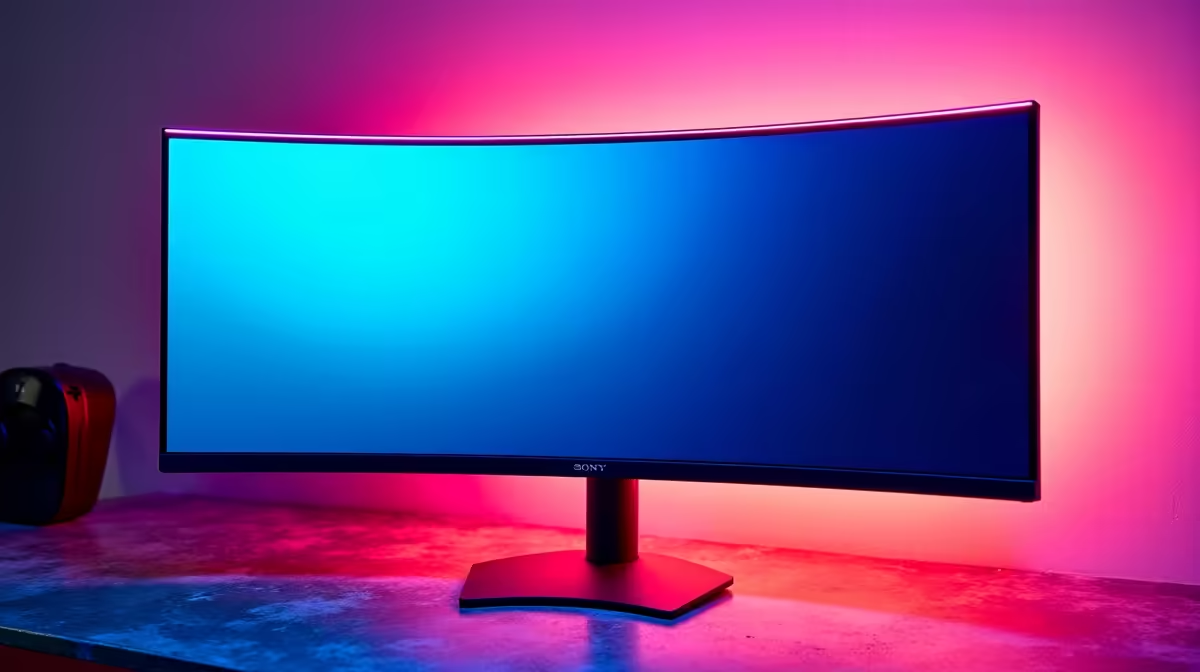
Ghosting on a ultrawide monitor is a motion-clarity issue, not automatic proof of a bad Samsung Odyssey G9. Start with Normal overdrive, VRR on where supported, and a frame cap just below 3440x1440 at 144Hz. If trails remain across another cable and device, then the panel class or display path is the likely limit.
Use a repeatable motion scene
Pick one game scene or UFO-style motion test and keep brightness, refresh, and resolution unchanged. Compare Off, Normal, and Fast overdrive; the fastest preset often creates bright inverse trails. If 60Hz looks clean but high refresh smears, the panel setting or cable path needs attention.
Match FPS to refresh
A Samsung Odyssey G9 can target 3440x1440 at 144Hz, but uneven frame pacing still looks bad. Cap the game 3-5 fps below refresh, keep VRR enabled, and close overlays for the first retest. For handhelds and laptops, also test the built-in panel before blaming a dock or external display.
Replace only after the trail follows the part
If trails follow the monitor to another PC, a faster IPS or OLED panel may be the right fix. If they follow one GPU, driver, or cable, repair that path first. Broad SA planning for this category is around R8,000-R30,000, so controlled proof matters.
FAQ
What setting fixes ghosting on a ultrawide monitor first?
Normal or Medium overdrive is the first setting to try. Extreme modes often create inverse ghosting even when the monitor is fast.
Is ghosting the same as low FPS?
No. Low FPS feels choppy; ghosting leaves trails. A frame cap near 3440x1440 at 144Hz can improve pacing without changing the panel.
When should SA buyers replace a monitor or part?
Replace only when trails remain across cable, driver, overdrive, and second-device checks. Broad local pricing sits around R8,000-R30,000.
Pro Tip
Save a daily preset with Normal overdrive, VRR on, and a stable frame cap. Retest from that baseline before changing cables or buying a new part.