You've upgraded to a DDR5 build and the microstutter you hoped to leave behind is still there. The good news for SA gamers: this is nearly always free to fix, and the steps below pin the cause fast.
Quick Answer
On a DDR5 build, microstutter is a frame-pacing problem: even at a high average FPS, uneven frametimes make motion judder. Enabling a frame-rate cap and Low Latency mode to smooth the 1% lows usually removes it without any new hardware. For South African buyers that matters: it tells you whether you actually need to budget for new parts or just spend ten minutes in the right menus.
Isolating Microstutter Before You Spend
Record a 60-second frametime capture on the DDR5 build. Smooth gameplay sits as a near-flat line; microstutter shows regular spikes even at a high average FPS. Cap the frame rate, enable Low Latency mode, and re-test - if the line flattens, it was pacing, not power. If spikes persist, suspect the memory profile or a background task.
The DDR5 build Checklist for Smooth Play
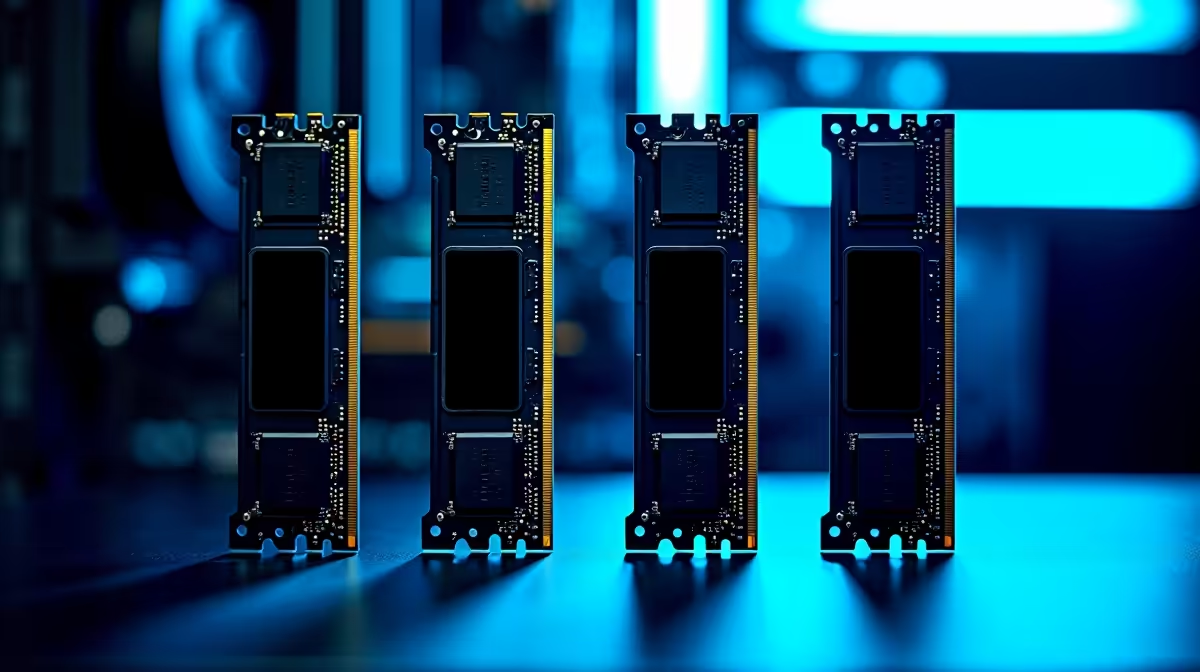
DDR5-6000 CL30 is the reliable target for current AMD and Intel platforms; pushing past it without testing invites instability. Make sure only one memory profile is active in BIOS; stacked or manual overrides on top of EXPO cause inconsistent frametimes. After enabling EXPO/XMP, run a quick stability pass - an unstable profile shows up as random hitching long before a crash. As a yardstick, verify the kit runs its rated speed in Task Manager and passes a 30-minute memory test before blaming anything else, so use that as your pass/fail line rather than chasing a perfect number.
When a Fix Becomes an Upgrade
After two or three controlled tests you'll see the pattern. If the microstutter clears with settings, you've saved the cost of a part - the fix was free. If it only improves with a hardware change, that's your signal to upgrade the one component the test exposed, not the whole rig. For South African buyers that means matching spend to a proven bottleneck: a sub-R2,000 cable or peripheral, a R3,000-R6,000 NVMe drive, or a larger ddr5 memory purchase only when the numbers justify it.
FAQ
Do I need to buy new parts to fix microstutter?
Rarely. The large majority of cases are settings, drivers, or storage placement - all free. Spend money only once a clean test still falls short, and then buy the one part the test pointed to rather than a full rebuild.
What single setting helps microstutter the most on this setup?
For most users it's the sync and frame-cap combination: turn V-Sync off, cap frames a few below your refresh rate, and enable a low-latency mode. Verify the kit runs its rated speed in task manager and passes a 30-minute memory test before blaming anything else.
Is the DDR5 build faulty if I still get microstutter?
Usually not. Microstutter that survives a clean driver install, a verified memory profile and the correct sync settings is rare - work the free fixes first. Only book a hardware check if a known-good test scene still misbehaves after every setting is ruled out.
anything, run the baseline test above. Save your working settings profile once the microstutter is gone, then re-test after major game or driver updates. Only browse new DDR5 Memory at Evetech if a clean, fully-tuned setup still falls short.