A camera that pings your phone every time a cat crosses the driveway or a branch sways gets muted within a week, and then it is useless when a real vehicle pulls in. The fix is vehicle detection, an AI mode that fires an alert only when a car or bakkie enters the frame and stays quiet for everything else. Set up properly, it turns a noisy camera into one you actually trust. The work is in the zone drawing and the sensitivity, not the hardware.
Quick Answer
To set up vehicle detection on a driveway camera, enable the AI vehicle or car detection mode in the camera app, draw a detection zone over the driveway and gate only, mount the camera 2.5 to 3 metres high angled along the approach, then tune sensitivity until cars trigger reliably without the wind setting it off. Expect a few days of small adjustments to dial it in.
Get the Camera Placement Right First
No amount of software tuning saves a badly aimed camera, so start with the mount. Position it 2.5 to 3 metres high, high enough to be out of easy reach but low enough to keep number plates and faces in usable detail. Angle it along the line a vehicle travels as it enters, not straight down or across, so the AI sees the full shape of an approaching car rather than a sliver of roof. Keep the gate and the first stretch of driveway in frame, and avoid pointing it at a busy road beyond your boundary, which floods it with passing traffic you do not care about.
Enable the AI Detection Mode
- Open the camera app and find detection settings. Look for a section called Detection, Smart Detection, or AI Events.
- Turn on vehicle or car detection. Modern cameras separate detection into types: person, vehicle, animal, package. Switch on vehicle detection and, if you want the camera silent otherwise, turn the others off for this camera.
- Confirm the AI runs as you expect. Some cameras process detection on-device, others need a subscription for the smart filtering. Check which yours uses before relying on it. The current crop of AI-capable models is laid out in the security camera range at Evetech, where the detection features are listed per camera.
Draw the Detection Zone
- Open the zone or activity area editor. This is where you tell the camera which part of the frame to watch.
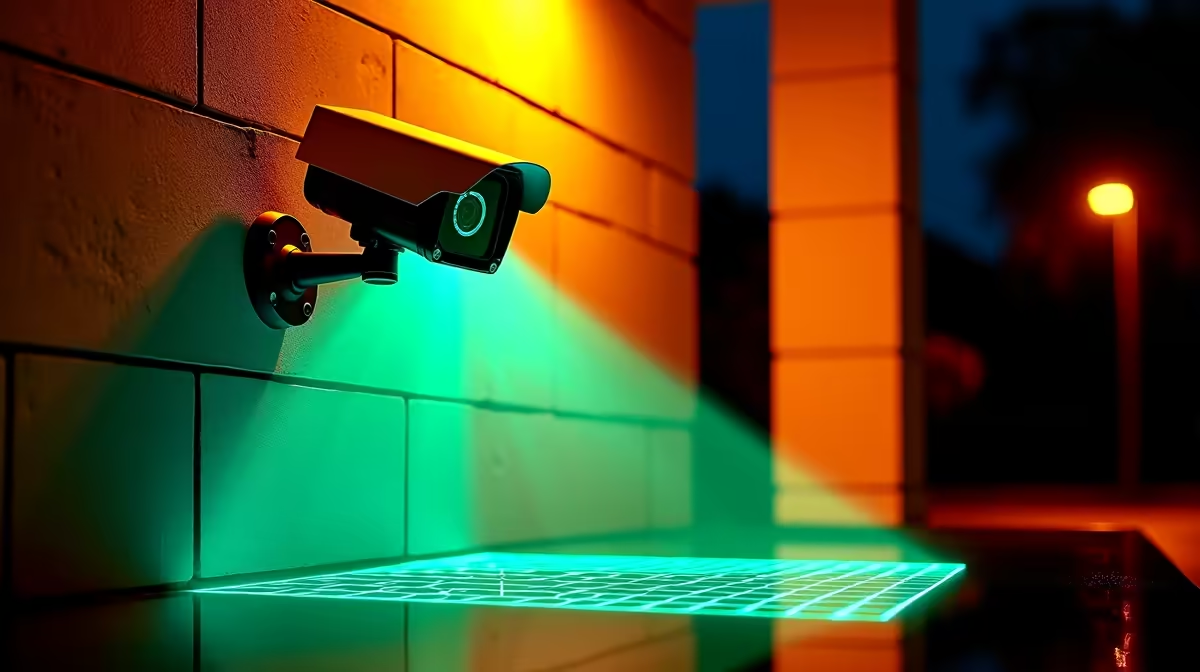
- Trace only the driveway and gate. Drag the zone outline so it covers the path a vehicle takes and the gate, and deliberately leave out the pavement, the road, and the neighbour's wall. A tight zone is the single biggest cut to false alerts, because the camera simply ignores motion outside it.
- Add an exclusion if needed. If a tree or flag sits inside the unavoidable zone, some apps let you mask that patch so its movement never counts.
Tune Sensitivity and Test
- Set sensitivity to the middle and test. Drive or walk a vehicle in and watch whether it alerts. Too low and a slow-rolling car slips through; too high and a person or shadow triggers it.
- Adjust in small steps over a few days. Nudge sensitivity until vehicles trigger every time and nothing else does. Real-world light changes from morning to night will expose edge cases, so give it a few days. A few mounting brackets and a weatherproof power run from the accessories best sellers make a tidy permanent install rather than a temporary one.
Seasonal and Environmental Tuning
Detection accuracy can shift across seasons even after initial calibration. A zone that works in winter may fire more false alerts in summer when trees are full and shadows lengthen differently. Revisit zone edges and sensitivity settings quarterly, particularly after seasons change, and run a test vehicle through each time to confirm the trigger still fires reliably. Busy streets adjacent to the property are a common false-trigger source: the detection zone must not reach across the boundary. If the road is visible in the frame, use the exclusion mask aggressively to blank that strip.
Night Performance
Vehicle detection after dark depends on the camera's low-light capability. A camera with strong infrared illumination or a built-in spotlight gives the AI enough of a vehicle shape to work with, but a camera struggling to produce a clear image in darkness will produce poor detection regardless of sensitivity. Check that night footage shows a clear, identifiable outline of a car before trusting night-time detection for real alerts.
Frequently Asked Questions
Why does vehicle detection still trigger on people sometimes?
Sensitivity set too high, or a detection zone that is too broad, lets large moving objects register as vehicles. Tighten the zone to the driveway and drop sensitivity a notch until only cars and bakkies fire the alert.
How high should I mount the camera?
Around 2.5 to 3 metres works well. That height keeps the camera out of easy reach while keeping number plates and faces detailed, and angling it along the vehicle's approach gives the AI the full shape to recognise.
Does vehicle detection need a subscription?
It depends on the camera. Many process AI detection on the device itself at no extra cost, while some gate the smart filtering behind a plan. Check the model's spec before you buy if on-device detection matters to you.
Will it work at night?
Yes, as long as the camera has decent night vision so the AI can still make out a vehicle's shape in the dark. Pair vehicle detection with good IR or a spotlight, or detection accuracy drops once the light fades.
How often should I revisit the detection settings?
Seasonal changes in light, vegetation, and shadows can shift false-alert rates. A quick review every few months, or whenever you notice more noise in alerts, keeps performance consistent.
Want a driveway camera that only alerts on real vehicles? Browse the security cameras at Evetech for AI-capable models, plus the mounts and accessories for a clean permanent install.