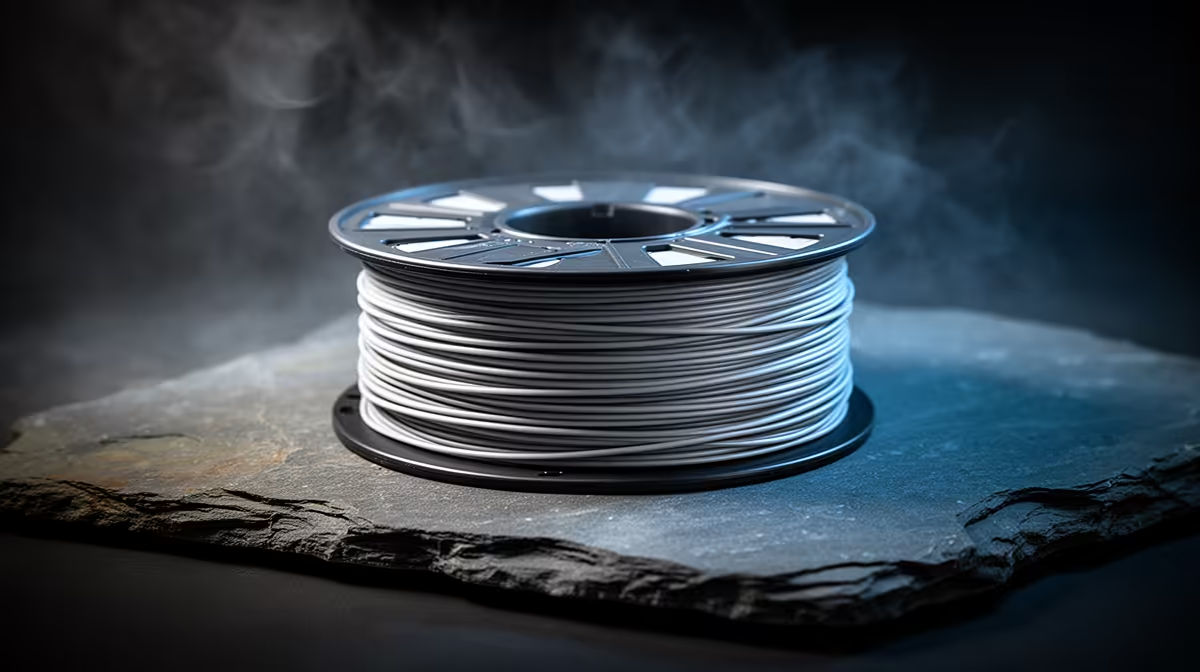
Filament does not care how careful you are at the printer if it has already drunk water off the shelf. A spool of nylon left open in humid air can take on several percent of its own weight in moisture inside a day, and even PETG turns brittle and stringy once it gets damp. Storing filament in South Africa is really a question of where you live: a maker in muggy Durban fights a very different battle to one on the dry Highveld, and the storage kit should scale to match.
Quick Answer
Keep working spools sealed below about 20 percent relative humidity. On the humid coast (Durban, Cape Town) that means airtight boxes with heavy silica gel and a small hygrometer in every box. Inland on the Highveld (Joburg, Pretoria), ambient air is drier, so a sealed tub with a couple of desiccant packs is usually enough. Nylon and TPU always need the strictest sealing, wherever you are.
Why coastal and inland air change the rules
The amount of water in the air is what filament reacts to, and that varies sharply across the country. Coastal cities sit in warm, moist sea air where indoor relative humidity often runs high for months at a time. The Highveld is the opposite: high altitude, dry winters, and far less ambient moisture to work against you.
That difference decides how aggressive your storage has to be. On the coast a spool can absorb a printing day's worth of moisture in the time it sits out between prints, so sealing is not optional. Inland you have more margin, though leaving spools open for weeks will still cause trouble with the thirstier materials.
A storage system that scales to your climate
- Pick the right container. Use a genuinely airtight box with a rubber gasket, not a loose-lid storage tub. One large sealed box can hold several spools, which is more practical than dozens of individual bags for an active printer.
- Add real desiccant, not a token sachet. Indicating silica gel changes colour when it is saturated. Pour loose beads in alongside the spools, or use several large packs, so there is enough surface area to pull humidity down within hours rather than days.
- Measure, do not guess. A cheap hygrometer inside each box tells you the truth. Aim to keep the reading under 20 percent. On the coast you will refresh desiccant far more often than a Joburg maker will.
- Treat nylon and TPU as special cases. These soak up water fastest and degrade quickest. They want the tightest sealing you can manage and the freshest desiccant, regardless of whether you are at the coast or inland.
- Regenerate your silica gel. When the beads turn from orange or blue to clear or pink, dry them out in an oven at roughly 120 degrees Celsius for two to three hours, let them cool, and reuse them. This saves buying new desiccant constantly.
Recovering a spool that has already gone wet
If you are seeing steam-like popping at the nozzle, stringing, rough surfaces or weak layers, the filament has moisture in it. A filament dryer or a low oven bake (well below the material's softening point) drives that water back out. PETG in particular prints noticeably stronger after drying, so it is worth the step rather than writing the spool off. Once dried, get it straight into a sealed box so it does not reabsorb on the shelf.
If you are still choosing a machine to feed, the 3D printers stocked at Evetech cover entry-level through to enclosed workhorses, and you can round out a maker bench with the airtight tubs, hygrometers and tools sitting in the accessories that sell fastest.
Frequently Asked Questions
Does PLA really need sealed storage in South Africa?
PLA is the least thirsty common filament, so a hobby printer on the dry Highveld can often manage it with a sealed tub and basic desiccant. On the humid coast, even PLA prints better kept sealed, because damp PLA still strings and loses surface finish.
What humidity level should I aim for inside the box?
Keep it under about 20 percent relative humidity for general use, and tighter still, under roughly 10 percent, for nylon and TPU. A small hygrometer in the box is the only reliable way to know you are there.
How do I know my silica gel still works?
Indicating silica gel changes colour as it saturates, typically from orange to green, or blue to pink. Once it has changed, it is full of water and doing nothing. Bake it dry and it is good to go again.
Can I just leave a spool on the printer between prints?
On the coast that is the fastest way to ruin filament, because it sits in open humid air for hours. A sealed dry box, ideally feeding the printer through a sealed port, keeps the spool protected while you print.
Ready to start printing or upgrade your setup? Browse the full range of 3D printers at Evetech (https://www.evetech.co.za/components/3d-printers-130) and pair your machine with the storage and tools you need to keep every spool dry.