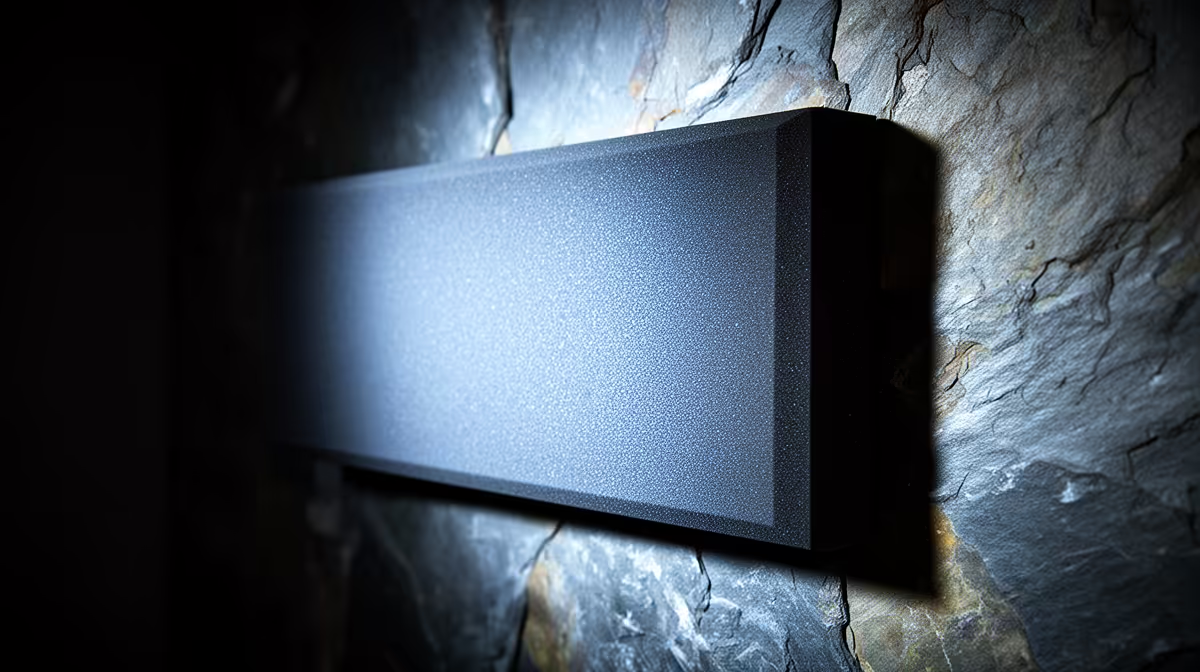
Record a vocal in a bare room and you do not just capture your voice, you capture the room bouncing it back at you a fraction of a second later. That smeared, ringing quality is the room colouring everything you do. Learning to treat a room to reduce echo and reflections is the single biggest jump in clarity most home recordists ever make, and it comes down to putting absorption exactly where the sound bounces first.
Quick Answer
Place acoustic panels at the first reflection points on your side walls and ceiling, then break up any pair of bare parallel walls. Those first reflections arrive almost on top of your direct sound and blur it, while parallel walls create the metallic flutter echo that ruins vocal recordings. Treat those two things and the room stops fighting you.
Find the first reflection points before you mount anything
A first reflection point is the spot on a wall or ceiling where sound from your source hits the surface and bounces straight to your ears before any other path. Because it arrives so close behind the direct sound, your ear cannot separate the two, and the result is a hollow, washed out tone.
The mirror trick locates them in minutes. Sit in your normal recording or mixing position and have someone slide a small mirror along each side wall at ear height. Wherever you can see the speaker or your mic position in the mirror, that surface is a first reflection point. Mark it. Repeat for the ceiling with the mirror held flat overhead. Those marks are where your first panels go, not the corners, not the spots that simply look symmetrical.
Mount panels where the bounce happens
Once the points are marked, the panels do the work. For first reflection points, a panel in the 50mm to 100mm thickness range covers the frequencies that matter for voice and most music. Thicker panels, or a panel mounted with an air gap behind it, reach lower in frequency and tame more of the room.
Cover the marked spots on both side walls and the ceiling cloud first, because those are the loudest early reflections. Do not blanket the whole room. Over treating leaves a space sounding dead and lifeless, and it wastes panels you could place better. A few well positioned panels at the reflection points beat a wall papered in foam every time.
If you are choosing between absorbing the wall behind your speakers or behind your head, prioritise the side and ceiling reflections, since those are the ones the mirror test will keep pointing you toward.
Kill flutter echo between parallel walls
Flutter echo is the rapid, metallic ringing you hear when you clap once in an empty room. It happens when sound bounces back and forth between two hard parallel surfaces, usually opposite bare walls, with nothing in between to stop it. On a recording it shows up as a harsh ring layered over every word.
The fix is to interrupt at least one of the two parallel surfaces. A single panel on one wall breaks the back and forth path, and treating the reflection points you already marked usually handles it. If you want to test, clap your hands in the middle of the room before and after mounting: the sharp ringing tail should collapse into a short, clean thud.
Use the soft furnishings you already own
You do not have to start with panels. Soft, irregular surfaces absorb and scatter sound, so a thick rug on a hard floor, heavy curtains over a window, a fabric sofa, and a loaded bookshelf all chip away at echo for free. A bookshelf is especially useful because its uneven face scatters sound rather than reflecting it cleanly, which helps break flutter echo on one wall.
Treat the easy wins first, then add panels at the reflection points to finish the job. Good closed back headphones let you hear exactly what improved, so check the latest studio and gaming headsets at Evetech when you are comparing your before and after, and the top selling headset picks are a quick way to see what monitors and mixers people pair with a treated room.
Frequently Asked Questions
What is the difference between treating echo and soundproofing?
Treatment controls how sound behaves inside the room by absorbing reflections, which improves what you record. Soundproofing stops sound leaving or entering the room, which needs mass and sealing. Acoustic panels treat, they do not soundproof, so they will not stop a neighbour hearing you.
Where should the very first panels go?
At the first reflection points on your side walls and the ceiling above your position, found with the mirror test. These early reflections do the most damage to clarity, so treating them first gives the biggest improvement per panel.
How thick should acoustic panels be?
For voice and most music, panels in the 50mm to 100mm range work well at first reflection points. Mounting a panel with an air gap behind it, or going thicker, extends absorption into lower frequencies if your room has a boomy character.
Can furniture really replace acoustic panels?
It can do a lot of the early work. Rugs, curtains, fabric sofas and full bookshelves all absorb or scatter sound and noticeably reduce echo. For a serious recording space you will still want dedicated panels at the reflection points, but furniture is a sensible free starting point.
How do I test for flutter echo?
Clap your hands sharply once while standing in the middle of the room and listen for a ringing, metallic tail. A clear ring means flutter echo between parallel walls. After treating one of those walls, the same clap should sound short and dry.
Hearing the room more than your voice? Pair a properly treated space with accurate monitoring from the headphones and headsets range at Evetech and judge every change with confidence.