For robotics projects the desktop usually compiles ROS workspaces, runs Gazebo simulations and trains small models, all of which spike the CPU. Whether you need a cooler upgrade depends on how often those all-core compiles and sims run.
Quick Answer
Upgrade the cooler if you compile large ROS workspaces or run Gazebo often, where all-core load pushes a stock cooler past 90C. A DeepCool AK620 (around R1,100 at Evetech) keeps a Ryzen 7 7700 in the mid-70s C during long compiles, preventing throttling that drags out build times.
When Robotics Workloads Warrant It
Flashing a microcontroller barely touches the CPU. The heat comes from a full colcon build of a big ROS 2 workspace, running Gazebo physics at high step rates, and training a small perception model on the CPU. These pin all cores for minutes, and on an AM5 Ryzen 7 7700 or LGA1700 i5 a stock cooler reaches its thermal ceiling, slowing every compile through throttling.
Choosing The Right Cooler
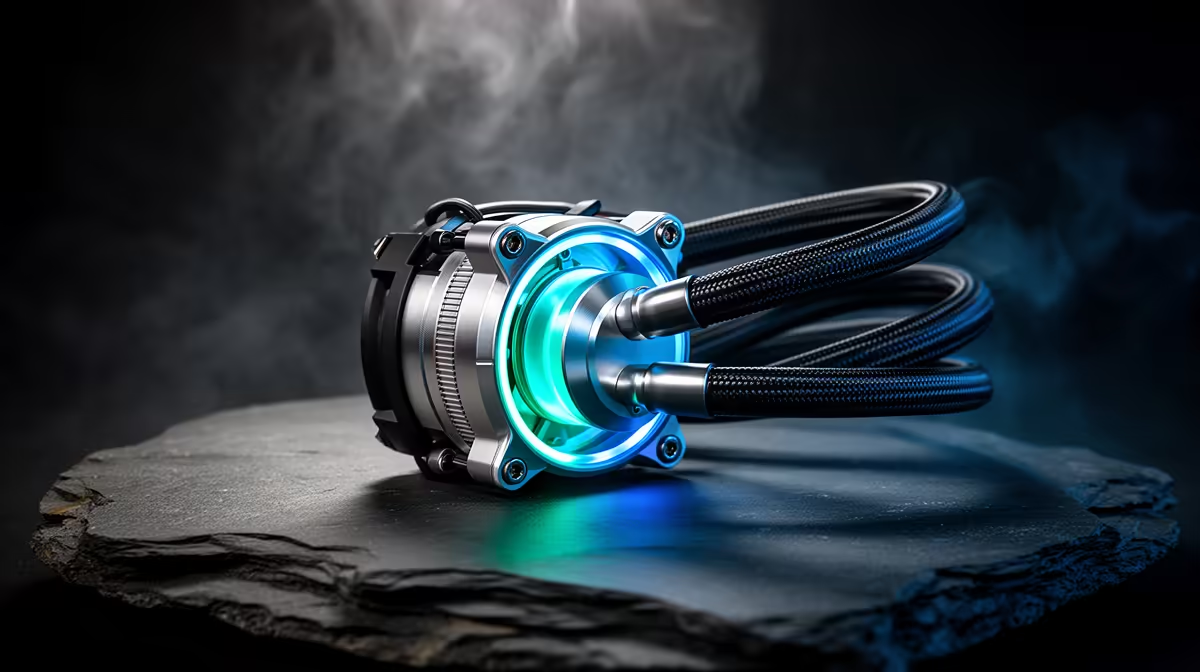
Match socket and clearance. For AM5 or LGA1700, the Thermalright Peerless Assassin 120 SE (R650) is the value champion, the DeepCool AK620 (R1,100) a quieter dual-tower step up. Both keep a 7700 or i5 under throttle during repeated builds. If your case is short, a 240mm AIO like the Arctic Liquid Freezer III (~R2,200) clears the heat without a tall heatsink. Faster, cooler compiles mean less waiting between code changes.
FAQ
Does compiling ROS heat the CPU enough to need a cooler?
A large colcon build pins all cores for minutes, which pushes a stock cooler past 90C on a Ryzen 7 or i5. A 120mm tower cooler keeps clocks high so builds finish faster.
Which cooler is best value for a robotics desktop?
The Thermalright Peerless Assassin 120 SE around R650 gives the best price-to-performance, dropping all-core temps 15-20C. The DeepCool AK620 at roughly R1,100 runs quieter for frequent heavy builds.
Will better cooling speed up Gazebo simulations?
It prevents thermal throttling during long high-step-rate sims, so the CPU holds its boost clocks. That keeps simulation timing consistent rather than slowing down as the chip heats up.
full colcon build before and after fitting the cooler. If the build finishes noticeably faster, throttling was slowing you down and the cooler upgrade paid off.