The CPU socket latch on most motherboards sits in one of the tightest corners of the whole case, wedged between the cooler and the case roof with barely enough room for a fingertip. Dress the top cable run before checking access to that latch, and you may find it buried with no way to release it later.
Quick Answer
Check you can still reach the CPU socket latch once the top run is dressed. That corner is cramped in most cases. Fit the extension before combing it, or the latch ends up buried behind a cooler with nothing to grip.
🧱 Why the CPU socket corner is awkward
The CPU power socket sits at the top edge of most boards, an area frequently boxed in on three sides by the cooler, the case roof and whatever else occupies that upper corner. There is little spare room for fingers to work in once the cooler is mounted and the build is largely assembled, which is exactly why cable placement in that specific corner deserves more thought than the rest of the run.
🔧 Sequencing: extension first, combs after
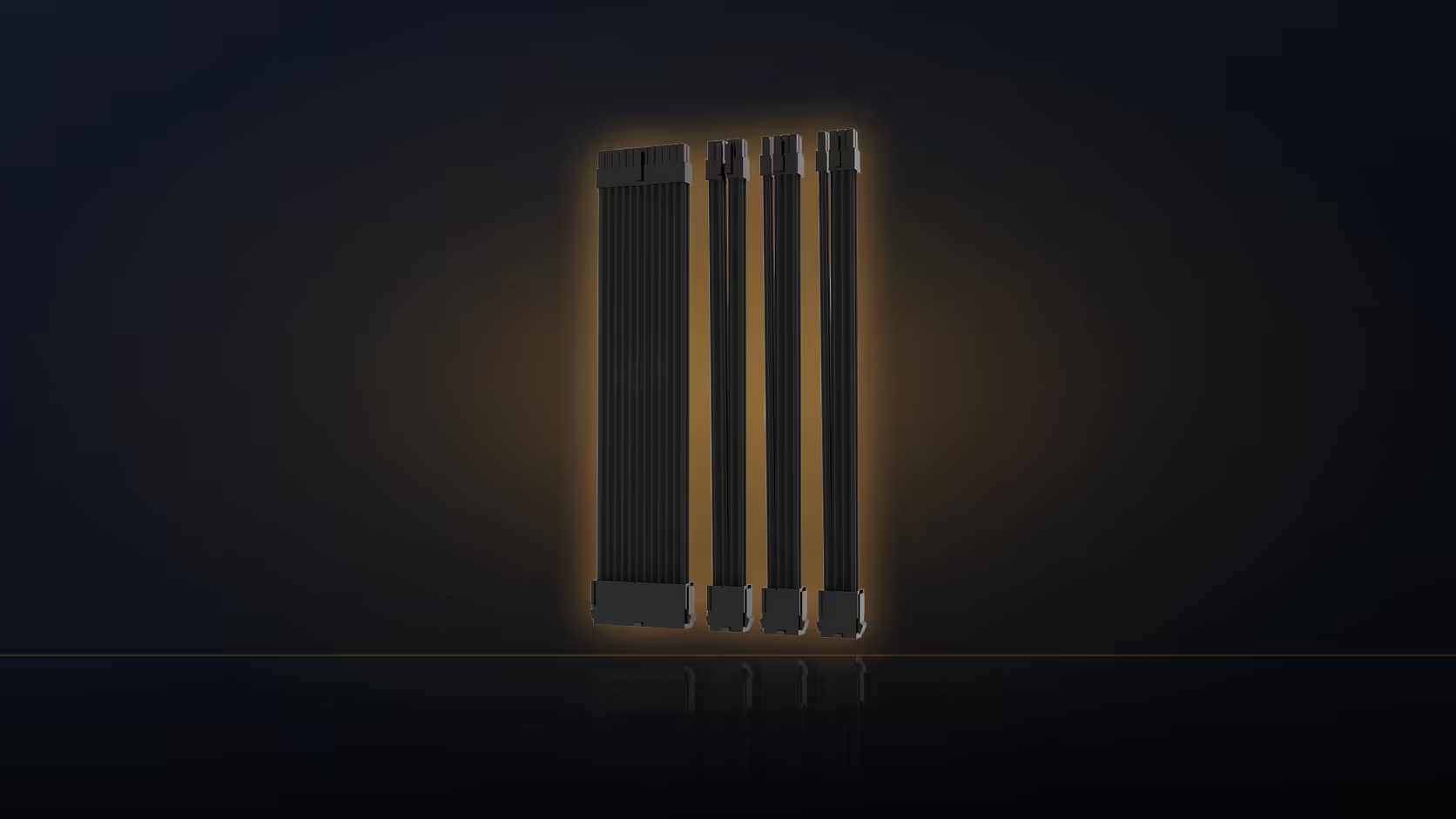
Fit the EPS extension itself before adding combs, and ideally before the cooler is fully built up around the socket - doing it in that order lets the plug seat squarely rather than being pushed in at an awkward angle once space around it has already tightened up. Combing the run too early, before the cooler and case layout are settled, risks locking in a shape that later turns out to block access entirely.
✅ Testing access before you close up
Before sealing the build, actually try releasing the latch once with the cable run in its final position. If a fingertip genuinely cannot reach the release tab, that is the signal to change the routing while the side panel is still off and adjustments are still easy - not a problem to discover after the build is finished and the cooler is fully seated.
🌡️ Coolers, angles and slack as the fix
Tall tower coolers make this problem noticeably worse, since their fin stack frequently overhangs the top of the board and shades the socket area from above, cutting off the easiest angle of approach. Feeding the run down from a roof cutout, where the case has one, can offer more working room at the plug than trying to approach the socket sideways across a crowded board. Where the latch still ends up hard to reach despite careful routing, leaving a little extra slack in the lead is often enough to let you lift the whole run slightly and get a finger onto the tab from the side. One more detail worth watching: a comb positioned very close to the plug stiffens that last stretch of cable, so keep the nearest comb further back in this specific corner, where the socket is already tight enough without added rigidity working against you.
🧭 Checking access before the cooler even goes on
The most reliable moment to confirm access is before the cooler is mounted at all, while the socket is still fully open. Seat the extension, dress the run loosely into roughly its final path, and release the latch once while everything is easy to reach - then note what that path looked like before the cooler covers it. There is more of the range to see at cable solutions, and where a particularly tall cooler makes any extension too tight to fit comfortably, individually sleeved premium cables is worth a look instead.
Frequently Asked Questions
Why is the CPU socket the awkward one?
It sits at the top edge, often boxed in by the cooler and the case roof, so there is little room for fingers once everything is assembled.
When should the extension go on?
Before the combs, and ideally before the cooler is fully built up, so the plug can be seated squarely rather than at an angle.
How do I test that the latch is still reachable?
Try releasing it once with the run in place. If a fingertip cannot reach the tab, the routing needs changing while the panel is still off.
Does a large cooler make this worse?
Usually yes, especially tall tower coolers whose fin stack overhangs the top of the board and shades the socket from above.
Is a right-angle approach helpful here?
Feeding the run down from the roof cutout rather than across the board can give more room at the plug than a tight sideways approach.
What if the latch ends up buried anyway?
Leave enough slack that the whole lead can be lifted a little, which is often enough to get a finger onto the tab from the side.
Does the comb position affect access?
It can. A comb set very close to the plug stiffens the last stretch, so keep that one further back where the socket is tight.
Planning cable access around a tight CPU corner?
Check Evetech's power supply range for extensions that route cleanly around a tower cooler.