Quick Answer
A BSOD on an RTX 5070 build is almost always a driver or power issue: clean-install the NVIDIA driver with DDU, confirm a 750W-plus ATX 3.1 PSU with the correct 12V-2x6 connector seated fully, and test memory with EXPO off. Most RTX 5070 crashes come from mismatched drivers or a power connector that is not fully seated, not a defective card.
Where RTX 5070 Crashes Come From
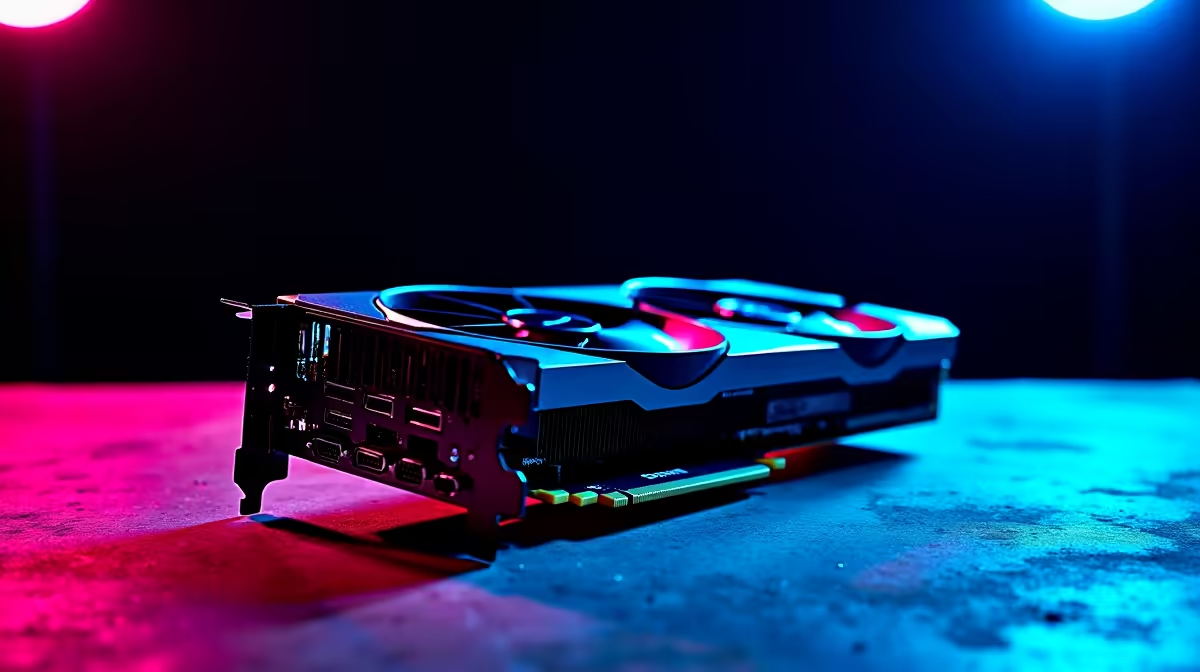
The RTX 5070 draws around 250W, so power delivery is the first thing to check. A BSOD under load often means a loose or daisy-chained 12V-2x6 connector or an undersized PSU. The second cause is the GPU driver, especially after a Windows update changed it. The third is unstable EXPO memory pushed past what the kit can hold reliably.
Step-By-Step Fix
First, run DDU in safe mode and install the latest NVIDIA driver cleanly. Second, confirm a 750W-plus ATX 3.1 PSU and reseat the 12V-2x6 connector fully at both ends. Third, disable EXPO and test; if stable, retune the memory profile. Fourth, update the motherboard BIOS and check temperatures during a load test.
Using The Stop Code
The BSOD stop code narrows the cause: VIDEO_TDR_FAILURE points to the GPU driver, WHEA_UNCORRECTABLE_ERROR to power or memory, and MEMORY_MANAGEMENT to RAM. Note the code before troubleshooting to target the right fix.
FAQ
Why does my RTX 5070 build blue-screen?
Usually a driver conflict, a loose or undersized power connector, or unstable EXPO memory. A clean driver reinstall and a fully seated 12V-2x6 cable fix most cases.
What PSU does an RTX 5070 need?
A 750W-plus ATX 3.1 unit with a native 12V-2x6 connector. A larger 850W PSU adds headroom for overclocking and a high-power CPU.
How do I do a clean driver install?
Boot into safe mode, run DDU to remove the existing GPU driver completely, then install the latest NVIDIA driver. This clears conflicts that cause repeated BSODs.
Confirm a 750W-plus ATX 3.1 PSU at Evetech, reseat the 12V-2x6 connector, and clean-install the NVIDIA driver with DDU to stop RTX 5070 blue screens.