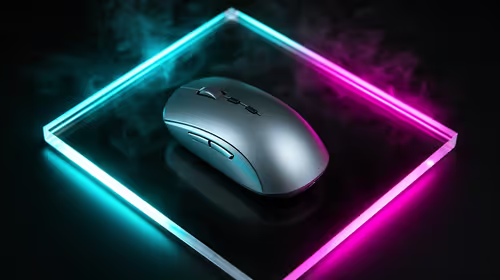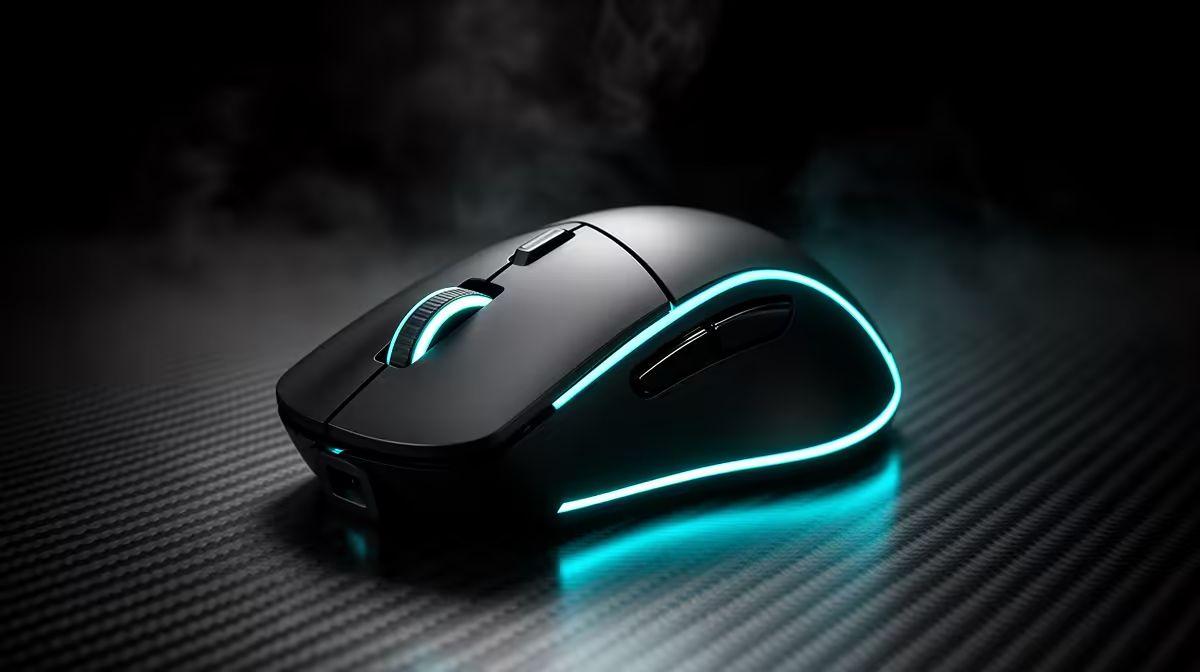
Onboard memory lets a mouse carry selected settings from one PC to another without keeping its configuration app running. The stored set varies by model. DPI stages and button remaps often transfer, while lighting effects, application actions and complex macros may still need software.
Quick Answer
Install the official mouse app, update only when a relevant stable firmware is offered and switch to Onboard Memory mode. Create one simple profile with DPI, polling rate and basic button assignments. Save it to a hardware slot, close the app and test the mouse on another PC or the Windows sign-in screen.
Use Evetech's gaming-mouse catalogue and current mouse best sellers to compare profile count and supported controls. Look for explicit onboard-memory detail; a DPI button alone does not prove full profile storage.
Separate Hardware and Software Profiles
A software profile can detect the foreground game and load bindings through a background service. An onboard profile lives in mouse storage and works before that service starts. This makes it useful on shared PCs, tournament systems and work machines where extra software is not installed.
The hardware has less memory and a smaller feature set. A desktop shortcut that launches an application may rely on the vendor service. Text macros, layered actions and screen-sampling RGB can also disappear when the app closes.
Basic mouse buttons, standard keyboard shortcuts, DPI stages and polling rate are more likely to survive. The exact list belongs to the model and firmware.
Build a Safe Base Profile
Start with a known DPI such as the value you already use in games. Remove unused DPI stages so an accidental button press cannot jump from slow aim to a very high setting.
Choose a polling rate the mouse, receiver and PC hold cleanly. A wired or wireless 1000Hz profile is broadly practical. Higher rates can increase CPU and USB demand, so prove them in the target games before saving them as the only slot.
Keep primary click, secondary click and a navigation path intact. Remapping every button at once can leave you without a way to operate the software or restore the profile.
Assign standard Back and Forward to side buttons first. Test them in a browser and game. Add media or keyboard shortcuts after the core layout travels correctly.
Find the Onboard Mode
Vendor software uses different names: On-Board Memory Mode, Device Memory, Hardware Profile or Stored Profile. Some apps edit a live software profile until you toggle a separate hardware mode. Others require dragging a profile into a numbered device slot.
Read the model guide and note how many slots exist. One mouse may have a single persistent profile; another can cycle through several with a dedicated button. Wireless and Bluetooth modes can expose different capabilities.
Save or export the software version before writing it to hardware. Name it with DPI, rate and purpose, such as 800dpi-1000hz-basic, avoiding private information.
Test Without the Service
After saving, exit the vendor app from the system tray and stop it from auto-starting for one controlled reboot. Do not uninstall yet. Test DPI, buttons, scroll, polling and lighting at the sign-in screen and desktop.
Plug the mouse into another trusted PC without the vendor software. For wireless, carry the paired receiver and use the same connection mode. Bluetooth can load a different profile or operate at a lower report rate.
Use a polling-rate tester for context, but judge consistency in a game. Browser-based measurements can vary with scheduling and display refresh.
If a binding fails, return to the app and replace it with a standard keyboard or mouse keycode supported in hardware. Do not assume the save failed because one software-only action disappeared.
Handle Game Profiles
One onboard profile cannot auto-switch per game without support in the device firmware. Use separate hardware slots and a profile-cycle button where the mouse offers them. Give each slot a distinct but restrained lighting colour if that effect also stores.
Keep the same DPI across games and adjust sensitivity in each title when possible. This avoids a hidden DPI change altering desktop and menu movement.
Competitive rules can restrict macros and automation. Follow the current event and game policy. Onboard storage makes a macro portable; it does not make the action permitted.
For a shared PC, avoid storing login sequences or private text. Anyone holding the mouse may trigger or inspect supported macros.
Check Wireless Behaviour
Battery level, sleep timer and lighting can depend on the vendor service even when DPI is stored. Test wake-up, reconnect and low-battery behaviour after closing the app.
Keep the receiver in a direct extension close to the mouse rather than behind a metal case. Onboard memory cannot repair wireless interference. Save a lower polling-rate travel profile when battery life matters.
If the mouse supports both 2.4GHz and Bluetooth, switch between them and verify DPI. Bluetooth often prioritises compatibility and battery life, so not every gaming feature carries over.
Remove the Software Carefully
Keep the official installer and a profile backup. Uninstall only after the hardware profile has survived reboots and another PC. Some devices need the app for firmware updates, battery reporting or future remaps, so you may choose to leave it installed without auto-start.
After uninstalling, check Device Manager only if the mouse stops behaving normally. Standard HID functions should remain. Avoid third-party driver cleaners that can disturb other USB devices.
Reinstall the official app when you need to change stored settings. Confirm it reads the hardware profile before overwriting a slot with defaults.
Firmware and Recovery
Update mouse firmware under stable power and through a direct USB connection when the release fixes a relevant issue. Keep the receiver connected as instructed for wireless updates. Do not interrupt the process.
Record the factory-reset shortcut or recovery process. A corrupt or unusable profile may require holding selected buttons while reconnecting. The exact combination is model-specific.
If onboard memory stops retaining settings, test another slot and reset through the documented method. A failing internal memory or firmware problem deserves vendor support rather than repeated random flashes.
FAQ
Does onboard memory store every mouse setting?
No. Storage and supported actions vary. Basic DPI and buttons often transfer, while software-driven features may not.
Can the mouse switch profiles for each game without software?
Only when its firmware and hardware slots support manual or onboard switching. Automatic app detection usually needs the background service.
Should the vendor software be uninstalled?
It can stay installed without running at startup. Keep it when you need updates, battery detail or future profile edits.
Save one simple hardware profile, close the vendor service and prove every DPI and button setting on another PC before relying on onboard memory.