Quick Answer
For Heidelberg, a local LLM rig needs VRAM first: 12GB can run smaller quantised models, while 16GB-24GB gives more room for larger Llama, Qwen, Mistral, or DeepSeek-style models. Budget around R25,000-R45,000 for a useful AI workstation; a basic gaming PC will feel cramped once models and context windows grow.
Workload Fit
Ollama, LM Studio, llama.cpp, and text-generation-webui reward NVIDIA GPUs, enough system RAM, and fast SSD space. CPU-only inference works, but it is slow enough to frustrate daily use. For Heidelberg buyers, the practical win is a machine that stays smooth after an hour of real use, not a spec sheet that only looks strong for one component.
Recommended Spec Shape
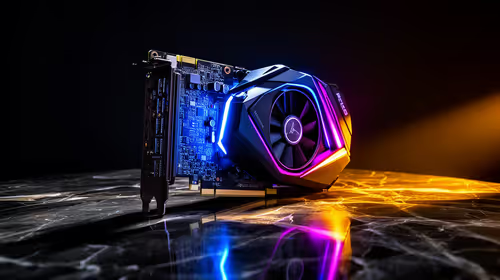
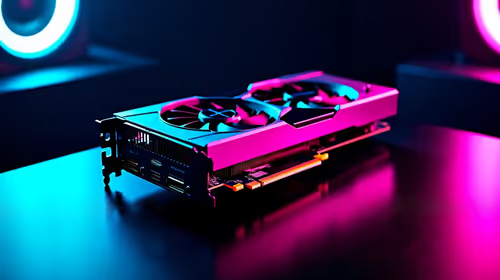
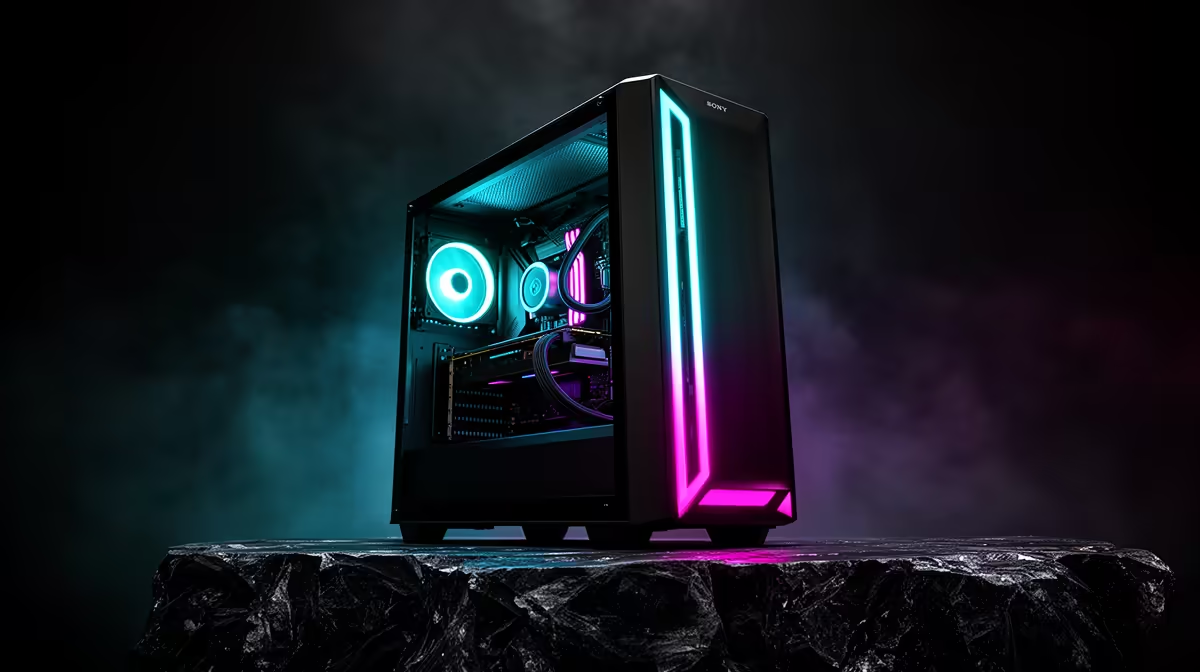
A practical baseline is Ryzen 7 7700 or Core i7-class CPU, 32GB-64GB RAM, 1TB NVMe SSD, and RTX 4070 Super or RTX 4080-class graphics when the budget permits. Keep the case airflow simple, choose a known PSU brand, and leave at least one storage slot or drive bay free. That keeps the machine easier to service when projects, games, or recordings grow.
Local Setup Checks In Heidelberg
Measure the desk, monitor position, cable route, and network point before ordering. In Heidelberg, a wired fibre or Ethernet run can matter more for streaming and online games than a small GPU upgrade. For creative work, a quiet room and reliable backup drive protect the result better than decorative lighting.
FAQ
What should I buy first for this rig?
Buy the core PC, monitor, and one reliable input set first. Add extras only after the system holds the target workload, because weak RAM, storage, or cooling will be felt every day.
Is R20,000 enough for the title workload?
Yes, if the spec is focused and the settings are realistic. It is not enough for every premium feature at once, so prioritise CPU, GPU, RAM, and SSD capacity before styling or oversized accessories.
Should I choose a laptop instead?
Choose a laptop if the machine must travel often. Choose a desktop if most work happens in Heidelberg, because desktops usually deliver better cooling, easier upgrades, and more performance per rand.
Practical check
Before checkout, write down the target workload, monitor resolution, and one must-have spec; if a part does not support that target, remove it from the Heidelberg shortlist.