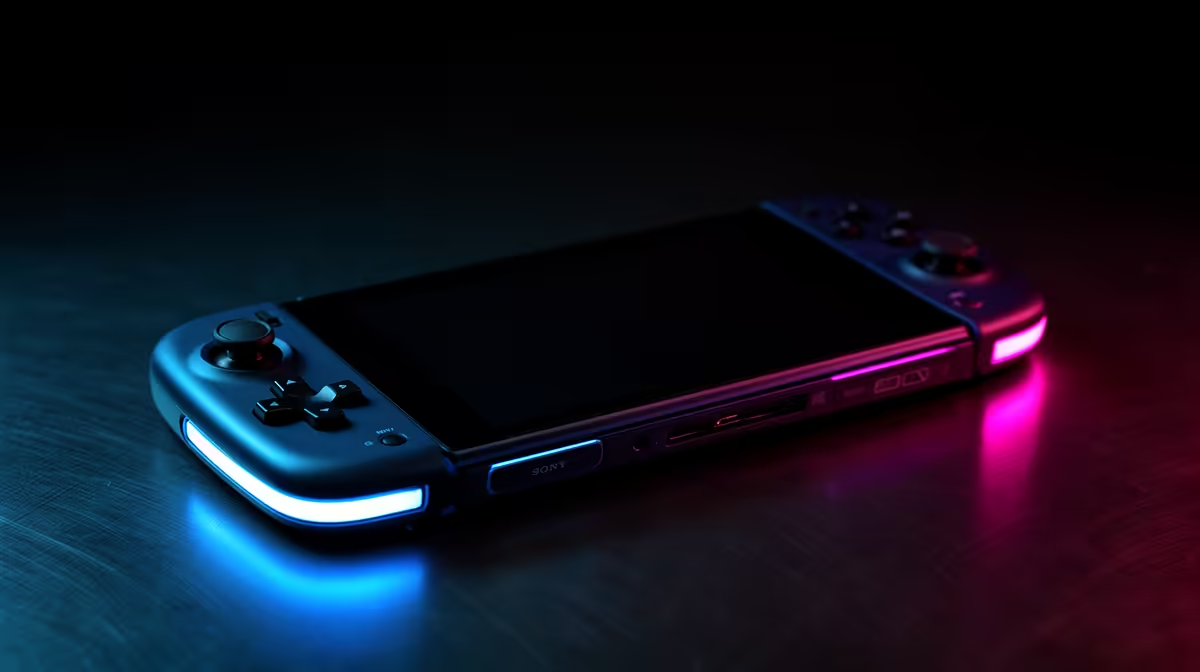
Thirty frames per second can feel composed on a handheld when every frame arrives on schedule. An uncapped game swinging between 35 and 50 FPS can look faster in a counter yet feel worse in your hands. The fix is a frame-time plan: one limiter, a display cadence that suits the target and enough performance headroom for the hardest scene.
Quick Answer
Set a 30 FPS cap with the game's own limiter when it produces clean pacing. Match it with a 60Hz or 90Hz display mode that gives each game frame an even number of refreshes. Use VSync where tearing remains, and test adaptive sync only inside the screen's supported range. Tune graphics until the busiest section holds the cap without sitting at full load.
Evetech's portable gaming range shows the refresh-rate and display options available across handhelds. Its best-selling PC systems offer a useful comparison when the same game also lives on a faster desktop.
Why Uneven 45 FPS Feels Rough
At a fixed 30 FPS, a new frame should arrive every 33.3 milliseconds. If the sequence alternates between short and long waits, motion judders even when the average remains 30. The same problem makes a fluctuating 45 FPS feel less predictable than a locked lower target.
Frame counters hide that rhythm. Use a frame-time graph and pan the camera across a detailed scene. Look for an even line, then feel whether inputs and motion remain consistent through combat.
Shader compilation, asset streaming and background work can cause spikes that no cap removes. Let shader work finish, keep storage free and close downloads before judging the limiter.
Pick One Limiter
Start with the in-game limiter. It can manage the engine's render queue with lower delay, though quality varies by title. If its pacing is poor, compare the handheld control centre or a supported external limiter.
Avoid stacking several 30 FPS caps. The game, driver and overlay can fight over presentation. Disable the extras and change one method at a time.
Set the cap before launch when a device tool requires it. Confirm the actual value after entering the game, because some titles override display or limiter settings.
Match the Display Cadence
Thirty divides evenly into 60Hz and 90Hz. Each game frame can remain on screen for two or three refreshes. It does not divide evenly into every display mode, which can create a repeating uneven cadence without variable refresh.
Adaptive sync helps when frame rate stays within the panel's variable-refresh range. Thirty FPS may sit below the lower boundary on some screens. Low frame-rate compensation can repeat frames on supported systems, but support depends on the panel and device path.
VSync removes tearing by aligning presentation with refresh. At a stable 30 FPS on 60Hz, that can produce a clean result. If performance falls below the target, its queue can add delay or visible stutter, so leave headroom.
Build Performance Headroom
Do not tune for 30 FPS while the GPU is pinned at its limit in a quiet room. Lower resolution scale, shadows or heavy effects until the game holds 30 through its busiest repeatable scene with some room left.
Then reduce TDP in small steps if battery life matters. Stop at the first sign of frame-time spikes and return one step. A lower cap often permits a useful power reduction, but the amount changes by title.
CPU-limited games may need enough processor power even at 30 FPS. Crowds, simulation and traversal can expose this after a graphics-only test looks clean.
Control Input Feel
A 30 FPS target has more inherent delay than 60 FPS. Keep extra latency out of the chain. Use the built-in controls or a responsive controller link, enable TV Game Mode when docked and avoid deep render queues.
Motion blur can make low-frame-rate camera pans look smoother, though some players dislike it. Try the game's low or per-object setting rather than assuming full blur helps every scene.
Set stick sensitivity for the lower frame rate. A rapid camera that jumps far each frame exposes the cadence, while a controlled turn is easier to read.
Test the Whole Session
Play for at least fifteen minutes so temperature and clocks settle. Move between gameplay, menus and cut-scenes. Some games remove the cap in menus, raising power and fan noise for no benefit.
Save the frame target, refresh mode, limiter source and power profile together. Changing one later can break the rhythm you built.
FAQ
Should I enable VSync for a 30 FPS cap?
Use it when tearing remains and the game can hold 30 with headroom. Compare input feel and pacing because limiter implementations differ.
Does adaptive sync guarantee smooth 30 FPS?
No. Thirty may fall below the panel's variable-refresh floor unless the device supports low frame-rate compensation.
Can a 30 FPS limit reduce power draw?
Yes, when the game would otherwise render more frames. Measure a warm repeatable scene because CPU and display load still matter.
Choose one 30 FPS limiter, match it to an even display cadence and tune the busiest scene until the frame-time line stays calm.