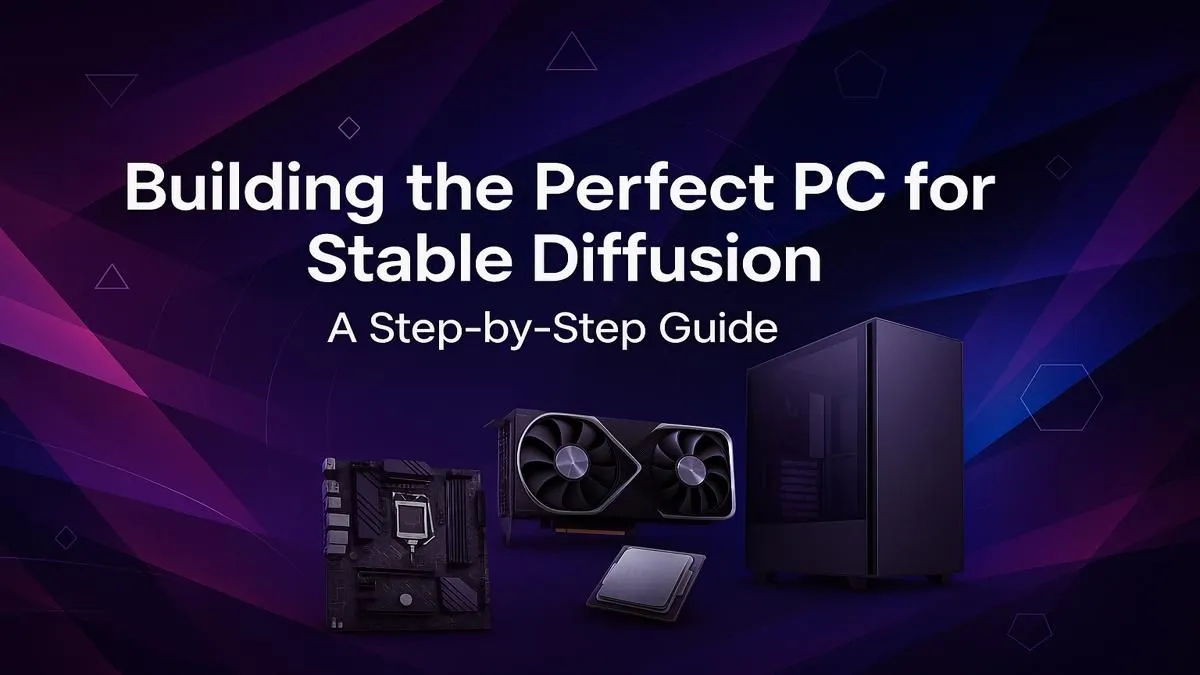
Tired of slow, low-res AI art generators? Ready to unlock the true power of Stable Diffusion and create breathtaking images right on your own machine? Building a dedicated Stable Diffusion PC is your ticket to creative freedom, giving you full control without subscriptions or queues. This guide breaks down exactly what you need, component by component, to assemble the ultimate AI art powerhouse here in South Africa. Let's get building! 🔧
Why Your Gaming Rig Needs an AI Upgrade
You might have a beast of a gaming PC, but AI image generation plays by a different set of rules. While gaming prioritises frame rates and raw clock speed, a Stable Diffusion PC build is all about one thing: the Graphics Processing Unit (GPU) and its video memory (VRAM).
Stable Diffusion loads massive models, datasets, and the images you're generating directly into the GPU's VRAM. If you run out, generation fails or slows to a crawl. Think of VRAM as your artist's canvas; the bigger the canvas, the more complex and high-resolution your masterpiece can be. This is the single most important factor for a smooth AI workflow.
The Core Components for Your Stable Diffusion PC
Building a balanced PC for Stable Diffusion means focusing your budget where it counts most. While every part matters, the GPU does almost all the heavy lifting.
The Graphics Card (GPU): The Heart of the Machine 🧠
This is where your build begins and ends. For Stable Diffusion, NVIDIA is currently the undisputed champion due to its CUDA (Compute Unified Device Architecture) platform, which most AI tools are heavily optimised for.
- Item
While AMD Radeon GPUs are fantastic for gaming and have made huge strides in AI, the software support and community tutorials are still heavily skewed towards NVIDIA's ecosystem, making it the easier path for now. For professionals who need certified drivers and maximum stability, professional workstation cards offer immense VRAM pools but at a premium price.
CPU, RAM, and Storage: The Supporting Cast
While the GPU is the star, it needs a solid team to back it up.
- CPU (Processor): You don't need a top-of-the-line processor. A modern 6 or 8-core CPU like an AMD Ryzen 5 or Intel Core i5 is more than enough to handle the operating system and background tasks without bottlenecking the GPU.
- System RAM: This is different from the GPU's VRAM. 16GB is a workable minimum, but 32GB of fast DDR4 or DDR5 RAM is highly recommended. This ensures your system can smoothly load AI models from your drive into the system RAM before they are passed to the GPU.
- Storage (SSD): AI models can be huge, often several gigabytes each. A fast NVMe SSD is essential. It dramatically reduces loading times for models and the Stable Diffusion application itself. A 1TB NVMe drive is a great starting point, giving you space for your OS, apps, and a healthy collection of models.
Optimisation Pro Tip ⚡
Once you're set up, use the --xformers command-line argument when launching Stable Diffusion (like in AUTOMATIC1111). This memory-efficient attention algorithm can significantly speed up image generation and reduce VRAM usage, letting you create larger images than your card might normally handle. It's a must-use setting!
A Balanced Stable Diffusion PC Build Example
So, what does a powerful, value-focused Stable Diffusion PC build look like in South Africa? Here’s a great starting point that balances performance and price:
- CPU: AMD Ryzen 5 7600X or Intel Core i5-13600K
- GPU: NVIDIA GeForce RTX 4070 SUPER (12GB VRAM)
- Motherboard: A solid B650 (for AMD) or B760 (for Intel) board
- RAM: 32GB DDR5 5200MHz+
- Storage: 1TB NVMe PCIe 4.0 SSD
- Power Supply: A quality 750W 80+ Gold PSU
This setup provides an incredible foundation for high-performance AI art generation. You can easily browse and compare the latest graphics cards to find the one that best fits your budget and creative ambitions. ✨
With the right hardware, you're not just using an AI tool; you're building a launchpad for limitless creativity. Happy generating! 🚀
Ready to Build Your AI Art Powerhouse? Crafting the perfect Stable Diffusion PC build unlocks a universe of creativity. Stop dreaming and start generating. Explore our massive range of PC components and find the exact parts you need to bring your imagination to life, right here in South Africa.