Quick Answer
For a Gen 5 NVMe SSD showing blue screens, start with evidence rather than a parts swap. Stop codes, memory profiles, storage errors, firmware, and drivers are more likely than instant board failure. Record the code, return BIOS to defaults, and test the same workload again. Gen 5 NVMe drives often sit around R2,500-R7,000 depending on capacity and heatsink bundle, so a measured fix can prevent buying the wrong component.
Read The Stop Code
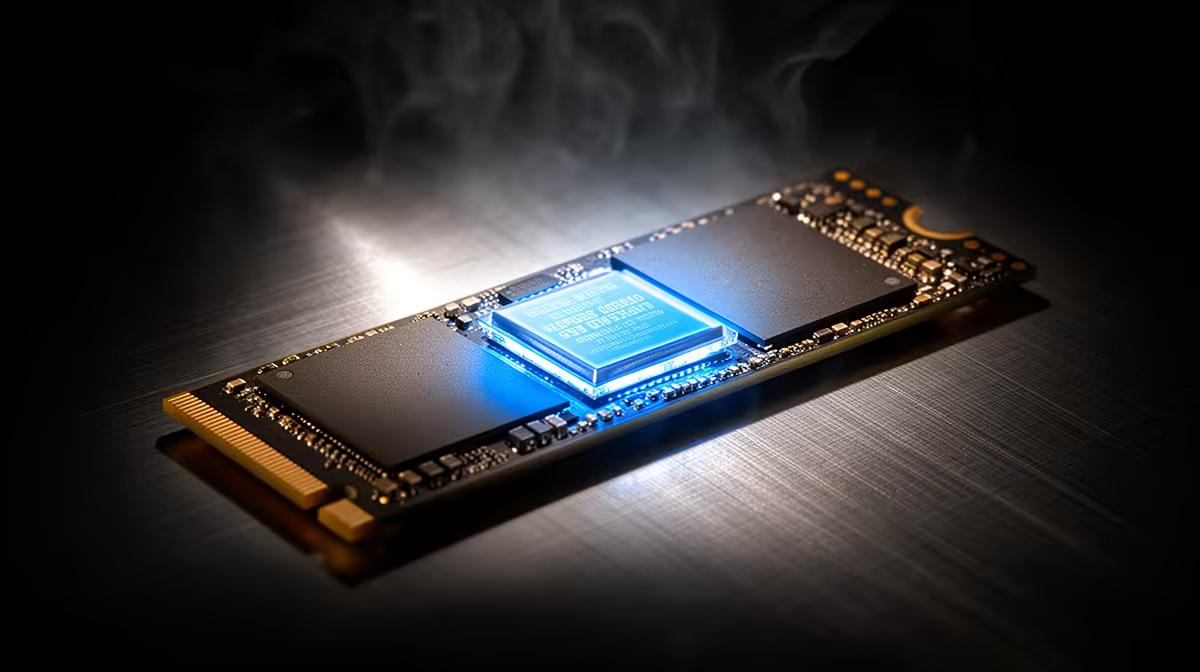
A blue screen leaves evidence. Match the code to memory, storage, graphics, networking, or a kernel driver, then compare it with the last BIOS or driver change. Use named parts in your notes, such as Crucial T700 Gen 5 NVMe SSD or Corsair MP700 Gen 5 NVMe SSD, so BIOS, driver, and support checks stay specific. For SA buyers, fast storage helps with heavy work files and game installs, but it needs airflow in warm SA rooms.
Stock Settings First
Disable EXPO or XMP for one pass, update chipset and GPU drivers, and check storage health. Watch CPU and GPU temperatures for 15-20 minutes under load. Use concrete checkpoints such as 10,000-14,000 MB/s reads, PCIe 5.0 x4 lanes, and controller temperatures that can pass 70 C. If the issue began after a Windows update, test defaults and the same workload before calling hardware faulty.
Buy Or Repair Decision
Do not treat the category name as the diagnosis. A display symptom needs display testing, a stop code needs driver and memory checks, and a power-off event needs heat and PSU checks. For this Gen 5 NVMe SSD, replace parts only when the same fault repeats at stock settings after driver, cable, heat, RAM, and storage checks.
FAQ
Can a motherboard cause blue screens?
Yes, but only after RAM, storage, drivers, and BIOS settings have been cleared as causes.
Should I reinstall Windows first?
No. A reinstall can hide the clue while bad RAM, a hot SSD, or unstable firmware remains.
When is replacement sensible?
When the same stop code returns at stock settings with healthy storage and tested RAM.
Practical check
Before spending on a Gen 5 NVMe SSD, write down the trigger, temperature readings, driver version, BIOS profile, and one repeatable pass or fail result.